
Propane vs Electric Patio Heater: Which Is Better for Your Patio?
An honest propane vs electric patio heater comparison: heat output, running cost per hour, tank runtime, wiring, safety rules for covered patios and balconies, and a simple way to decide which one fits the way you use your outdoor space.
Affiliate disclosure: This guide contains affiliate links to Amazon and links to our buying guides. As an Amazon Associate, we earn from qualifying purchases at no additional cost to you.
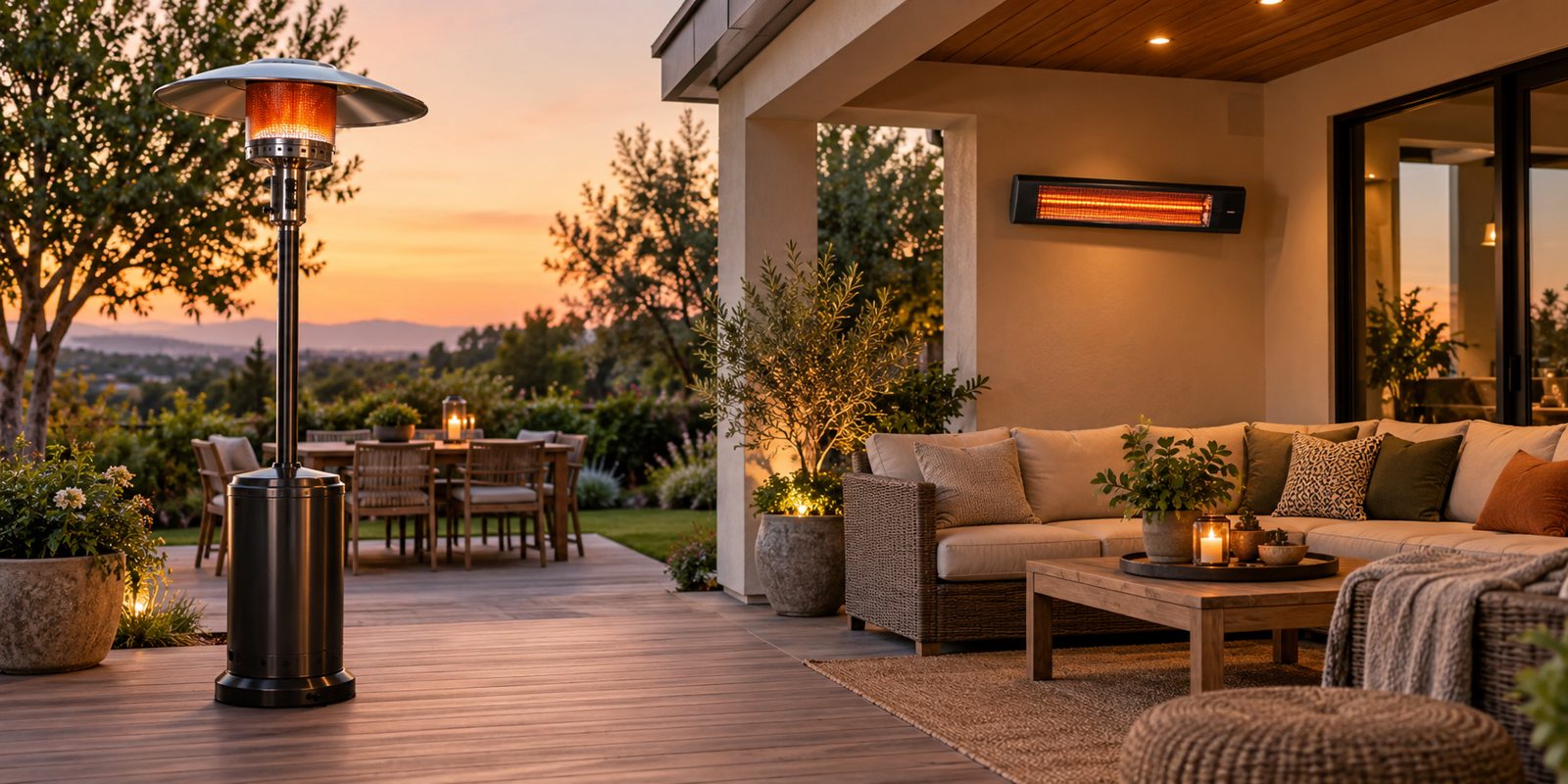
A patio heater can add weeks, even months, to your outdoor season. The first big decision is the fuel. A propane patio heater gives a lot of heat anywhere you can roll it, while an electric patio heater plugs in or is wired in and simply switches on. Both can be the right choice, but rarely for the same patio.
In this propane vs electric patio heater guide we compare heat output, real running costs, tank runtime, installation, safety and the places each type is allowed. We use official energy data and the manufacturer manuals, and we show every calculation so you can redo it with your own local prices.
Propane vs Electric Patio Heater at a Glance
| Factor | Propane patio heater | Electric patio heater |
|---|---|---|
| Typical output | 40,000–50,000 BTU (tower); 10,000–11,000 BTU (tabletop) | 1,500 W plug-in (about 5,100 BTU); 2,000–6,000 W hardwired |
| Best for | Open patios, decks and larger groups | Covered patios, small zones, balconies where allowed |
| Power source | 20 lb cylinder (tower) or 1 lb cylinder (tabletop) | 120 V outlet, or a 208–240 V circuit for larger models |
| Running cost | Higher per hour, because it makes much more heat | Lower per hour, but heats a smaller area |
| Fumes | Produces carbon monoxide; outdoors only | No combustion, no fumes |
| Portability | High: wheels, no cord | Low to medium: limited by cord or wiring |
| Under a roof | Only with the clearances and openings in the manual | Usually the better fit; follow mounting heights |
| Upkeep | Tank swaps, leak checks, burner cleaning | Little more than keeping it clean and dry |
The short version: propane wins on raw heat and freedom of placement, electric wins on convenience, running cost per hour and use under a roof. The rest of this guide explains why, so you can decide for your own patio.
How Each Type of Patio Heater Makes You Warm
The propane patio heater
Propane patio heaters burn gas behind a metal screen or inside a glass tube. The hot surface radiates heat, and the reflector on top of a tower sends it down and out in a circle. Some of the heat also warms the air, which rises and drifts away, especially when there is a breeze.
The infrared patio heater
Electric patio heaters for outdoor use are almost always infrared heaters. The U.S. Department of Energy explains that radiant heaters emit infrared radiation that directly heats objects and people within their line of sight. That is why an infrared patio heater feels warm on your skin almost instantly, even though the air around you stays cool.
Manufacturers of infrared heaters say their heat does not “blow away” in a draft the way warm air does. That is a manufacturer claim, but it matches the physics: radiant heat travels in a straight line, so aim matters more than air temperature.
In practice this means a propane tower warms a circle around it, while an electric infrared heater warms whatever it points at. Both work best when people sit within a few feet of the heat source.
Heat Output: BTU vs Watts
Propane heaters are rated in BTU per hour, electric heaters in watts. To compare them, use the EIA conversion: 1 kilowatt-hour equals 3,412 BTU. So 1 watt of electric heat equals about 3.4 BTU per hour.
| Heater | Rated input | BTU per hour | Compared with 1,500 W |
|---|---|---|---|
| Plug-in electric | 1,500 W | about 5,100 | 1× |
| Hardwired electric | 3,000 W | about 10,200 | 2× |
| Hardwired electric | 6,000 W | about 20,500 | 4× |
| Propane tabletop | 11,000 BTU | 11,000 | about 2× |
| Propane tower | 46,000 BTU | 46,000 | about 9× |
| Propane tower | 48,000 BTU | 48,000 | about 9.4× |
These are our own conversions from the rated input. On paper, a propane tower is in a different league. In reality the gap is smaller than the numbers suggest, because a well-aimed infrared heater wastes less of its heat on the air. Still, if you want to warm a group of six to eight people on an open deck, propane is usually the only practical option. Our patio heater BTU guide shows how much heat your space needs.
Patio Heater Running Cost per Hour
In any propane vs electric patio heater comparison, running cost is where the two types differ most in daily life. The patio heater running cost depends on your local energy prices, so we show the formula and an example with national averages. Redo it with the numbers on your own bill or receipt.
Electric patio heater
Cost per hour = kilowatts × price per kWh. The EIA lists an average U.S. residential electricity price of 18.31 cents per kWh for July 2026. A 1,500 W heater uses 1.5 kWh per hour: 1.5 × $0.1831 ≈ $0.27 per hour. A 3,000 W heater costs about twice that.
Propane patio heater
Cost per hour = gallons per hour × price per gallon. The EIA puts propane at 91,452 BTU per gallon, so a 46,000 BTU heater on full burns about 0.5 gallons per hour. At the EIA residential average of $2.674 per gallon (bulk delivery, March 2026), that is about $1.35 per hour.
Cylinder refills and tank exchanges usually cost more per gallon than bulk delivery. The simplest way to calculate your real cost: divide what you pay for a full tank by the hours it lasts. For example, if a refill costs you $25 and the tank runs nine hours, you pay about $2.80 per hour. The $25 is only an example; use your own price.
| Heater | Energy use per hour | Example cost per hour |
|---|---|---|
| 1,500 W electric | 1.5 kWh | about $0.27 |
| 3,000 W electric | 3 kWh | about $0.55 |
| 46,000 BTU propane, bulk price | about 0.5 gal | about $1.35 |
| 46,000 BTU propane, $25 refill | about 1/9 of a tank | about $2.80 |
Per unit of heat, propane at bulk prices is actually cheaper than electricity: roughly $29 per million BTU versus about $54 for electricity, by our calculation from the same EIA prices. Propane only costs more per hour because the heater produces so much more heat.
How Long Does a 20 lb Propane Tank Last?
Many listings promise “up to 10 hours” on a 20 lb cylinder. The math shows where that number comes from, and why your tank may run out sooner.
- A full 20 lb cylinder holds about 4.7 gallons, which is roughly 430,000 BTU (our calculation from the EIA figure).
- At full power, a 46,000 BTU heater runs about 9.3 hours and a 48,000 BTU heater about 9 hours.
- On a lower setting the tank lasts longer, which explains the “up to 10 hours” claims.
- Blue Rhino states that its exchange grill tanks contain 15 lb of propane, not 20 lb. At 48,000 BTU, that is closer to 6.5–7 hours.
- A 1 lb cylinder on an 11,000 BTU tabletop heater lasts roughly two hours, according to Cuisinart.
Keep a spare tank if you entertain often, but store it away from the heater. The Mr. Heater manual warns not to store a spare cylinder under or near the appliance.
Installation and Power Supply
Propane
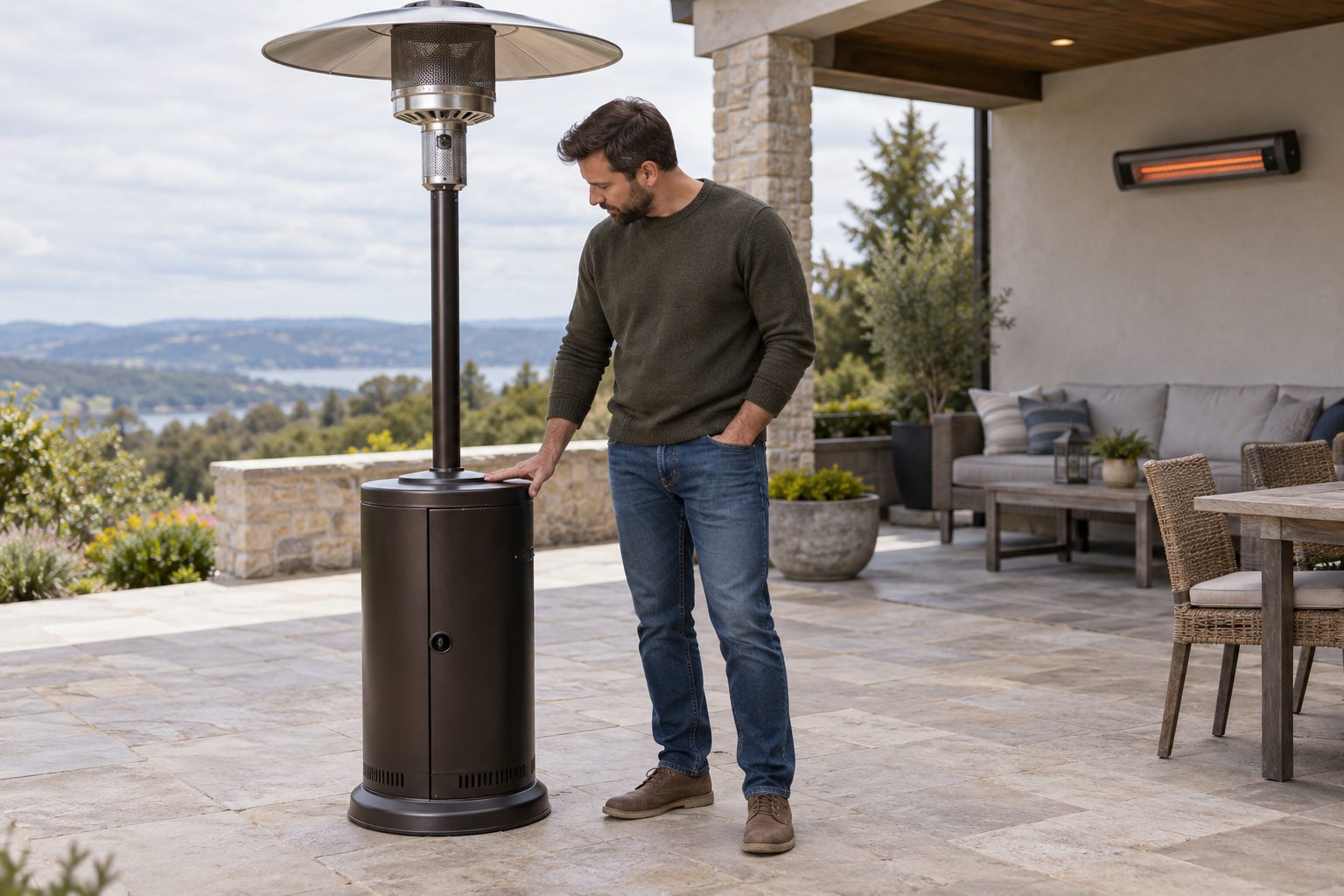
A tower heater needs assembly, a leak test with soapy water on every new connection, and a level, stable surface. After that you can roll it wherever the clearances in the manual allow. No electrician is needed.
Electric
Most plug-in patio heaters are limited to 1,500 W on a standard 120 V outlet. The heater manuals we read say to plug it directly into a wall outlet and never use an extension cord. Outdoor outlets must be GFCI protected; the CPSC notes this has been required for outdoor receptacles since 1973.
For more heat, hardwired infrared heaters run from about 2,000 to 6,000 W on 208–277 V, depending on the model. Infratech warns that a 240 V heater connected to 208 V produces only about 60% of its intended infrared output, so check your supply voltage. Hardwiring is a job for a licensed electrician.
Safety Rules: Covered Patios, Balconies and Fumes
This is where the two types differ most. The Amazon Basics propane heater manual is clear: outdoor use only, never inside a building, garage or other enclosed area, because the heater produces odorless carbon monoxide. Propane manuals also list minimum clearances to combustible materials, typically 24 to 36 inches above the heater and 24 to 36 inches at the sides.
- Covered patios: propane is only allowed under a roof when the space meets the opening rules in the manual. Electric infrared heaters are designed for mounting under a roof, with their own minimum heights and clearances. An infrared patio heater is the usual choice here. Read our guide to using a patio heater under a covered patio before you buy.
- Apartment balconies: NFPA 1, as quoted by the Nashville Fire Department, bans grills and similar devices used for cooking, heating or any other purpose on balconies of buildings other than one- and two-family homes. Many cities also limit propane on balconies to 1 lb cylinders. An electric heater is often the only option there, but check your lease or HOA rules first.
- Tip-over protection: look for an automatic tilt or tip-over shut-off on propane towers and electric heaters. The Department of Energy recommends a tip-over switch for space heaters.
- Children and pets: both types have hot surfaces. Place them where nobody can bump into them and never leave them running unattended.
Wind, Weather and Comfort
Wind is the biggest enemy of patio heat. Several propane manuals, including Fire Sense and Amazon Basics, say not to use the heater when the wind is above 10 mph. A propane heater also loses warm air with every gust.
An infrared patio heater handles a light breeze better, because it warms you directly rather than the air. It will not make a windy, open deck cozy, though. Whichever type you choose, a windbreak such as a hedge, screen or row of large planters makes a noticeable difference. Our winter patio ideas include more ways to stay warm outside.
Rain matters too. The Dr Infrared DR-238 is IP55 rated for indoor and outdoor use, but many electric heaters are meant to sit under a roof or weather cover. Propane heaters should be covered or stored after use to keep water out of the burner and controls.
Propane vs Electric Patio Heater Pros and Cons
Propane patio heater
- High output, ideal for open spaces and groups
- No outlet or electrician needed
- Easy to move around the patio
- Classic tower look many people like
- Higher cost per hour of use
- Tanks to buy, refill, carry and store
- Produces carbon monoxide; strict clearance and ventilation rules
- Often not allowed on apartment balconies
Electric patio heater
- Lower running cost per hour
- No fumes, so suitable under a roof when installed correctly
- Instant heat at the flip of a switch
- Wall, ceiling, tabletop and tower options
- A 1,500 W plug-in model only warms a small zone
- Needs a GFCI-protected outdoor outlet nearby
- Larger models need hardwiring by an electrician
- Some models need protection from rain
Propane vs Electric Patio Heater: Which One Should You Choose?

Still unsure about propane vs electric patio heater options? Many households end up with both: a fixed electric heater under the covered part of the patio and a propane tower they roll out for parties in the open garden.
Real-Life Scenarios
| Situation | Best fit | Why |
|---|---|---|
| Open deck, 6–8 guests | Propane tower | Highest output; no outlet needed |
| Covered porch with two chairs | Electric infrared, wall mounted | No fumes; heat aimed at the seats |
| Apartment balcony | Electric, if allowed | Propane is often banned on balconies |
| Restaurant-style outdoor dining at home | Several propane towers or hardwired electric | Even heat over a larger area |
| Bistro set on a terrace | Tabletop heater | Small zone, easy to store |
| Partly covered patio | Electric under the roof, propane in the open part | Each type where it works best |
What About Natural Gas Patio Heaters?
If your home already has a natural gas line, a permanently installed natural gas heater is a third option. It has the high output of propane without tank swaps, but it needs a professional gas installation and cannot be moved. The same carbon monoxide and clearance rules apply as for propane. For most patios the choice still comes down to propane vs electric, which is why we focus on those two here.
Common Mistakes to Avoid
- Buying a 1,500 W heater for a large open patio and expecting it to warm everyone.
- Using a propane heater in a closed-in porch or garage. This is a carbon monoxide risk.
- Running an electric heater on an extension cord, which the manuals forbid.
- Placing a propane tower under an umbrella, awning or low pergola without checking the clearances.
- Forgetting the leak test after connecting a new tank.
- Comparing heaters only on BTU or watts and ignoring wind, roof and seating distance.
Patio Heaters to Consider
These models appear in our best patio heaters comparison, where we compare specifications, clearances and trade-offs in more detail.
| Heater | Type | Best for | Link |
|---|---|---|---|
| Amazon Basics 46,000 BTU | Propane tower | Open patios, all-round use | View on Amazon |
| Fire Sense 62785 (48,000 BTU) | Propane tower | Open-air entertaining | View on Amazon |
| Cuisinart COH-500 (11,000 BTU) | Propane tabletop | Small table for two to four | View on Amazon |
| Dr Infrared DR-238 (1,500 W) | Electric infrared, wall or ceiling | Covered patios and porches | View on Amazon |
| EAST OAK 1500W tower | Electric, freestanding | Small patios with an outlet | View on Amazon |
| EAST OAK 1200W | Electric, under-table | Warm legs under a dining table | View on Amazon |
Prices and availability on Amazon change often. Always check the product listing and manual for the current clearances, output and certifications before you buy.
Frequently Asked Questions
Is a propane or electric patio heater better?
Neither is better everywhere. A propane patio heater is better for open patios and larger groups because of its high output and portability. An electric patio heater is better under a roof, on balconies where propane is not allowed and for small seating areas.
Is an electric patio heater cheaper to run than propane?
Per hour, yes: the patio heater running cost of electric is lower. With the July 2026 EIA average electricity price, a 1,500 W heater costs about $0.27 per hour, while a 46,000 BTU propane heater costs roughly $1.35 per hour at bulk propane prices and more with cylinder refills. The propane heater does produce far more heat in that hour.
Are electric patio heaters as warm as propane?
A 1,500 W electric heater produces about 5,100 BTU per hour, roughly one ninth of a 46,000 BTU propane tower. Because infrared heat is aimed directly at you, it feels warmer than that number suggests at close range, but it cannot match a propane tower for a group on an open patio.
How long will a 20 lb propane tank last on a patio heater?
About nine hours at full power on a 46,000 to 48,000 BTU heater, and longer on a low setting. Exchange tanks that contain 15 lb of propane run out sooner, at roughly six and a half to seven hours on full.
Can I use a propane patio heater on a covered patio?
Only if the space meets the ventilation and clearance rules in the heater manual, such as enough open wall area and enough distance to the ceiling. Never use one in an enclosed porch or garage. See our covered patio guide for the details.
Can I use an electric patio heater in the rain?
Only if the heater is rated for it. Some models, such as the Dr Infrared DR-238, are IP55 rated, but many electric heaters should be mounted under a roof or weather cover. Always plug into a GFCI-protected outdoor outlet.
Do electric patio heaters need a special outlet?
A 1,500 W plug-in heater uses a standard 120 V outdoor outlet with GFCI protection. Larger infrared heaters of 2,000 to 6,000 W are hardwired to a 208–277 V circuit by an electrician.
Can I use a patio heater on an apartment balcony?
Propane is often not allowed. NFPA 1 bans heating devices on balconies of multifamily buildings, and many cities limit propane on balconies to 1 lb cylinders. An electric heater may be allowed, but check your lease, HOA and local fire code.
Which patio heater is best in wind?
Neither works well in strong wind, and many propane manuals say not to use the heater above 10 mph. An infrared electric heater loses less heat to a light breeze because it warms people instead of air, and a windbreak helps both types.
Are infrared patio heaters safe?
Electric infrared heaters produce no fumes, which makes them suitable for covered spaces when mounted at the height and clearances in the manual. Keep combustible materials away from the front of the heater, as the manuals require.
What is the difference between a gas and a propane patio heater?
Propane is a type of gas sold in portable cylinders. “Gas patio heater” can mean propane or natural gas. A natural gas heater is permanently connected to your home gas line, so it never needs refilling but cannot be moved.
Is a propane or electric patio heater safer?
In a propane vs electric patio heater safety comparison, electric wins under a roof because it produces no carbon monoxide. Both types have hot surfaces, so keep the clearances from the manual, choose a model with tip-over protection and never leave either heater running unattended.
Do propane patio heaters smell?
A properly working propane heater should not smell strongly. A gas smell can mean a leak. Turn off the cylinder valve, extinguish any flame and check the connections with soapy water before using the heater again.
Final Thoughts
The propane vs electric patio heater question has a clear answer once you look at your space. For an open patio and a group of friends, a propane tower delivers the most heat and goes wherever you need it. For a covered patio, a porch or a balcony, an electric infrared patio heater is cleaner, has a lower running cost per hour and often the only safe or permitted option.
Start with where you sit, how many people you want to warm and whether there is a roof above you. Then check the manual for clearances before you buy. Ready to compare models? Head to our best patio heaters guide.
Sources
- EIA: British thermal units (BTU)
- EIA: Electric Power Monthly, average retail price of electricity
- EIA: Heating oil and propane update
- U.S. Department of Energy: Small space heaters
- Infratech: FAQs
- Bromic: Tungsten Smart-Heat Electric
- CPSC: GFCI fact sheet
- Mr. Heater MH48PH patio heater manual
- Fire Sense patio heater manual (60262)
- Amazon Basics propane patio heater manual
- Blue Rhino: How much propane is in a tank?
- U-Haul: 20 lb propane tank
- Cuisinart COH-500 tabletop patio heater
- Nashville Fire Department: Grills on balconies (NFPA 1)
- Consumer Reports: Patio heater options