How Many BTUs Do You Need for a Patio Heater? A Simple Sizing Guide
Find the right patio heater BTU for your space: what manufacturers say their heaters really cover, why the popular “20 BTU per square foot” rule falls short, how to size electric heaters in watts, how many patio heaters you need and how wind, roof and mounting height change the answer.
Affiliate disclosure: This guide contains affiliate links to Amazon and links to our buying guides. As an Amazon Associate, we earn from qualifying purchases at no additional cost to you.
You found a patio heater you like, the listing says 46,000 BTU, and now the real question begins: is that enough for your patio, or far too much? Patio heater BTU numbers are easy to compare but hard to translate into “will we be warm at the table?”
This guide makes that translation simple. We collected the coverage claims manufacturers make for their own propane and electric heaters, turned them into easy rules of thumb, and added a sizing table by patio size. You will also learn how many patio heaters you need for a bigger space and which factors make a heater feel stronger or weaker than its rating.
What Does Patio Heater BTU Mean?
BTU stands for British thermal unit. The EIA defines one BTU as the heat needed to raise the temperature of one pound of water by one degree Fahrenheit. The patio heater BTU figure on a label is the fuel the burner uses per hour at its highest setting. It tells you how much heat the heater can release, not how much of that heat reaches your guests.
Electric heaters are rated in watts. To compare them with propane, use the EIA conversion of 3,412 BTU per kilowatt-hour: 1 watt equals about 3.4 BTU per hour.
| Electric heater | BTU per hour (approx.) |
|---|---|
| 1,500 W | 5,100 |
| 2,000 W | 6,800 |
| 3,000 W | 10,200 |
| 4,000 W | 13,600 |
| 6,000 W | 20,500 |
These are our own conversions. As you will see below, a watt of well-aimed infrared heat usually does more for comfort than the same number of BTU from a propane tower, so do not compare the two types on BTU alone.
Why the “20 BTU per Square Foot” Rule Falls Short
Many buying guides, including those of large retailers, say you need about 20 BTU per square foot of patio. By that rule, a 48,000 BTU heater would warm 2,400 square feet, the size of a large house. No mainstream manufacturer we checked makes that claim for a single propane tower.
The rule appears to come from indoor heating, where walls and a roof keep warm air in. Outdoors, warm air rises and drifts away, so you need far more heat per square foot. At least one widely shared patio heater sizing table online is identical to the ENERGY STAR sizing chart for room air conditioners, which says a lot about how reliable these tables are.
Our advice: ignore BTU-per-square-foot rules that are not linked to real heaters. Start from the area manufacturers say their heater covers, then adjust for wind, roof and how warm you want to be.
What Patio Heaters Really Cover: Manufacturer Claims
We collected the coverage claims for common heater types. “Implied BTU per sq ft” is our own calculation from each claim.
| Heater | Output | Claimed coverage | Implied BTU per sq ft |
|---|---|---|---|
| Fire Sense Commercial 61185 (tower) | 46,000 BTU | 18 ft diameter (about 254 sq ft) | about 181 |
| Living Accents KD07-S (tower) | 47,000 BTU | 250 sq ft | about 188 |
| Sun Joe SJPPH48 (tower) | 48,000 BTU | 250 sq ft, 9 ft radius | about 192 |
| Bromic Tungsten Portable | 38,500 BTU | 215 sq ft | about 179 |
| Bromic Tungsten 500 (mounted gas) | 43,000 BTU | 215 sq ft | about 200 |
| Napoleon PTH11PSS (tabletop) | 10,000 BTU | 7 ft diameter (about 38 sq ft) | about 260 |
| Cuisinart COH-500 (tabletop) | 11,000 BTU | 30 sq ft (U.S. site) | about 367 |
| Mr. Heater 48,000 BTU (tower) | 48,000 BTU | 1,200 sq ft | about 40 |
Most patio heater BTU claims cluster around 180 to 260 BTU per square foot. The Mr. Heater claim is a clear outlier; its own low-profile model lists two different coverage figures, so treat very large claims with caution. Cuisinart even states 30 square feet on its U.S. site and 100 on its Canadian site for the same tabletop heater.
Patio Heater BTU Rules of Thumb
How many BTU do you need in practice? Based on the manufacturer claims above, these patio heater BTU rules give a realistic starting point for a propane or gas heater on a sheltered patio on a cool evening:
| Heater type | Typical output | Realistic coverage |
|---|---|---|
| Tabletop | 10,000–11,000 BTU | One small table, 30–40 sq ft |
| Mounted gas (wall or eave) | 25,000–43,000 BTU | About 100–215 sq ft |
| Freestanding tower | 40,000–50,000 BTU | About 200–250 sq ft, 16–18 ft across |
| Two towers | 80,000–100,000 BTU | About 400–500 sq ft |
Rule of thumb: plan about 200 BTU per square foot of seating area for propane. Need more warmth because it is windy or near freezing? Plan on the higher end, or add a second heater instead of buying one with a higher rating.
Patio Heater Size Chart: How Many BTU for Your Patio?
To find the right patio heater size, use the area where people actually sit, not the size of the whole patio. A 20 by 20 foot patio with one dining table in the corner only needs heat around that table.
| Seating area | Example | Propane option | Electric option (covered) |
|---|---|---|---|
| Up to 40 sq ft | Bistro table for two | One 10,000–11,000 BTU tabletop heater | One 1,500 W heater aimed at the seats |
| About 100 sq ft | 10 × 10 ft seating corner | One 40,000–48,000 BTU tower | 2,000–3,000 W |
| 150–250 sq ft | 12 × 16 ft dining area | One 46,000–50,000 BTU tower | 4,000–6,000 W, or two heaters |
| 300–500 sq ft | 16 × 24 ft entertaining space | Two towers | Three to four hardwired heaters |
The electric column assumes 20 to 30 watts per square foot, based on the Solaira guidance explained in the next section. For an open, unsheltered patio, choose the upper end of each range.
Sizing an Electric Patio Heater in Watts
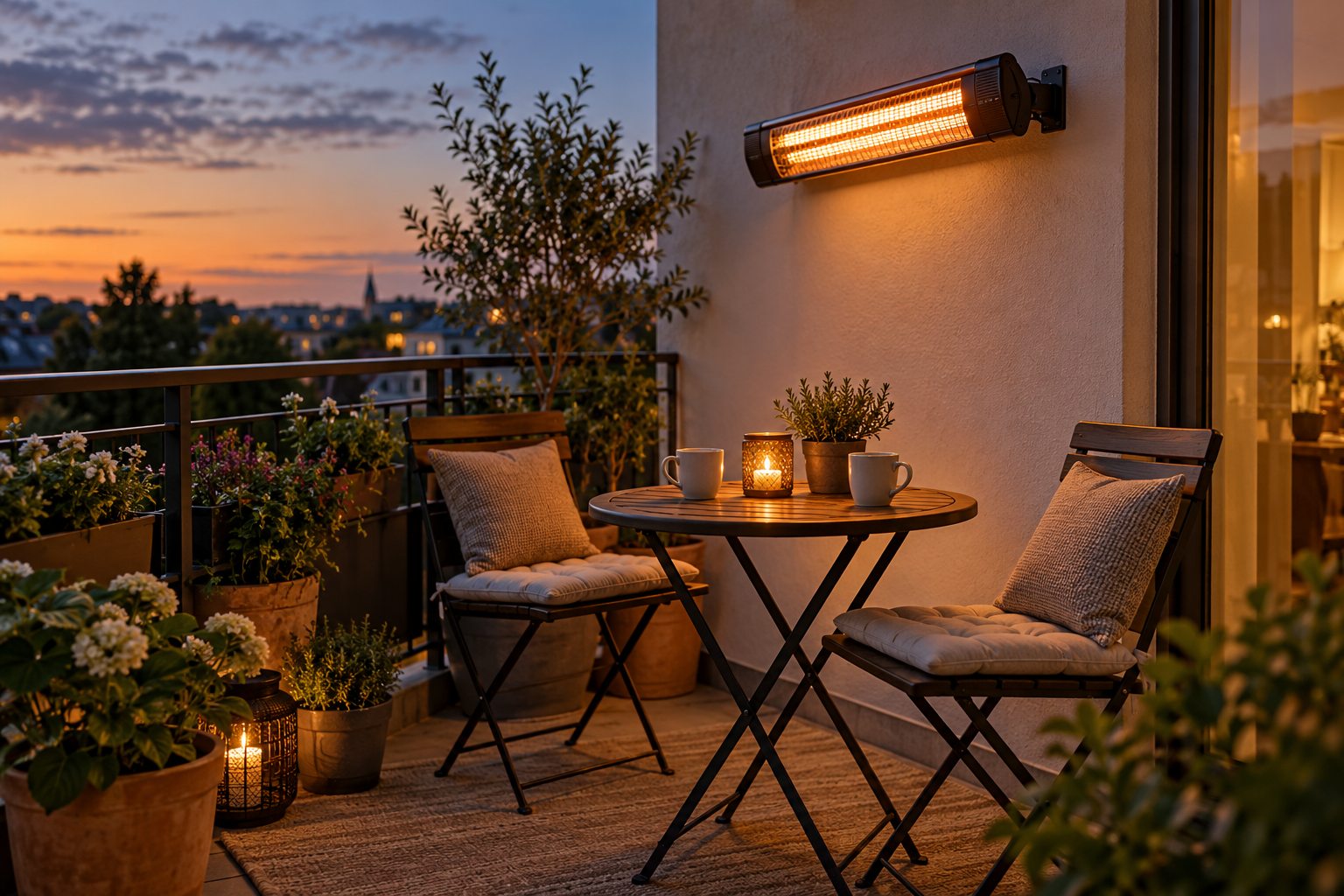
Electric infrared heaters are sized in watts per square foot. Solaira publishes a “recommended heat density” for a comfort increase of about 10°F:
| Setting | Mounted 6′7″–10′ | Mounted 10′–14′ |
|---|---|---|
| Outdoor, enclosed or sheltered | 15–20 W per sq ft | 21–24 W per sq ft |
| Outdoor, open | 20–30 W per sq ft | Not recommended |
For a 15°F increase, Solaira says to multiply these figures by 1.5; for 20°F, by 2.0. Manufacturer coverage claims point the same way:
- Infratech: a 1,500 W heater covers about 5 × 5 ft at a mounting height of 6–7 ft, while a 6,000 W heater covers about 11 × 11 ft at 8–12 ft.
- Bromic Tungsten Electric: 2,000, 3,000, 4,000 and 6,000 W models cover about 65, 100, 130 and 160 sq ft.
- Solaira: a 1.5 kW heater mounted at about 8 ft gives roughly 64 sq ft of effective heat.
A plug-in heater on a standard 120 V outlet is limited to 1,500 W. Infratech says a 120 V heater is fine for outdoor spaces no larger than about 5 by 5 feet. For more, you need 240 V models, installed by an electrician. Infratech also warns that a 240 V heater connected to 208 V gives only about 60% of its intended output.
How to Choose the Right Patio Heater BTU in 4 Steps
How Many Patio Heaters Do You Need?
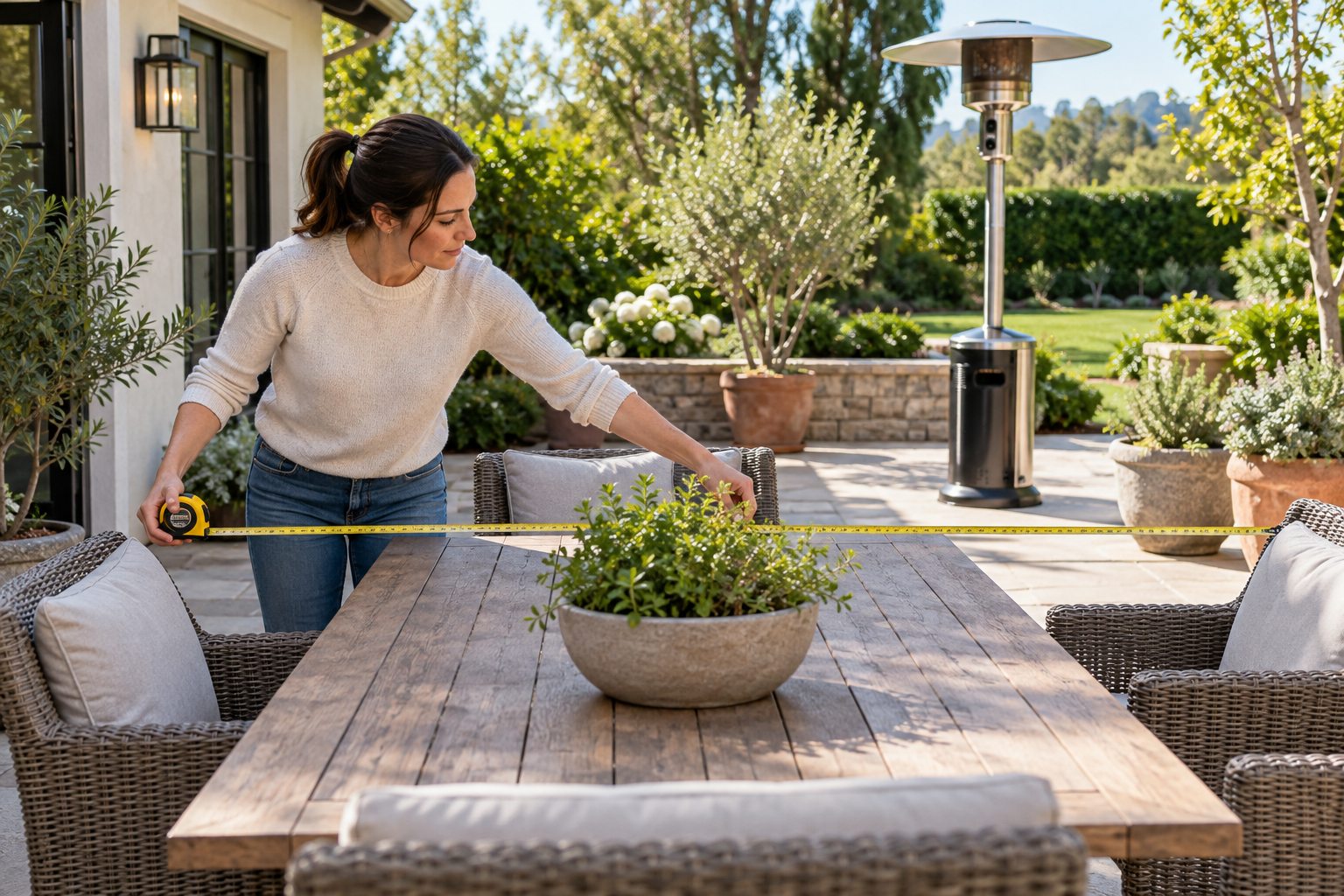
Bromic suggests a simple method: divide the area you want to heat by the coverage of one heater. If one heater covers about 215 square feet and your seating area is 400 square feet, you need two.
When you work out how many patio heaters to buy, remember that two smaller heaters also spread the warmth more evenly than one big one. With a single tower in the middle of a long table, the people at the ends stay cold. Place heaters so that their circles overlap slightly over the seats, not over the walkways.
| Seating area | Propane towers (about 215–250 sq ft each) | Electric 3,000 W (about 100 sq ft each) |
|---|---|---|
| 200 sq ft | 1 | 2 |
| 300 sq ft | 2 | 3 |
| 400 sq ft | 2 | 4 |
| 600 sq ft | 3 | 6 |
These counts are our own calculations from the manufacturer coverage claims. For electric heaters, larger 4,000 to 6,000 W models reduce the number you need.
What Changes How Warm a Patio Heater Feels
- Wind: several propane manuals say not to use the heater above 10 mph, and Bromic rates its portable heater for winds up to 8 mph. Even a light breeze carries warm air away, so add a windbreak where you can.
- Roof and walls: Infratech says sheltered spaces generally exceed the average coverage, and Bromic notes that covered terraces lose less heat. A covered patio often needs a smaller heater.
- Outdoor temperature: Bromic rates its gas heater coverage at about 60°F in a low-wind covered space. On a 40°F evening, plan for more heat or more heaters.
- Mounting height: wall and ceiling heaters need a minimum height for safety, but the higher you mount them, the weaker the heat at seat level. Infratech pairs higher wattages with higher mounting heights.
- Distance to the seats: radiant heat drops quickly with distance. Put the heater close to where people sit, within the clearances in the manual.
Propane.com says propane patio heaters can raise the outdoor temperature around them by up to 25°F. Treat that as a best case on a calm, sheltered evening.
Patio Heater BTU and Fuel Use
A higher patio heater BTU rating means more heat, but also more fuel. A full 20 lb propane cylinder holds about 4.7 gallons, or roughly 430,000 BTU by our calculation from the EIA figure of 91,452 BTU per gallon.
| Heater output on full | Runtime on a full 20 lb tank |
|---|---|
| 30,000 BTU | about 14 hours |
| 40,000 BTU | about 10.8 hours |
| 46,000 BTU | about 9.3 hours |
| 48,000 BTU | about 9 hours |
| 50,000 BTU | about 8.6 hours |
A 1 lb cylinder on a 10,000 to 11,000 BTU tabletop heater lasts about two to three hours, according to Napoleon, Fire Sense and Cuisinart. Our propane vs electric patio heater guide shows what this means for your running costs.
Worked Examples
Bistro set on a balcony
Two chairs and a small table take up about 30 square feet. If your building allows it, a 1,500 W electric heater aimed at the seats is enough. Propane is often not allowed on apartment balconies, so check the rules first.
Open deck with a dining table for six
How many BTU for this deck? The table and chairs cover about 12 × 14 feet, or 168 square feet. At about 200 BTU per square foot, that is roughly 34,000 BTU, so one 46,000 to 48,000 BTU tower in a sheltered spot works. On a windy deck, place two smaller heaters at the ends of the table.
Covered patio with a lounge set
A 10 × 12 foot seating area is 120 square feet. Under a roof, 15 to 20 W per square foot gives 1,800 to 2,400 W. Two 1,500 W heaters mounted on opposite sides, or one hardwired 2,000 to 3,000 W heater, would fit. Read our guide on using a patio heater under a covered patio for the mounting rules.
Common Patio Heater Sizing Mistakes
- Sizing for the whole patio instead of the seating area.
- Trusting the 20 BTU per square foot rule, which leads to heaters that are far too small.
- Expecting one 1,500 W plug-in heater to warm a whole dining area.
- Buying one very large heater for a long table instead of two smaller heaters at the ends.
- Forgetting that wind can make even a 48,000 BTU tower feel weak.
- Choosing a heater that is too powerful for the ceiling height of a covered patio.
Patio Heaters by Size
Matching patio heater size to your seating area is easier with real models. These models are part of our best patio heaters comparison, where you will find specifications and trade-offs for each one.
| Seating area | Heater | Output | Link |
|---|---|---|---|
| Small table | Cuisinart COH-500 tabletop | 11,000 BTU | View on Amazon |
| Small covered zone | Dr Infrared DR-238 | 1,500 W | View on Amazon |
| Small zone with outlet | EAST OAK 1500W tower | 1,500 W | View on Amazon |
| 200–250 sq ft, open | Amazon Basics propane tower | 46,000 BTU | View on Amazon |
| 200–250 sq ft, open | Sunjoy Avanti propane tower | 47,000 BTU | View on Amazon |
| 200–250 sq ft, open | Fire Sense 62785 | 48,000 BTU | View on Amazon |
Coverage on Amazon listings is not always stated or consistent, so compare the output with the size chart above and check the manual for clearances before you buy.
Frequently Asked Questions
How many BTUs do I need for a patio heater?
For a seating area of about 200 to 250 square feet, a 40,000 to 50,000 BTU propane tower is the standard choice. For one small table, a 10,000 to 11,000 BTU tabletop heater is enough. As a rule of thumb, plan about 200 BTU per square foot of seating area for propane.
What patio heater size do I need for a dining table for six?
A table for six with chairs takes up about 170 square feet. At about 200 BTU per square foot, that is roughly 34,000 BTU, so one 46,000 to 48,000 BTU tower in a sheltered spot is the right patio heater size. On a windy deck, use two smaller heaters at the ends.
How much area does a 46,000 BTU patio heater cover?
Manufacturers of 46,000 to 48,000 BTU towers usually claim about 250 square feet, or a circle of about 18 feet across. Fire Sense, for example, states 18 feet in diameter for its 46,000 BTU commercial heater.
Is 40,000 BTU enough for a patio heater?
For a seating area of up to about 200 square feet on a sheltered patio, yes. On a windy, open deck or for a larger group, choose a higher output or use two heaters.
How many BTU is a 1,500 W electric patio heater?
About 5,100 BTU per hour, using the EIA conversion of 3,412 BTU per kilowatt-hour. Because infrared heat is aimed directly at you, it warms a small zone effectively, usually around 25 to 65 square feet.
How many patio heaters do I need for 400 square feet?
About two propane towers, or roughly four 3,000 W electric heaters. Divide your seating area by the coverage of one heater, as Bromic recommends, and place the heaters so their warm zones overlap over the seats.
What size patio heater do I need for a 10 × 10 patio?
A 10 × 10 patio is 100 square feet. One 40,000 to 48,000 BTU propane tower is plenty for that area on an open patio. Under a roof, a 2,000 to 3,000 W electric infrared heater is a good fit.
Is the 20 BTU per square foot rule correct for patio heaters?
No. By that rule a 48,000 BTU heater would heat 2,400 square feet, while most manufacturers claim about 200 to 250 square feet. Outdoors, warm air escapes, so you need much more heat per square foot than indoors.
Does a higher BTU patio heater use more propane?
Yes. A 50,000 BTU heater on full empties a 20 lb tank in about 8.6 hours, while a 40,000 BTU heater lasts about 10.8 hours, by our calculation. Running on a lower setting extends the runtime.
How far away should I sit from a patio heater?
Within the warm zone, usually about 9 feet from the center of a 46,000 to 48,000 BTU tower, but never closer than the clearances in the manual. For electric heaters, follow the minimum distance to people and combustibles in front of the heater.
Can a patio heater be too powerful?
Yes, especially under a roof. A heater that is too strong for the ceiling height can be uncomfortable and may not meet the clearances in the manual. Choose the output that fits your seating area and mounting height.
Do covered patios need fewer BTUs?
Usually. Infratech and Bromic both say sheltered spaces lose less heat, and Solaira recommends a lower heat density for enclosed outdoor spaces. A roof also changes which heaters you are allowed to use, so check the safety rules.
Final Thoughts
The right patio heater BTU is not about the biggest number on the box, and the right patio heater size depends on where you sit. Measure where you sit, plan about 200 BTU per square foot for propane or 15 to 30 watts per square foot for electric, and adjust for wind, roof and cold. For larger spaces, two smaller heaters almost always beat one big one.
Once you know the size you need, compare models in our best patio heaters guide, and read our propane vs electric comparison if you have not chosen a fuel yet.
Sources
- EIA: British thermal units (BTU)
- Solaira: FAQs and recommended heat density
- Infratech: Getting started coverage chart
- Infratech: FAQs
- Bromic: Tungsten Smart-Heat Electric
- Bromic: How many patio heaters do I need?
- Bromic Tungsten Smart-Heat Gas product brief
- Fire Sense Commercial 61185 (BBQGuys listing)
- Sun Joe SJPPH48 (Home Depot listing)
- Living Accents 47,000 BTU patio heater (Ace Hardware)
- Napoleon PTH11PSS tabletop heater (BBQGuys listing)
- Cuisinart COH-500
- Mr. Heater 48,000 BTU portable patio heater
- Propane.com: Patio heaters
- Lowe’s: Patio heater buying guide
- ENERGY STAR: Room air conditioners