
Fragrant Plants: 20 Scented Picks for Your Patio, Garden and Home
The best fragrant plants for outdoor living and indoors: fragrant flowers for patio containers, evening scented plants for summer nights, fragrant herbs you can brush past, scented houseplants, where to place them and which scented plants are toxic to pets.
Affiliate disclosure: This guide links to our buying guides, which contain affiliate links. As an Amazon Associate, we earn from qualifying purchases at no additional cost to you.
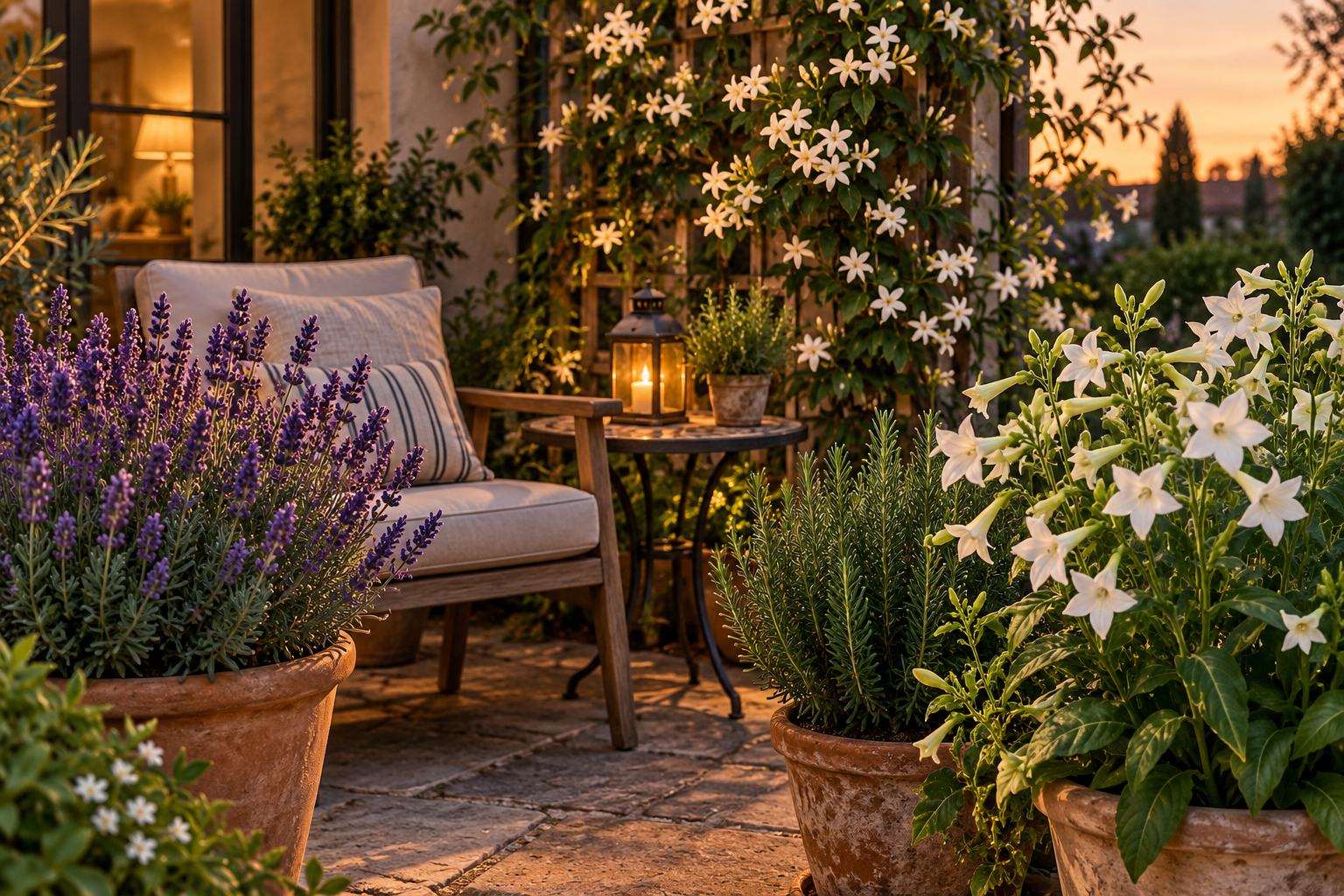
Scent is the most underrated part of a garden. A pot of lavender beside a chair, jasmine climbing a trellis or flowering tobacco opening at dusk can turn an ordinary patio into a place you want to linger. Fragrant plants also attract bees, butterflies and moths, adding life to your outdoor space.
This guide brings together 20 fragrant plants for patios, gardens and homes. You will find fragrant flowers for patio pots, evening scented plants that are at their best when you sit outside after dinner, fragrant herbs that release their scent when you brush past, and scented houseplants for a sunny window. We also add the safety warning the old version of this page was missing: lilies are extremely dangerous to cats.
Why Grow Fragrant Plants?
- A richer outdoor living space: scent makes a patio or balcony feel more relaxing and personal.
- Evening enjoyment: some flowers are most fragrant in the evening, exactly when many people sit outside.
- Pollinators: scented flowers attract bees, butterflies and moths.
- Useful herbs: fragrant herbs also end up in your kitchen.
- Memories: scents such as lavender, roses and honeysuckle are strongly linked to memories.
The old version of this page claimed that lavender helps against insomnia and that eucalyptus helps with respiratory problems. We cannot support those health claims with our sources, so we focus on what scented plants reliably do: make your space more pleasant.
20 Fragrant Plants at a Glance
| Plant | Type | Scent from | Source |
|---|---|---|---|
| Sweet alyssum | Annual | Flowers (honey) | Missouri |
| Flowering tobacco (Nicotiana) | Annual | Flowers, strongest in the evening | Missouri, Kentucky |
| Heliotrope | Annual | Flowers (vanilla) | Missouri |
| Stock | Annual | Flowers (clove) | Missouri |
| Dianthus | Annual or perennial | Flowers (clove) | Missouri |
| Garden phlox | Perennial | Flowers, potent on warm days | Missouri, Kentucky |
| Peony | Perennial | Flowers | Missouri |
| Rose | Shrub | Flowers | Missouri |
| Lily | Bulb | Flowers | Missouri |
| Clematis (fragrant types) | Vine | Flowers | Missouri |
| Native honeysuckle | Vine | Flowers | Kentucky |
| Sweet bay magnolia | Tree | Flowers, evening perfume | Kentucky |
| Lavender | Herb / shrub | Flowers and leaves | Missouri, Kentucky |
| Rosemary | Herb | Leaves (woodsy) | Missouri, Kentucky |
| Thyme (creeping) | Herb | Leaves, when walked on | Missouri, Kentucky |
| Mint | Herb | Leaves | Missouri |
| Basil | Herb | Leaves | Missouri |
| Agastache (hyssop) | Perennial | Flowers and leaves (anise) | Kentucky |
| Scented geranium | Tender perennial | Leaves | Missouri |
| Chamomile | Herb | Light, grassy scent | Kentucky |
Fragrant Flowers for Patio Pots and Beds
These fragrant flowers for patio containers and beds come from the Missouri and Kentucky lists:
| Flower | Why it works on a patio |
|---|---|
| Sweet alyssum | Low, spreading carpet of honey-scented flowers at the edge of pots |
| Heliotrope | Vanilla-scented purple flowers; ideal at nose height in a container |
| Stock | Spicy, clove-like scent; best in cool weather |
| Dianthus | Clove-scented flowers for edging and pots |
| Garden phlox | Kentucky notes a potent scent on warm days; buy in bloom to test the aroma |
| Roses | Choose varieties described as fragrant; compact types suit large pots |
| Lilies | Large, intensely scented flowers in summer, but toxic to cats (FDA) |
Missouri Extension recommends at least four to six hours of sun and good drainage for most scented plants, and grouping plants with similar needs. For heat-loving companions, see our guide to full sun plants.
Evening Scented Plants for Summer Nights
Evening scented plants are perfect for a patio you use after work. Kentucky Extension highlights two:
| Plant | Evening scent (Kentucky) | Tip |
|---|---|---|
| Flowering tobacco (Nicotiana) | Heavy, sweet scent that is strongest in the evening | Kentucky suggests planting the taller varieties |
| Sweet bay magnolia | Blooms in late spring release an evening perfume that can drift through an open window | Plant near a window or seating area |
Other popular evening scented plants include night-scented stock and moonflower vine (general gardening knowledge). Pale or white flowers are easiest to see at dusk. Add soft lighting and a patio heater to enjoy them longer; see our patio heater comparison and our tips for enjoying your patio in winter.
Fragrant Herbs You Can Brush Past
| Herb | Scent | Where to plant | Our guide |
|---|---|---|---|
| Lavender | Calming, floral; Kentucky notes the flowers are edible | Sunny, well-drained pot or border | See lavender care |
| Rosemary | Woodsy (Kentucky) | Container on a deck or patio | Grow in full sun |
| Thyme (creeping) | Releases scent when walked on (Kentucky) | Between paving stones | See thyme care |
| Mint | Fresh, cool | A pot of its own, because it spreads | See mint care |
| Basil | Sweet, spicy | Sunny pots near the kitchen | Warm weather only |
| Sage | Earthy | Sunny, dry spot | See sage care |
| Agastache | Anise from flowers and leaves (Kentucky) | Where visitors pass close by | Perennial |
| Scented geranium | Rose, lemon or mint scents from the leaves | Pots by a doorway | Bring in before frost |
Fragrant herbs release most of their scent when you touch them, so plant them next to paths, steps and chairs. See our guide to growing herbs indoors for windowsill options.
Fragrant Shrubs, Trees and Vines
- Sweet bay magnolia: evening-scented flowers in late spring (Kentucky).
- Native honeysuckle: sweet fragrance; Kentucky suggests letting native varieties trail over archways or walls.
- Fragrant clematis: listed by Missouri Extension; check that the variety you buy is scented.
- Roses: classic fragrant shrubs for sunny borders and large containers.
- Lilac: a much-loved spring scent; see when to trim lilac bushes.
- Jasmine: a fragrant climber for warm patios or a sunny conservatory.
Scented Houseplants
Scented houseplants bring scent to the home in winter. These care tips follow general houseplant practice:
| Plant | Light | Care tips |
|---|---|---|
| Jasmine (Jasminum polyanthum and others) | Bright light, some sun | A cool period in winter helps flower buds form |
| Gardenia | Bright light | Needs even moisture, humidity and acidic soil; often tricky indoors |
| Fragrant orchids | Bright, indirect light | Some orchids are scented; check the variety |
| Hyacinth (forced bulbs) | Bright light | Strong spring scent; discard or plant out after flowering |
| Scented geranium | Sunny window | Easy; rub the leaves to release scent |
| Citrus (dwarf) | Full sun | Fragrant flowers; summer outdoors, winter in a bright room |
Most scented houseplants need much more light than typical houseplants. A south- or west-facing window, or a summer outdoors on the patio, makes the difference between buds and no buds.
Where to Place Scented Plants
| Location | Best choices | Why |
|---|---|---|
| Next to seating | Heliotrope, nicotiana, lavender | You notice scent at close range |
| Along paths and steps | Thyme, rosemary, agastache, lavender | Brushing past releases scent |
| Under open windows | Sweet bay magnolia, phlox, roses | Scent drifts indoors (Kentucky) |
| Near the front door | Scented geranium, lavender in pots | A welcoming scent |
| Sheltered corners | Any fragrant plant | Missouri notes that a site protected from wind lets fragrance linger |
Safety: Scented Plants and Pets
Some scented plants are toxic. The old version of this page recommended lilies without any warning. The FDA warns that true lilies, including Easter, tiger, Asiatic, Oriental and stargazer lilies and daylilies, are extremely dangerous to cats: the whole plant, including pollen and even vase water, is toxic, and kidney failure can occur within 24 to 72 hours without treatment.
| Plant | Risk | Source |
|---|---|---|
| True lilies and daylilies | Kidney failure in cats | FDA |
| Angel’s trumpet (Brugmansia) | Toxic; avoid where pets or children are likely to be exposed | Missouri |
| Gardenia, eucalyptus | Commonly listed as toxic to pets | General veterinary guidance |
| Lavender, rosemary, basil, thyme | Commonly listed as low risk; large amounts can upset pets’ stomachs | General veterinary guidance |
The FDA advises calling your veterinarian or a pet poison control center immediately if a cat may have eaten any part of a lily. For more pet-friendly choices, see our guide to plants that bring positive energy, which includes a pet safety table.
Designing a Scented Patio
Raised beds bring flowers closer to your nose; see how to build a raised garden bed.
Scent Through the Seasons
With a little planning, your patio or garden can smell good for most of the year. This seasonal overview combines the plants from the sources above with general bloom times:
| Season | Outdoors | Indoors |
|---|---|---|
| Early spring | Hyacinths and other spring bulbs in pots | Forced hyacinths on a cool windowsill |
| Late spring | Lilac, sweet bay magnolia (evening), peonies, stock | Jasmine in a bright window |
| Summer | Lavender, roses, lilies, heliotrope, phlox, flowering tobacco | Scented geraniums, citrus flowers |
| Late summer to fall | Agastache, late roses, herbs such as rosemary and thyme | Move tender plants indoors before frost |
| Winter | Evergreen herbs such as rosemary in mild climates | Jasmine, gardenia and scented geraniums |
Exact timing depends on your climate and the varieties you choose. Overlapping bloom periods means there is almost always something in flower near your favorite seat.
Care Basics for Scented Plants
- Most scented plants need at least four to six hours of sun (Missouri).
- Good drainage is essential, especially for lavender and rosemary (Missouri, Kentucky).
- Group plants with similar needs for sun, fertility and moisture, as Missouri advises.
- Deadhead annuals such as heliotrope and stock to keep them flowering.
- Water containers regularly in summer; pots dry out faster than beds.
See our garden hose nozzle guide and how often to water your garden.
Fragrant Plants for Small Balconies
You do not need a garden to enjoy fragrance. These compact choices from the lists above suit a small balcony or patio (container sizes are general guidance):
| Plant | Container | Tip |
|---|---|---|
| Sweet alyssum | Window box or edge of a larger pot | Spills over the edge; honey scent |
| Heliotrope | Medium pot, about 10 to 12 inches | Place at table height |
| Lavender | Pot at least 12 inches wide, very well drained | Full sun; do not overwater |
| Creeping thyme | Shallow bowl or between pots | Brush it to release the scent |
| Scented geranium | Medium pot | Near the door; bring indoors before frost |
| Dwarf or patio rose | Large pot, at least 15 inches | Choose a variety labeled fragrant |
| Flowering tobacco | Large pot | Evening scent next to your chair |
On a windy balcony, group pots against a wall or screen so the scent lingers, as Missouri Extension advises for fragrant gardens in general.
Common Mistakes with Scented Plants
| Mistake | Why it hurts | Better approach |
|---|---|---|
| Planting in a windy spot | Scent blows away | Choose a sheltered site (Missouri) |
| Scented plants in deep shade | Few flowers, little scent | Give four to six hours of sun |
| Lilies in a home with cats | Life-threatening for cats (FDA) | Choose other fragrant flowers |
| Scent too far from seating | You hardly notice it | Plant near chairs, paths and windows |
| Too many strong scents together | Overwhelming | Limit to two or three at a time |
| Assuming every rose or clematis is fragrant | Many varieties are not | Check the label or buy in bloom |
What You Need
| Item | Why it helps | More information |
|---|---|---|
| Large containers with drainage holes | Fragrant flowers for patio pots | See our container gardening guide |
| Hose with gentle shower nozzle | Watering containers without damaging flowers | See our garden hose nozzle guide |
| Pruners | Deadheading and harvesting herbs | See our gardening tool sets guide |
| Gardening gloves | Pruning roses and handling plants | See our gardening gloves guide |
| Kneeling pad | Comfortable planting in beds | See our kneeling pad guide |
| Patio heater | Enjoy evening fragrance on cool nights | See our patio heater comparison |
| Retractable hose reel | Quick daily watering of balcony and patio pots | See our retractable garden hose guide |
Frequently Asked Questions
What are the most fragrant plants for a garden?
Popular choices include flowering tobacco, heliotrope, stock, dianthus, garden phlox, roses, lilies, lavender, native honeysuckle and sweet bay magnolia.
What are the best fragrant flowers for patio pots?
Sweet alyssum, heliotrope, stock, dianthus, lavender and compact fragrant roses work well in containers.
Which plants smell best in the evening?
Flowering tobacco has a heavy, sweet scent that is strongest in the evening, and sweet bay magnolia releases an evening perfume, according to Kentucky Extension.
What are the best fragrant herbs?
Lavender, rosemary, thyme, mint, basil, sage, agastache and scented geraniums.
What are good scented houseplants?
Jasmine, gardenia, fragrant orchids, forced hyacinths, scented geraniums and dwarf citrus, all in bright light.
Where should I plant scented flowers?
Near seating, paths, doorways and windows, in a spot sheltered from the wind so the scent lingers.
Are lilies safe for cats?
No. The FDA warns that all parts of true lilies, including pollen and vase water, can cause kidney failure in cats.
Is angel’s trumpet dangerous?
Yes. Missouri Extension warns it is toxic and should be avoided where pets or children are likely to be exposed.
How much sun do scented plants need?
Most need at least four to six hours of sun, according to Missouri Extension.
Why does my fragrant plant not smell?
It may not be a fragrant variety, it may need more sun, or the scent may be strongest at a different time of day.
Which scented plants attract pollinators?
Lavender, agastache, phlox, thyme, honeysuckle and flowering tobacco attract bees, butterflies and moths.
Does lavender help you sleep?
We cannot confirm this with our sources. Enjoy lavender for its scent and beauty rather than as a remedy.
What is the most fragrant flower?
Scent is personal, but lilies, jasmine, gardenia, heliotrope, flowering tobacco and old-fashioned roses are among the most strongly scented.
Will fragrant plants attract bees to my patio?
Yes, many will. That is good for pollinators, but if someone in your home is allergic to stings, place the most bee-friendly plants a little away from the door and seating.
Can I grow scented plants on a balcony?
Yes. Lavender, heliotrope, sweet alyssum, herbs and compact roses all grow well in containers on a sunny balcony.
Final Thoughts
Fragrant plants add a dimension that color alone cannot. Choose fragrant flowers for patio pots, a few evening scented plants near your seating and fragrant herbs along paths, and your outdoor living space will be a pleasure from morning to night.
Indoors, scented houseplants such as jasmine and scented geraniums bring that same feeling to a sunny window. Give your plants sun, shelter and good drainage, and keep safety in mind: no lilies in a home with cats.
Sources: University of Missouri Extension: fragrant plants give gardens an extra dimension; University of Kentucky Extension: draw them in with fragrance; U.S. Food and Drug Administration: lovely lilies and curious cats, a dangerous combination.
Back to contents ↑
