How to Create a Low-Maintenance Garden: Plants, Lawns and Smart Design
How to create a low-maintenance garden that looks good all year: smart low-maintenance landscaping, easy low-maintenance plants, the best types of lawns and lawn alternatives, and simple routines that save you hours every week.
Affiliate disclosure: This guide links to our buying guides, which contain affiliate links. As an Amazon Associate, we earn from qualifying purchases at no additional cost to you.
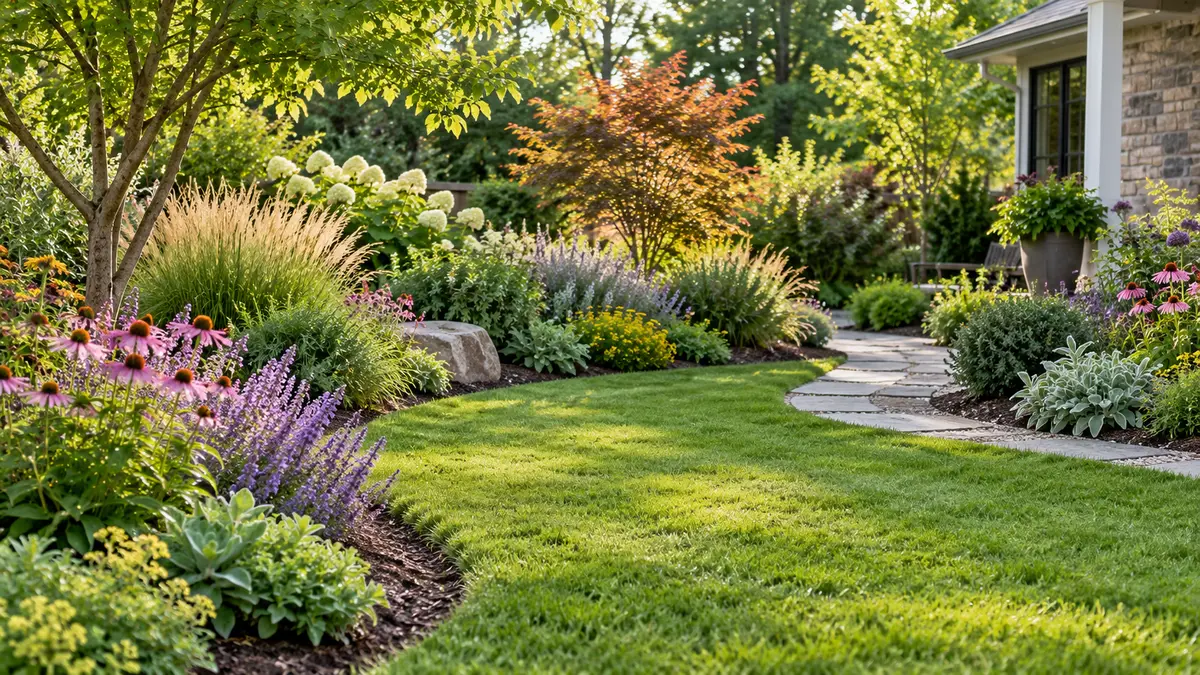
A low-maintenance garden is not a garden without plants. It is a garden where the right plants grow in the right place, the soil is covered, the lawn is the right size and watering takes care of itself. Set it up once, and you spend your weekends enjoying the garden instead of working in it.
This guide explains how to create a low-maintenance garden step by step. You will find the design choices that save the most time, the best low-maintenance plants, which types of lawns need the least care, practical lawn alternatives and a simple seasonal routine. Most ideas work for a small city yard as well as a larger garden.
What Makes a Garden Low-Maintenance?
A low-maintenance garden cuts the jobs that take the most time. For most yards, those are:
| Time-consuming job | Low-maintenance solution |
|---|---|
| Mowing and edging a large lawn | A smaller lawn with curved edges, or lawn alternatives |
| Weeding bare soil | Mulch, groundcovers and dense planting |
| Watering by hand | Drip irrigation or a soaker hose on a timer |
| Pruning fast-growing shrubs | Dwarf and slow-growing low-maintenance plants |
| Replacing annuals every year | Perennials, shrubs and bulbs that return each year |
| Treating pests and diseases | Resistant plants suited to your site |
Low-Maintenance Landscaping: Design Tips
Good low-maintenance landscaping starts on paper. A few design choices save the most time over the years:
12 Easy Garden Ideas That Cut Your Workload
Looking for inspiration? These ideas are popular with homeowners who want a beautiful yard with less work:
| Idea | Why it saves time |
|---|---|
| 1. A gravel garden with drought-tolerant perennials | No mowing and little watering once established |
| 2. A shrub border instead of a flower border | Shrubs need pruning once a year at most |
| 3. Groundcover under trees | No struggling grass in dry shade |
| 4. A small meadow or wildflower strip | Mowed once or twice a year |
| 5. Raised beds for vegetables and herbs | Fewer weeds and easier to reach |
| 6. Large containers by the door | One or two big pots instead of many small ones |
| 7. A patio or deck in place of lawn | Outdoor living space with no mowing |
| 8. Ornamental grasses for winter interest | Cut back once in spring |
| 9. Evergreen structure plants | Look good all year with little care |
| 10. Bulbs under shrubs | Color every spring without replanting |
| 11. A mowing strip along the lawn | No more hand edging |
| 12. Drip irrigation on a timer | Watering takes care of itself |
Combine a few of these ideas with the design tips above, and every part of the yard becomes easier to maintain.
The Best Low-Maintenance Plants
Low-maintenance plants grow well without much watering, pruning, feeding or spraying once they are established. Good choices for many U.S. gardens include:
| Group | Low-maintenance plants | Why they are easy |
|---|---|---|
| Perennials | Coneflowers, black-eyed Susans, daylilies, hostas (shade), sedums, catmint | Return every year, need little care |
| Ornamental grasses | Switchgrass, little bluestem, fountain grass | Structure all year; cut back once in spring |
| Shrubs | Dwarf conifers, boxwood, spirea, potentilla, compact hydrangeas | Slow-growing or naturally compact |
| Groundcovers | Creeping thyme, sedum, ajuga, vinca (non-invasive areas) | Cover soil and block weeds |
| Bulbs | Daffodils, alliums, crocus | Come back each spring; many are avoided by deer and rabbits |
| Herbs | Lavender, rosemary, sage, thyme | Drought-tolerant and aromatic |
Check that a plant is suited to your hardiness zone and is not invasive in your region before you plant it. Your local extension office has regional plant lists.
Native and Drought-Tolerant Plants
Native plants are adapted to your local climate and soil, so they usually need less water, fertilizer and pest control than exotic species. They also support pollinators and beneficial insects. Drought-tolerant plants such as lavender, sedum and ornamental grasses need little watering once established.
- Ask your extension office or a native plant society which species suit your region.
- Water new plantings regularly in the first year; after that, many low-maintenance plants need little extra water.
- Leave seed heads on coneflowers and grasses in fall; they feed birds and look good in winter.
Planting in fall is ideal for many perennials and shrubs. Our checklist to winterize your garden explains how to prepare new plantings for winter.
Types of Lawns: Which Grass Needs the Least Care?
Not all types of lawns need the same amount of work. The right grass for your climate needs less water, fertilizer and weeding:
| Types of lawns | Climate | Maintenance |
|---|---|---|
| Tall fescue | Cool and transition zones | Deep roots, fairly drought-tolerant; moderate care |
| Fine fescues | Cool, shady areas | Low fertilizer and mowing needs; not for heavy traffic |
| Kentucky bluegrass | Cool climates | Attractive but needs more water and fertilizer |
| Zoysia grass | Warm and transition zones | Dense, slow-growing; needs less mowing once established |
| Bermuda grass | Warm, sunny climates | Very tough but spreads into beds; needs edging |
| Buffalograss | Dry areas of the Great Plains | Very drought-tolerant; low mowing needs |
Whatever grass you choose, mow high (about 3 inches for most cool-season grasses) and water deeply but less often. Taller grass shades out weeds and needs less watering.
Weeds in the lawn? See our guide on how to get rid of weeds, which includes a section on lawns.
Lawn Alternatives That Save Time
The fastest way to a low-maintenance garden is less lawn. Popular lawn alternatives are:
- Groundcovers: creeping thyme, sedum, clover or ajuga for areas with little foot traffic.
- Mulched shrub and perennial beds: once established, they need far less time than grass.
- Wildflower or meadow areas: mowed once or twice a year; great for pollinators.
- Patios, decks and gravel: create outdoor living space without mowing.
- Clover lawns: stay green, need little fertilizer and tolerate some drought.
Keep a small area of lawn where you actually use it, for example for children, pets or a picnic blanket, and replace the rest with lawn alternatives.
Mulch and Weed Control
Mulch is the backbone of every low-maintenance garden. A layer of 2 to 3 inches of shredded bark, wood chips or shredded leaves:
- blocks the light weed seeds need to sprout;
- keeps the soil moist, so you water less;
- keeps soil temperatures more even;
- improves the soil as it breaks down.
Keep mulch a few inches away from stems and trunks, and top it up once a year. For more weed control ideas, read how to get rid of weeds.
Easy Watering: Set It and Forget It
- Drip irrigation or soaker hoses under the mulch water plants at the roots with little waste.
- A hose timer turns the water on and off automatically.
- A hose reel near the faucet keeps the hose tidy and quick to use; see our retractable hose reel guide.
- Group plants by water needs, so drought-tolerant plants are not overwatered.
- Water deeply and less often to encourage deep roots.
How much water does your garden need? See how often to water your garden. For hand watering, a light expandable garden hose is easy to carry and store.
Patios, Paths and Outdoor Living
Hardscape reduces maintenance and adds living space. A patio, deck or gravel seating area needs only occasional sweeping, and a clear path keeps you off the beds. Choose permeable materials such as gravel or pavers with gaps where possible, so rainwater can soak in.
Want to use the patio in the colder months? Read our tips to enjoy your patio during winter and compare patio heaters.
Low-Maintenance Front Yard Ideas
The front yard is the first thing visitors see, so it pays to make it neat and easy to care for:
- Evergreen structure: a few evergreen shrubs by the door and along the path keep the yard tidy in every season.
- A defined edge: a clean border of stone, brick or metal edging between lawn and beds looks sharp and stops grass from creeping in.
- Repeat a few plants: three to five types repeated in groups look calmer and are easier to care for than many single plants.
- A smaller front lawn: widen the beds along the house and path and keep a simple rectangle or oval of grass.
- Lighting and containers: solar path lights and one or two large planters by the door add curb appeal with little work.
Seasonal touches such as a wreath or a pair of porch pots are easy to add; see our outdoor Christmas decorating ideas.
A Low-Maintenance Garden for Small Spaces
- Choose one or two large containers or a raised bed instead of many small pots.
- Use evergreen shrubs and grasses for year-round structure.
- Replace a small lawn with gravel, pavers or a groundcover.
- Add a vertical element, such as a trellis with a climber, for greenery without floor space.
A raised bed makes gardening easier on your back and keeps weeds out; see how to build a raised garden bed.
Low-Maintenance Containers
- Use large pots: they dry out more slowly than small ones.
- Choose drought-tolerant plants such as succulents, lavender and ornamental grasses.
- Mix slow-release fertilizer into the potting mix at planting.
- Group pots together so you can water them in one go, or connect them to a drip line.
Growing edibles in pots? See growing flowers, vegetables and greens in pots.
A Simple Seasonal Routine
| Season | Low-maintenance tasks |
|---|---|
| Spring | Cut back grasses and perennials; top up mulch; check the irrigation |
| Summer | Mow high; pull the few weeds that appear; deadhead if you like |
| Fall | Plant shrubs, perennials and bulbs; rake leaves onto beds as mulch |
| Winter | Plan changes; clean and sharpen tools |
Where to Start: Changes That Save the Most Time
You do not have to redo the whole yard at once. Start with the change that saves you the most time, and spread the work over a few seasons:
| Step | Effort | Time saved |
|---|---|---|
| Mulch all bare soil | Low: one weekend | High: much less weeding |
| Install a drip line or soaker hose with a timer | Low to medium | High in summer |
| Replace a hard-to-mow corner with groundcover or gravel | Medium | Medium |
| Swap fussy annuals for perennials and shrubs | Medium, spread over time | High over the years |
| Shrink the lawn and widen the beds | Medium to high | Very high: less mowing and edging |
Fall is a great time to start: the soil is still warm, plants establish before winter and you can plan the next steps over the winter months.
Wildlife-Friendly and Easy to Care For
An easy-care garden can also be good for wildlife. Leaving seed heads standing, planting native perennials and shrubs and keeping one wilder corner provides food and shelter for birds, pollinators and beneficial insects, with even less work for you. These helpers also keep many pests in check; read more in our guide to garden insects.
Tools That Save Time
The right tools make a low-maintenance garden even easier: a battery-powered weed eater for edges, a leaf blower for paths and patios, sharp pruners and a comfortable kneeling pad. See our list of essential garden tools for the basics.
Mistakes to Avoid
- Planting too close: shrubs that outgrow their space need constant pruning.
- Choosing plants for looks only: a plant that does not suit the site needs extra care.
- Leaving soil bare: weeds fill every gap.
- Using gravel over bare soil without a plan: weeds grow in the gravel; remove weeds first and edge the area.
- Planting invasive groundcovers: some spread into lawns and wild areas; check local lists.
Frequently Asked Questions
How do I create a low-maintenance garden?
Keep the design simple, choose low-maintenance plants suited to your site, cover bare soil with mulch, reduce the lawn and automate watering with drip irrigation on a timer.
What are the best low-maintenance plants?
Native perennials such as coneflowers and black-eyed Susans, ornamental grasses, sedums, daylilies, dwarf shrubs and bulbs such as daffodils need little care once established.
What is the lowest-maintenance type of lawn?
It depends on your climate. Fine fescues suit cool, shady areas; zoysia and buffalograss suit warmer or drier regions. In any climate, a smaller lawn is the biggest time saver.
What can I use instead of grass?
Groundcovers such as creeping thyme or clover, mulched beds with shrubs and perennials, wildflower areas, gravel or a patio are popular lawn alternatives.
Is gravel low maintenance?
It can be, if you remove weeds first, lay it on a well-prepared base and edge the area. Leaves and seeds landing in gravel still need occasional cleanup.
How much time does a low-maintenance garden need?
Once established, often an hour or two a week in the growing season, mostly for mowing a small lawn, pulling a few weeds and enjoying the garden.
What is low-maintenance landscaping?
Low-maintenance landscaping is a design approach that reduces lawn, uses suitable plants, covers soil with mulch and automates watering, so the garden needs less work.
Are native plants low maintenance?
Usually yes. Native plants are adapted to local conditions, so once established they need less water, fertilizer and pest control.
What are good low-maintenance garden ideas?
Popular ideas are a gravel garden with drought-tolerant perennials, a shrub border, groundcover under trees, raised beds, a patio instead of lawn and drip irrigation on a timer.
How do I make my front yard low maintenance?
Use evergreen shrubs for structure, a clean edge between lawn and beds, a smaller lawn, repeated groups of a few easy plants and mulch on all bare soil.
When is the best time to plant a low-maintenance garden?
Fall and spring. Fall planting gives roots time to establish before summer heat, which means less watering next year.
Final Thoughts
A low-maintenance garden comes down to a few choices: a simple design, low-maintenance plants in the right place, mulch on every bare patch, the right types of lawns in a smaller area and automated watering.
Start with the change that saves you the most time, such as shrinking the lawn or adding mulch, and build from there. Each step gives you more time to relax in your garden.
Sources: University of Maryland Extension: landscape designs with native plants; University of Connecticut Extension: sustainable landscapes; University of Minnesota Extension: lawn care; Old Farmer’s Almanac: low-maintenance landscaping ideas.
Back to contents ↑