How to Grow Herbs Indoors: A Simple Guide for Fresh Herbs All Winter
How to grow herbs indoors on a windowsill or under a grow light: the best herbs to grow indoors, light, pots, watering, feeding and harvesting, so you have fresh herbs all year.
Affiliate disclosure: This guide links to our buying guides, which contain affiliate links. As an Amazon Associate, we earn from qualifying purchases at no additional cost to you.
Learning how to grow herbs indoors means you can pick fresh basil, parsley and chives even when the garden is asleep. Most culinary herbs grow well inside if they get enough light, a free-draining pot and not too much water.
This guide covers how to grow herbs indoors step by step: which herbs to choose, where to put them, how to use a grow light in winter and how to harvest so the plants keep producing. It is also the right moment to bring herbs indoors from the garden before the first frost.
The Best Herbs to Grow Indoors
Not every herb is equally happy inside. These are the best herbs to grow indoors for beginners:
| Herb | Light needs | Tip |
|---|---|---|
| Parsley | Medium to bright | Slow to start from seed; buy a young plant. See how to grow parsley at home |
| Chives | Medium to bright | Cut to about 2 inches above the soil; regrows quickly |
| Mint | Medium | Grow in its own pot; spreads fast. See how to care for mint |
| Oregano | Bright | Likes to dry out between waterings |
| Thyme | Bright | Needs sharp drainage. See thyme care |
| Basil | Very bright, warm | Needs the most light and warmth; keep away from cold glass |
| Rosemary | Very bright | Water carefully; dies from both drought and wet roots |
| Sage | Bright | Keep on the dry side. See sage care |
| Cilantro | Medium to bright | Short-lived; sow a few seeds every few weeks. See growing coriander |
Start with two or three of the best herbs to grow indoors, such as parsley, chives and mint. They tolerate slightly less light than basil and rosemary.
How to Grow Herbs Indoors: Step by Step
Follow these steps for how to grow herbs indoors from a young plant or seed:
Herbs grown from seed take a few weeks longer to reach harvest size than young plants, but they are cheaper and you can sow a new pot every few weeks.
Growing Herbs Indoors from Cuttings
Some herbs root easily from cuttings, which is a quick way to start growing herbs indoors in fall:
- Basil and mint: cut a 4-inch shoot below a leaf node, remove the lower leaves and place it in a glass of water on a bright windowsill. Pot it up once the roots are about an inch long.
- Rosemary, sage, thyme and oregano: take cuttings of new, soft growth and root them in moist potting mix or a seed-starting mix.
- Change the water every few days, and move rooted cuttings into potting mix; herbs kept in water long-term grow weakly.
Light: The Key to Growing Herbs Indoors
Light matters more than anything else when growing herbs indoors. Most herbs need about 6 to 8 hours of bright light a day.
- South-facing window: the best choice, especially in winter.
- East or west window: works for parsley, chives and mint; basil and rosemary may stretch.
- North window: usually too dark without a grow light.
- Rotate the pots every few days, because herbs lean toward the light.
- Keep leaves off cold glass on winter nights; frost on the window can damage them.
Signs of too little light: long, pale stems with small leaves and a plant that leans strongly toward the window.
Grow Lights for Indoor Herbs
In winter, even a sunny window gives fewer hours of light. A grow light makes growing herbs indoors much more reliable:
Pots and Potting Mix
- Drainage holes are a must: herbs do not tolerate standing water.
- Terracotta or clay pots dry out faster than plastic, which suits Mediterranean herbs such as thyme, oregano and rosemary.
- Use potting mix, not garden soil: garden soil compacts in pots and can bring in pests.
- Pot size: a pot of about 6 inches wide suits most single herbs; give mint its own pot.
- Use a saucer and empty it after watering.
Watering and Feeding Herbs Indoors
Overwatering is the second most common problem when growing herbs indoors.
- Check before you water: water when the top inch of soil feels dry. Parsley, mint and basil like slightly more moisture; thyme, rosemary, sage and oregano prefer to dry out more.
- Water thoroughly until it runs from the drainage hole, then let the pot drain.
- Feed lightly: use a liquid all-purpose fertilizer at half strength or less, and only while the herbs are actively growing. Too much fertilizer weakens the flavor.
- Raise humidity in dry, heated rooms by grouping pots together or placing them on a tray with pebbles and water.
For more about watering in pots, read how often to water your garden, which includes containers.
Growing Herbs Indoors in Winter
Growing herbs indoors in winter works, but expect slower growth than in summer. To keep them going:
- Keep herbs in a room of around 60 to 70°F, away from radiators, heating vents and cold drafts.
- Add a grow light when days are short; this is the biggest improvement you can make for growing herbs indoors in winter.
- Water less often than in summer, because the soil dries more slowly.
- Harvest lightly, and let the plants recover between cuttings.
- Freeze or dry some herbs from the summer garden as a backup for the darkest weeks.
Bringing Garden Herbs Indoors in Fall
Before the first frost, you can bring herbs indoors from the garden:
- Good candidates: chives, parsley, oregano, thyme, rosemary and mint; basil is best started fresh or taken from cuttings, because it dislikes cold.
- Pot them up a few weeks before frost and leave the pots outside in a sheltered spot for a week or two to adjust.
- Check for pests: look under leaves for aphids, whiteflies and spider mites, and rinse the plants before bringing them in.
- Cut back by about a third to reduce stress.
Bringing herbs in is part of getting the garden ready for winter; see our checklist to winterize your garden.
How to Harvest Indoor Herbs
- Pinch or cut just above a pair of leaves; new shoots grow from that point and the plant becomes bushier.
- Annual herbs such as basil: leave at least 4 to 6 inches of stem so the plant can regrow.
- Perennial herbs such as thyme and oregano: remove no more than the top third of growth at a time.
- Pinch off flower buds on basil and mint to keep the leaves tender and flavorful.
Common Problems with Indoor Herbs
| Problem | Likely cause | What to do |
|---|---|---|
| Long, pale, leaning stems | Too little light | Move to a brighter window or add a grow light |
| Yellow leaves, wet soil | Overwatering | Let the soil dry more and check the drainage hole |
| Brown, crispy leaf tips | Dry air or underwatering | Water thoroughly and raise humidity |
| Sticky leaves, tiny insects | Aphids or whiteflies | Rinse the plant and wipe the leaves; isolate it |
| Fine webbing under leaves | Spider mites | Rinse and raise humidity; remove badly affected shoots |
White spots or insects on leaves? See our guide to white pests on plant leaves.
How to Set Up an Indoor Herb Garden
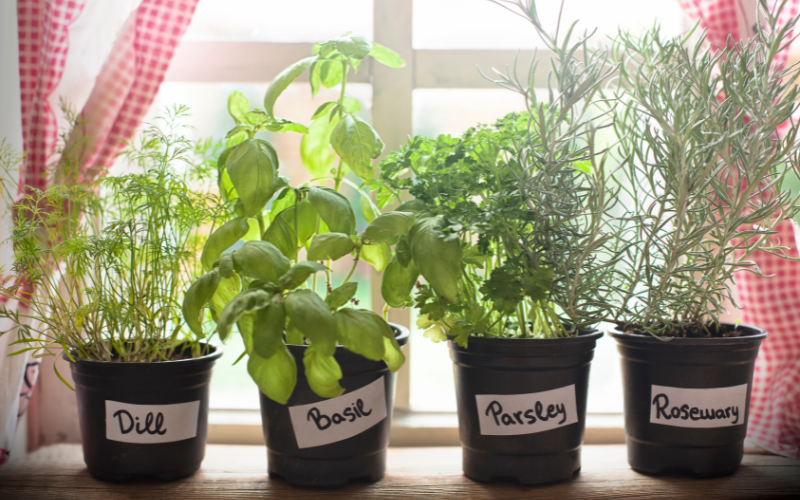
An indoor herb garden can be as simple as three pots on a kitchen windowsill. To make it work long-term:
- Group herbs with similar needs: Mediterranean herbs (thyme, rosemary, oregano, sage) together, and moisture-loving herbs (parsley, mint, basil, chives) together.
- Use a tray to protect the windowsill and make watering easier.
- Place the indoor herb garden near the kitchen, so you use the herbs often; regular harvesting keeps them compact.
- Sow cilantro and basil every few weeks for a steady supply.
Want to grow more than herbs inside? Read our tips for a windowsill vegetable garden. In spring, move hardy herbs outside into pots or a bed; see growing vegetables and greens in pots and vegetable gardening for beginners.
Frequently Asked Questions
What herbs grow best indoors?
The best herbs to grow indoors are parsley, chives, mint, oregano, thyme and basil. Rosemary and sage also grow inside, but need very bright light and careful watering.
Can herbs grow indoors without sunlight?
Yes, with a full-spectrum grow light 6 to 12 inches above the leaves for 12 to 16 hours a day. Without a sunny window or a grow light, most herbs become weak and leggy.
How often should I water herbs indoors?
Water when the top inch of soil feels dry, usually once or twice a week, depending on the pot, the herb and the room. Always let excess water drain away.
Why are my indoor herbs dying?
The most common causes are too little light and too much water. Move them to a brighter spot or add a grow light, and let the soil dry slightly between waterings.
Is growing herbs indoors in winter possible?
Yes. Growing herbs indoors in winter works best with a grow light, a room of about 60 to 70°F and careful watering. Growth is slower than in summer, so harvest lightly.
Can I grow basil indoors all year?
Yes, if it gets plenty of light and warmth. Basil needs the most light of the common herbs and dislikes cold windows, so a grow light helps in winter.
Should I grow herbs indoors from seed or buy plants?
Buy young plants for a quick start, especially parsley, rosemary and thyme. Basil, cilantro and chives grow easily from seed.
Do indoor herbs need fertilizer?
Only a little. Use a liquid all-purpose fertilizer at half strength or less while the herbs are actively growing; too much reduces the flavor.
Final Thoughts
Now you know how to grow herbs indoors: pick easy herbs, give them as much light as you can, use pots with drainage holes and water only when the top of the soil is dry. A simple grow light makes growing herbs indoors in winter far more successful.
Start with a few pots on a sunny windowsill, harvest often and add more herbs as your indoor herb garden grows.
Sources: Iowa State University Extension: growing herbs indoors; University of Illinois Extension: keep growing herbs indoors this fall and winter; Penn State Extension: growing herbs indoors; Chicago Botanic Garden: fresh all winter, grow herbs indoors.
Back to contents ↑