Windowsill Vegetable Garden: What to Grow Indoors and in Window Boxes
How to start a windowsill vegetable garden: the easiest vegetables to grow indoors, microgreens on a windowsill, sprouts and pea shoots, window box vegetables and window box herbs for outdoors, plus light, watering and harvest tips.
Affiliate disclosure: This guide links to our buying guides, which contain affiliate links. As an Amazon Associate, we earn from qualifying purchases at no additional cost to you.
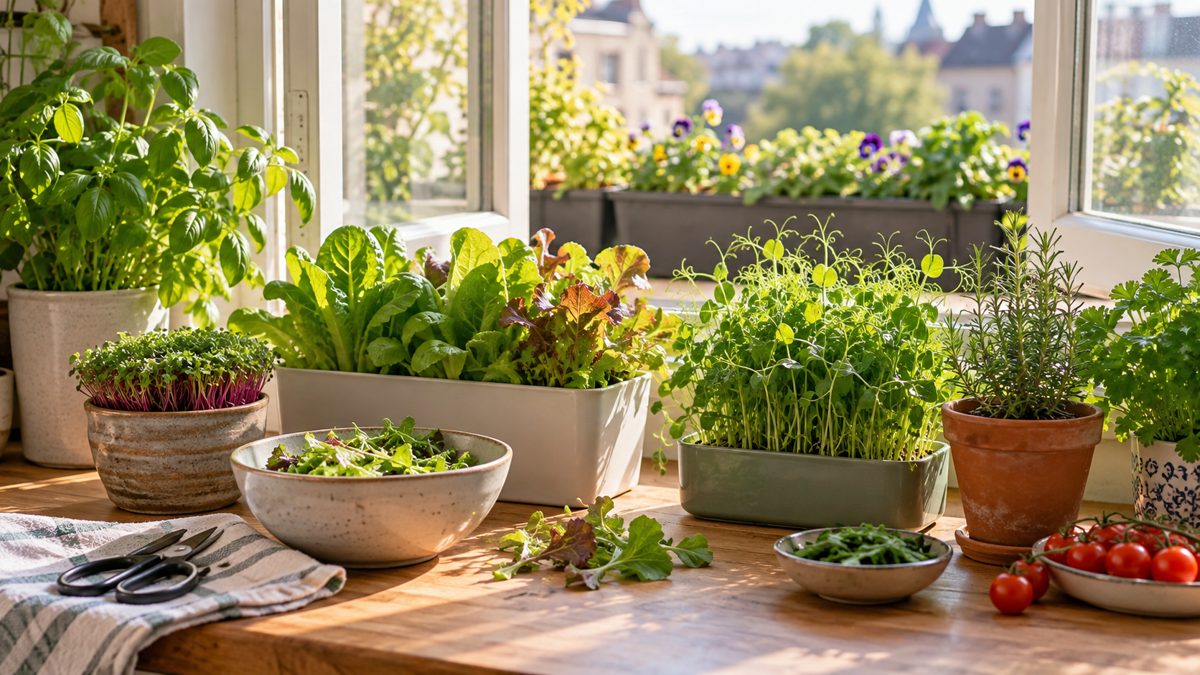
A sunny windowsill or a window box is all you need to harvest something fresh every week, even without a garden. Microgreens, pea shoots, herbs and baby lettuce grow quickly in small containers, and a window box outside your kitchen can give you salad greens and herbs from spring to fall.
This guide explains how to set up a windowsill vegetable garden indoors and a productive window box outdoors. You will learn which vegetables to grow indoors, how to grow microgreens on a windowsill, how to sprout seeds safely, which window box vegetables and window box herbs do best, and how to give them the light, water and care they need.
Why Start a Windowsill Vegetable Garden?
- Fresh greens and herbs all year, even in winter
- No garden needed: works in apartments and on balconies
- Fast results, especially with microgreens
- Few pests and no weeds
- A great way to start gardening with children
- Window light is weaker than outdoor sun, especially in winter
- Small containers dry out quickly
- Large fruiting crops rarely do well indoors
- Yields are small, so focus on high-value crops
Light: The Key to a Windowsill Garden
Light is the biggest limit indoors. Even a bright window gives much less light than open sky, and winter days are short.
| Window | Light | Best crops |
|---|---|---|
| South-facing | Brightest, most hours of sun | Herbs, microgreens, compact peppers, cherry tomatoes in summer |
| East- or west-facing | Moderate; half a day of sun | Lettuce, pea shoots, parsley, mint, chives |
| North-facing | Low light | Microgreens with a grow light; mint and chives only |
| Any window in winter | Weak and short days | Add an LED grow light |
The University of Maryland Extension notes that light from a sunny window may be enough in some cases, but microgreens generally grow best under grow lights, about 6 to 12 inches above the plants for around 16 hours a day. Turn pots regularly so plants do not lean toward the window.
The Best Vegetables to Grow Indoors
The best vegetables to grow indoors are fast, compact and harvested young:
| Crop | Time to harvest | Why it works |
|---|---|---|
| Microgreens | 7 to 21 days | Fast, tiny and very flavorful |
| Pea shoots | 2 to 3 weeks | Sweet shoots, often a second cutting |
| Sprouts | A few days | No soil needed; grown in a jar |
| Baby lettuce and salad greens | 3 to 5 weeks | Cut-and-come-again leaves |
| Radishes | About 4 weeks | Small, fast roots in a deep pot |
| Green onions | Regrow in 1 to 2 weeks | Regrow from the white root ends |
| Herbs | Ongoing | Basil, parsley, chives and mint |
| Compact peppers and cherry tomatoes | Months | Only in a very sunny window or under lights |
| Light hose for balcony boxes | Easy watering outdoors without carrying cans | See our expandable garden hose guide |
| Gardening gloves | Clean hands when filling boxes | See our gardening gloves guide |
How to Grow Microgreens on a Windowsill
Microgreens on a windowsill are the quickest way to harvest homegrown vegetables. The University of Maryland describes microgreens as fast-growing, closely spaced seedlings harvested at the true leaf stage, about 2 to 3 inches tall, 7 to 21 days after sowing.
Harvested microgreens keep in the refrigerator for up to about 10 days after rinsing, according to the University of Maryland.
Pea Shoots: Sweet and Easy
- Soak pea seeds overnight.
- Sow them densely in a tray or shallow pot of potting mix, barely covered.
- Keep the mix moist and the tray in bright light.
- Harvest when the shoots are about 4 inches tall, cutting above the lowest leaves; many trays give a second, smaller cutting.
- Use pea shoots in salads, stir-fries and sandwiches.
Sprouts on the Windowsill (and How to Grow Them Safely)
Sprouts such as alfalfa, mung beans, lentils and radish are grown in a jar without soil and are ready in a few days. However, Virginia Cooperative Extension warns that the warm, humid conditions for sprouting are also ideal for bacteria such as E. coli, Salmonella and Listeria.
- Buy seeds sold specifically for sprouting from a reputable supplier.
- Wash your hands and use a clean jar and clean drinking water.
- Rinse the seeds about every 12 hours, and more often in warm weather.
- Keep finished sprouts in the refrigerator at 40°F or below and eat them within 4 to 6 days.
- Children, older adults, pregnant women and people with weakened immune systems should not eat raw sprouts; cook them instead.
Microgreens are grown in a growing medium with light and are cut above the surface, which is different from sprouts grown in a jar. For the safest choice indoors, microgreens and pea shoots are a better start than raw sprouts.
Regrowing Vegetables from Kitchen Scraps
Some vegetables to grow indoors do not even need seeds. A few kitchen scraps regrow on the windowsill:
| Scrap | How | What you get |
|---|---|---|
| Green onion roots | Stand the white root ends in a glass of shallow water; change the water every few days | New green tops within one to two weeks |
| Lettuce or celery base | Place the base in a shallow dish of water, then pot it up once roots appear | A small crop of fresh leaves |
| Garlic cloves | Plant a clove in a small pot | Garlic greens to snip like chives |
These regrown crops are small, but they are a fun, zero-cost start to a windowsill vegetable garden, especially with children.
Herbs on the Windowsill
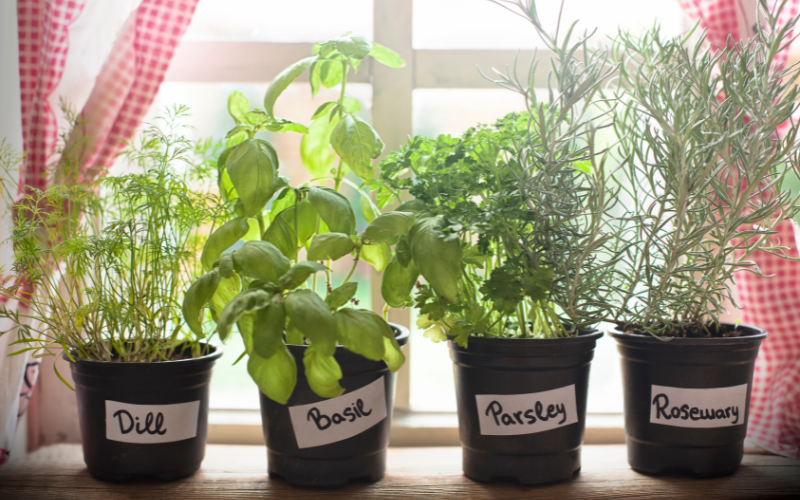
Herbs are a natural fit for a windowsill vegetable garden. Basil and parsley like bright light and moist mix; chives and mint tolerate a bit less light; thyme and rosemary need the sunniest window and dry mix.
See our detailed guide on how to grow herbs indoors, and our individual guides on mint, parsley and thyme.
Window Box Vegetables for Outdoors
Outside the window, a window box is a small vegetable garden in its own right. The University of Maine lists window boxes for crops such as lettuce, string beans and carrots, and the University of Maryland notes that leafy greens need only 3 to 5 hours of sun.
| Window box vegetables | Sun | Tip |
|---|---|---|
| Lettuce and salad mixes | 3 to 5 hours | Sow every 3 weeks for a steady supply |
| Spinach and Asian greens | 3 to 5 hours | Best in spring and fall |
| Radishes | 4 to 6 hours | Sow directly; harvest in about four weeks |
| Bush beans | 6 hours or more | Needs a deep box |
| Short carrots | 6 hours | Choose round or short varieties; box 12 inches deep |
| Cherry tomato (trailing type) | 6 to 8 hours | One plant per box; water daily in summer |
| Strawberries | 6 hours | Everbearing types fruit all summer |
Window box vegetables dry out quickly in sun and wind, so check them daily in summer.
Window Box Herbs
- Sunny box (6 hours or more): thyme, oregano, sage, basil and rosemary.
- Partly shaded box (3 to 5 hours): parsley, chives, mint and cilantro.
- Mixed box: combine herbs with similar water needs; keep mint in its own box.
- Kitchen window: plant the herbs you cook with most, right where you can reach them.
Window box herbs are also attractive: trailing thyme and oregano soften the edges, and flowering chives attract bees. See how to grow sage and how to grow cilantro.
How to Set Up a Window Box
For more on pots, potting mix and self-watering options, see our complete guide to container gardening.
Watering and Feeding
| Situation | Watering | Feeding |
|---|---|---|
| Microgreens | Keep the mix moist; water from below if possible | Not needed |
| Herbs and lettuce indoors | When the top inch is dry | Light liquid feed every 3 to 4 weeks |
| Window boxes in summer | Daily check; often daily watering | Liquid feed every 2 weeks |
| Overwintering plants | Sparingly | None until spring |
Use pots with drainage holes and empty saucers after watering. A watering can with a long, narrow spout makes watering a windowsill much easier. Outdoors, a hose with a gentle shower setting is quicker; see our garden hose nozzle guide.
Overwintering Peppers and Citrus on the Windowsill
- Peppers: pepper plants are perennial in their native climate. Before frost, pot up a healthy plant, cut it back, check for pests and keep it on a bright, cool windowsill with little water. It may drop leaves; in spring, it regrows and fruits earlier.
- Citrus: lemons, limes and kumquats in pots can spend winter on a bright, cool windowsill away from radiators. Water sparingly and move them outside again after the last frost.
- Check for pests: plants coming in from outside often carry aphids, mealybugs or scale; see white bugs on plants and how to get rid of scale insects.
Windowsill Garden Problems and Solutions
| Problem | Likely cause | Solution |
|---|---|---|
| Tall, pale, leaning seedlings | Too little light | Use the sunniest window; add a grow light; turn pots |
| Mold on microgreens | Too much water, poor airflow, sowing too thick | Water from below; improve airflow; sow less densely |
| Wilting window box plants | Dry mix in sun and wind | Water daily; use a larger box |
| Yellow leaves on herbs | Overwatering or lack of nutrients | Let mix dry slightly; feed lightly |
| Small, gnat-like flies | Fungus gnats in wet mix | Let the top of the mix dry out |
What You Need
| Item | Why it helps | Tip |
|---|---|---|
| Shallow trays and small pots with drainage | For microgreens, herbs and greens | Food-safe trays for microgreens |
| Window box with brackets | Outdoor growing space | At least 6 to 8 inches deep |
| Light potting mix | Healthy roots in small containers | Never use garden soil |
| Small LED grow light | Strong growth in winter | 6 to 12 inches above plants |
| Snips and a hand trowel | Harvesting and planting | See our gardening tool sets guide |
| Hose nozzle for outdoor boxes | Gentle, even watering | See our garden hose nozzle guide |
Frequently Asked Questions
Can I grow tomatoes on a windowsill?
Only compact cherry or micro tomatoes, in a very sunny south-facing window or under a grow light. Indoors, you usually get small harvests; outdoors in a window box or pot they do much better.
What is the difference between microgreens and sprouts?
Sprouts are germinated seeds grown in water in a jar and eaten whole, roots and all. Microgreens grow in a growing medium with light and are cut above the surface after 7 to 21 days.
What vegetables can I grow on a windowsill?
Microgreens, pea shoots, baby lettuce, radishes, green onions and herbs grow well on a sunny windowsill. Compact peppers and cherry tomatoes need a very sunny window or a grow light.
Is a windowsill vegetable garden enough light?
A south-facing window works for many crops in spring and summer. In winter, or in less sunny windows, add a small LED grow light.
How do I grow microgreens on a windowsill?
Sow seeds thickly in a shallow tray of potting mix, keep it moist, give bright light and harvest with scissors when the first true leaves appear, usually after 7 to 21 days.
What are the easiest vegetables to grow indoors?
Microgreens, pea shoots, green onions regrown from root ends, baby lettuce and herbs such as basil, parsley and chives.
What vegetables grow well in window boxes?
Lettuce, spinach, Asian greens, radishes, bush beans, short carrots, trailing cherry tomatoes and strawberries.
Which herbs are best for a window box?
Thyme, oregano, sage, basil and rosemary in full sun; parsley, chives, mint and cilantro in partial shade.
How deep should a window box be for vegetables?
At least 6 to 8 inches for greens and herbs, and about 12 inches for carrots and bush beans.
Are homegrown sprouts safe to eat?
Sprouts can carry harmful bacteria. Use seeds sold for sprouting, keep everything clean, refrigerate and eat within a few days. Vulnerable people should only eat cooked sprouts.
Do I need a grow light for indoor vegetables?
Not always in summer, but in winter most windowsills are too dark for strong growth. A small LED grow light makes a big difference.
How often should I water a window box?
Check it daily in summer. In sun and wind, most window boxes need water every day.
Can I overwinter pepper plants indoors?
Yes. Pot up a healthy plant before frost, cut it back, check for pests and keep it on a bright, cool windowsill with little water until spring.
Final Thoughts
Now you know how to start a windowsill vegetable garden: choose the sunniest window, grow fast crops such as microgreens, pea shoots, lettuce and herbs, and add a grow light in winter. Microgreens on a windowsill are the quickest and easiest start.
Outdoors, window box vegetables and window box herbs turn every window into a small kitchen garden. With the right box, good potting mix and daily watering in summer, you can harvest fresh greens and herbs from spring to fall, and grow vegetables indoors through the winter.
Sources: University of Maryland Extension: growing microgreens and baby greens indoors; University of Maryland Extension: growing vegetables in containers and salad tables; University of Maine Cooperative Extension: growing vegetables in container gardens; Virginia Cooperative Extension: sprout safety.
Back to contents ↑