Fire Pit vs Patio Heater: Which Is Better for Your Patio?
Fire pit vs patio heater compared on warmth, running cost, safety rules, smoke, space and atmosphere, so you can choose the right way to keep your patio comfortable on cool evenings.
Affiliate disclosure: This guide contains affiliate links to Amazon and links to our buying guides. As an Amazon Associate, we earn from qualifying purchases at no additional cost to you.
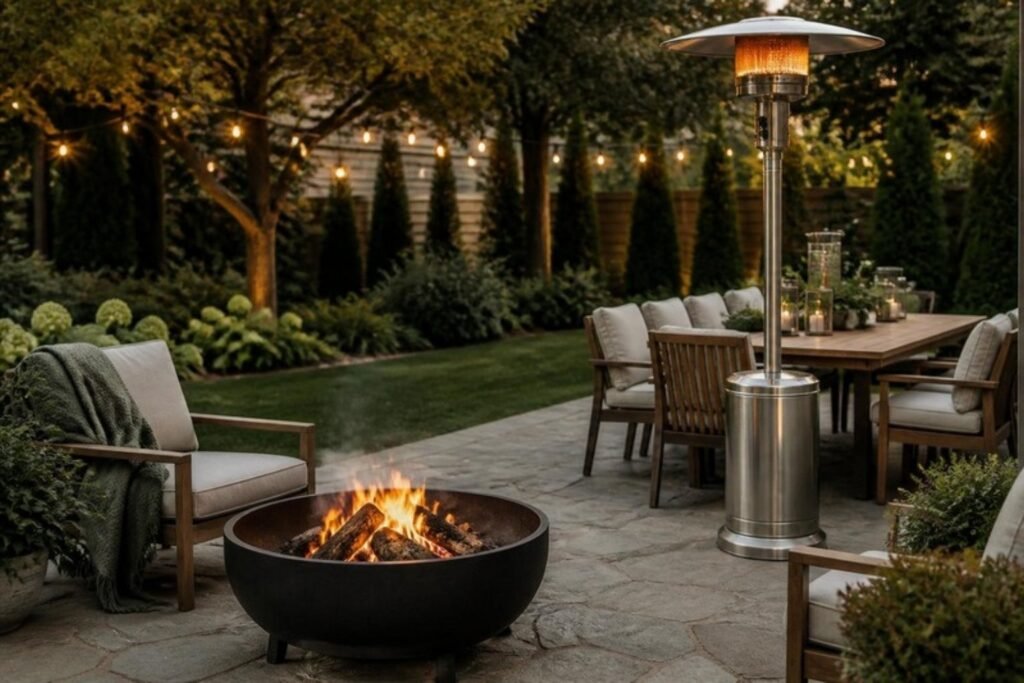
The fire pit vs patio heater question comes up every fall. Both promise long evenings outside, but they warm you in very different ways. A fire pit is a gathering point with flames, crackle and a bit of smoke. A patio heater is a quiet, steady heat source you switch on and forget about.
In this fire pit vs patio heater guide we compare both on warmth, running cost, safety rules, smoke, space and atmosphere. You will also find how a wood burning fire pit differs from a propane fire pit, which local rules apply, and a simple way to decide which one fits your patio.
Fire Pit vs Patio Heater at a Glance
| Factor | Fire pit | Patio heater |
|---|---|---|
| Type of warmth | Radiant heat from a low flame, strongest up close | Radiant heat from above or from the side, aimed at a seating area |
| Fuel | Wood, propane or natural gas | Propane, natural gas or electricity |
| Atmosphere | Real flames, a natural gathering point | Mostly functional; some towers have a visible flame |
| Smoke and ash | Wood: yes. Gas: no | None |
| Covered patio | No | Electric models rated for it, within the manual |
| Control | Wood: limited. Gas: adjustable flame | On, off and heat settings |
| Local rules | Wood fires often limited by distance rules and burn bans | Mainly the clearances in the manual |
The short version: a fire pit wins on atmosphere and social appeal; a patio heater wins on comfort, control and where you can use it. The sections below explain where those differences come from.
How a Fire Pit and a Patio Heater Warm You
The fire pit
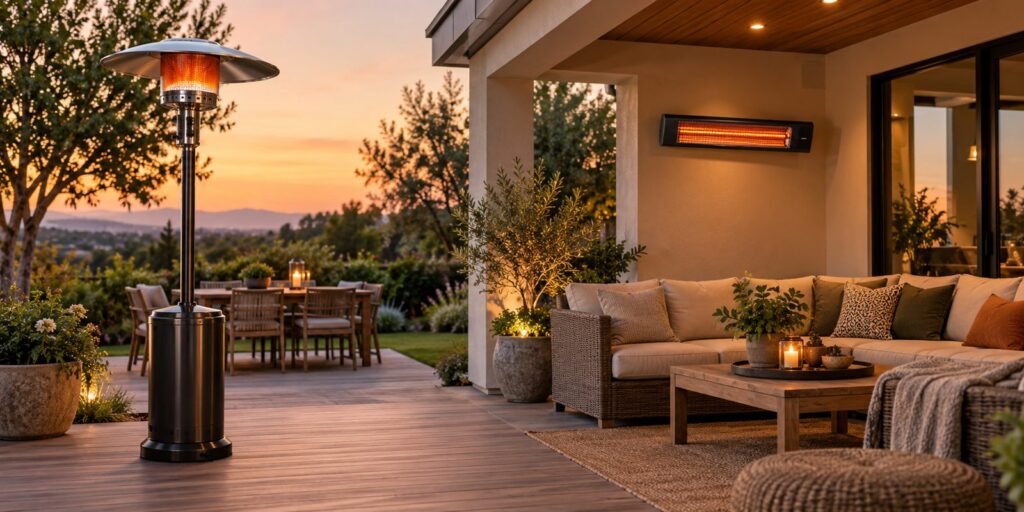
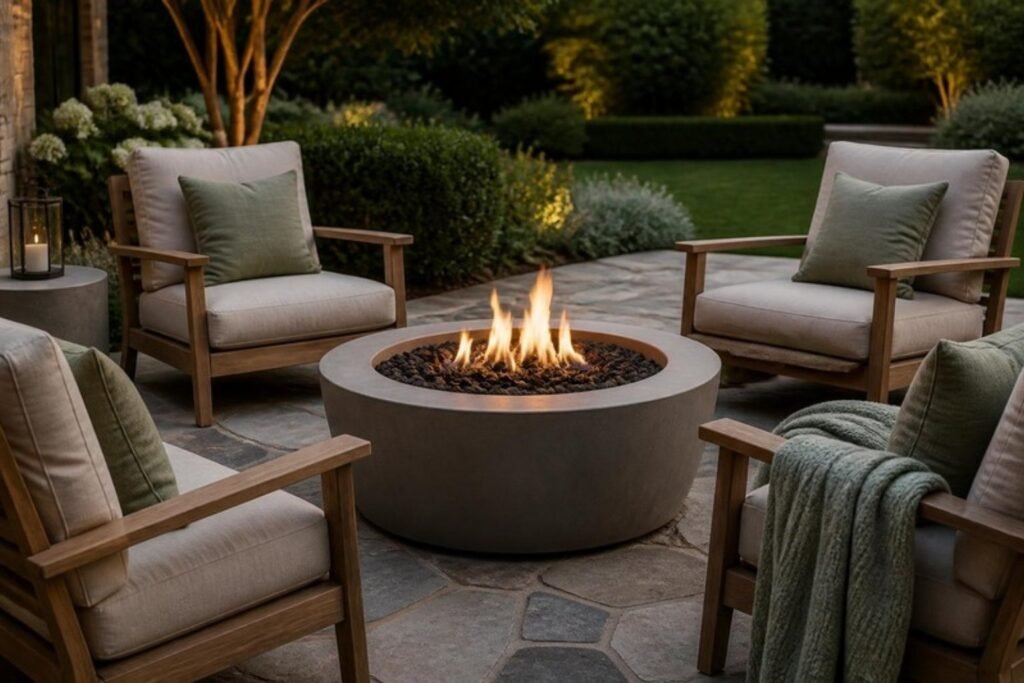
A fire pit sits low to the ground, and much of its heat rises straight up with the flames. You feel radiant heat on your face, hands and legs when you sit close and face the fire, while your back stays cool. That is why people pull their chairs in, and why a fire pit suits a small circle of people better than a long dining table.
A wood burning fire pit gives the classic crackling fire, but it needs dry wood, tending and time to burn down. A propane fire pit lights with a button, burns without smoke or ash and turns off instantly, but its flame looks calmer and gives off less heat than a big wood fire.
The patio heater
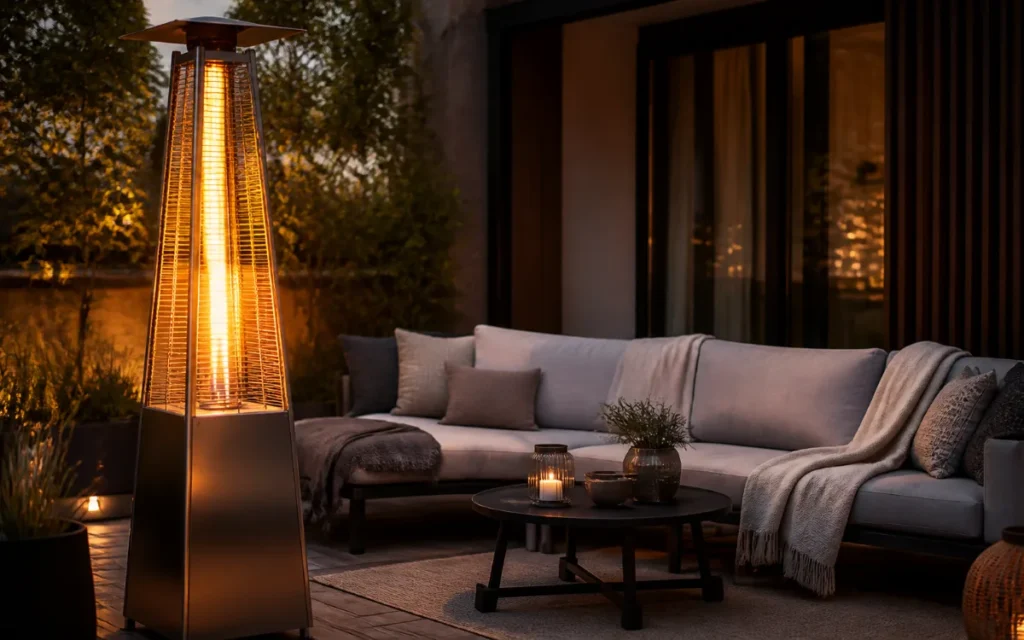
A tower patio heater burns propane at the top and uses a reflector hood to send radiant heat down over a circle around it. An electric infrared heater, mounted on a wall or ceiling, aims its heat at a seating zone. Both warm people evenly from above or the side, so a group at a table stays comfortable without crowding around a flame. Our propane vs electric patio heater guide explains the difference between the two heater types.
Types of Fire Pits and Patio Heaters
Both categories cover several very different products. Knowing the main types makes the fire pit vs patio heater choice much easier, because a propane fire pit has more in common with a patio heater than with a wood burning fire pit.
| Type | How it works | Good to know |
|---|---|---|
| Wood burning fire pit | Open steel or stone bowl for logs | Most heat and atmosphere; smoke, sparks and the strictest rules |
| Low-smoke fire pit | Double-wall steel bowl that reburns smoke once the fire is hot | Less smoke than an open bowl, but never smoke-free |
| Propane fire pit or fire table | Gas burner under lava rock or fire glass, fed by a tank | Push-button start, no ash; the tank often hides in the base |
| Natural gas fire pit | Burner connected to your home gas line | No tanks to refill; needs a professional installation and often a permit |
| Chimenea | Front-opening fireplace with a chimney | Draws smoke upward and warms mainly in one direction |
| Propane tower heater | Burner on a tall post with a reflector hood | Warms a circle around the base; for uncovered patios |
| Tabletop propane heater | Small burner on a table, with a 1 lb or 20 lb tank | Warms one table; lower output |
| Electric infrared heater | Wall, ceiling or stand-mounted infrared element | No combustion; models rated for it can work under a roof |
When this guide compares a fire pit with a patio heater, it mostly means a wood burning or propane fire pit against a propane tower or electric infrared heater, the most common choices for U.S. patios.
Fire Pit vs Patio Heater: 7 Key Differences
1. How evenly it warms
This is the biggest practical difference in the fire pit vs patio heater comparison. A patio heater spreads warmth over a defined area, so everyone at the table feels it. A fire pit warms whoever sits closest and faces it. On a cold night, guests at a fire pit often end up with warm knees and a cold back. Patio heater makers list a heating area or diameter on the box; compare it with the size of your seating area, and see our patio heater BTU guide for sizing.
2. Atmosphere
Here the fire pit wins easily. A wood burning fire pit is a focal point: people gather, talk and roast marshmallows. A propane fire pit keeps much of that feeling with less work. A patio heater is mainly a comfort device, though some towers have a glass flame tube that adds a glow.
3. Smoke and neighbors
Wood smoke drifts into clothes, hair and your neighbors’ windows. Dry, seasoned wood burns cleaner than damp wood, and some fire pits are designed to burn with less smoke once the fire is going, but a wood fire is never completely smoke-free. A propane fire pit and a patio heater produce no smoke or ash.
4. Where you can use it
Fire codes limit where a wood fire can burn. Many U.S. jurisdictions follow the International Fire Code rule that a recreational fire may not burn within 25 feet of a structure or combustible material. Patio heaters only need the clearances in the manual, and an electric heater rated for it can even be used under a roof. See our guide on using a patio heater under a covered patio.
5. Effort
A wood fire needs kindling, tending, ash cleanup and time to burn out completely. A propane fire pit and a patio heater start with a button or switch and stop instantly. If you want warmth for an hour after dinner, the gas options are far easier.
6. Heat output and control
Many propane fire pits are rated at roughly 40,000 to 60,000 BTU per hour, similar to a full-size propane patio heater, but much of the fire pit’s heat goes up instead of out. A heater has clear settings, and an electric model can run on a low setting for one or two people. A wood fire is hard to adjust: it is either building up or burning down.
7. Purchase price
Simple wood burning fire pits and freestanding propane patio heaters are both available at entry-level prices. Low-smoke stainless fire pits, built-in gas fire tables and hardwired electric heaters cost considerably more. Check current prices on the product pages, because they change often.
Running Cost: Propane Fire Pit vs Patio Heater
For gas models the calculation is the same: divide the BTU rating by 91,452, the energy in one gallon of propane according to the EIA, and multiply by your price per gallon. The table uses the EIA average residential propane price of $2.598 per gallon (October 5, 2026) and the EIA average electricity price of 18.31 cents per kWh (July 2026), plus an example price of $25 per 20 lb cylinder refill.
| Running on full | Bulk price per hour | $25 refill per hour | 20 lb tank lasts |
|---|---|---|---|
| 58,000 BTU propane fire pit | about $1.65 | about $3.37 | about 7.4 hours |
| 46,000 BTU propane patio heater | about $1.31 | about $2.67 | about 9.3 hours |
| 1,500 W electric patio heater | about $0.27 (electricity) | not used | not used |
A wood burning fire pit has no fixed hourly cost: it depends on your local firewood price, the size of the fire and how dry the wood is. Wood bought by the cord is usually much cheaper per evening than small bundles from a store. For a full breakdown of heater costs, including exchange tanks and a calculator, see our guide to the cost to run a patio heater.
Cooking, Upkeep and Safety Features
Cooking
A wood burning fire pit is the clear winner if you want to cook: s’mores, hot dogs and, with a grill grate, even burgers. Many propane fire pits are not designed for cooking, because food drips can clog the burner, so check the manual first. Patio heaters are not for cooking at all.
Maintenance
A wood burning fire pit needs the cold ash removed after each fire and a cover or drain holes so rainwater does not sit in the bowl and cause rust. A propane fire pit or heater needs a leak check at the start of the season: brush soapy water over the hose and connections, and look for bubbles. Clean the reflector and burner area of a tower heater, and check the burner for insect nests after storage. Electric heaters only need dusting and a look at the cord.
Safety features to look for
- Spark screen for a wood burning fire pit, to keep embers inside the bowl.
- Tip-over switch on a propane tower heater, which shuts off the gas if the heater falls.
- Flame-failure shutoff on gas fire pits and heaters, which stops the gas if the flame goes out.
- Safety certification such as CSA, ETL or UL on the product or packaging.
- Outdoor rating and overheat protection on electric heaters.
Fire Pit Safety Rules and Distances
Fire pit safety starts with your local fire code. Many fire departments in the U.S. use the International Fire Code (IFC). As published by the Fairmount Fire Protection District in Colorado and the City of Raleigh, the main rules are:
- Recreational fires (wood burning fire pits and campfires) may not burn within 25 feet of a structure or combustible material, and the fire itself is limited in size.
- Portable outdoor fireplaces may not be used within 15 feet of a structure or combustible material, though the IFC exempts one- and two-family homes from that distance.
- Attendance: a fire must be attended until it is completely out, with a fire extinguisher, garden hose or other approved means ready to use.
- Burn bans: fires can be prohibited when weather conditions are dangerous.
Other basic fire pit safety habits: burn only dry, seasoned firewood, never use gasoline or other accelerants, keep children and pets at a safe distance, and drown the embers with water before you go inside. Patio heaters have their own rules: follow the clearances in the manual, and never use a propane heater in an enclosed space. Our patio heater BTU guide also covers placement.
Local rules vary a lot. Some cities ban wood fires altogether, some allow only gas fire pits, and homeowners associations and rental agreements can add their own restrictions. Call your fire department or check its website before you buy.
Fire Pit or Patio Heater: Which One Fits Your Patio?
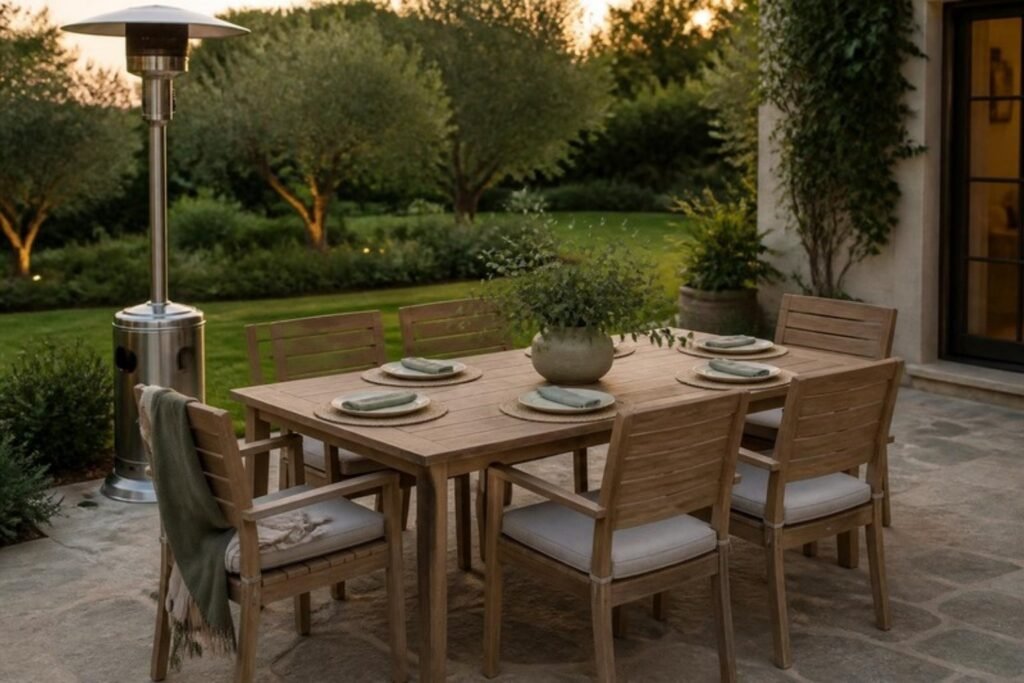
Weighing patio heater vs fire pit for a specific spot? Start with how you use the space, then match it to the situations below.
| Situation | Best fit | Why |
|---|---|---|
| Dining table for 4 to 8 people | Propane patio heater | Even warmth over the whole table |
| Covered patio or porch | Electric patio heater | No combustion, can be rated for use under a roof |
| Large backyard, small group | Wood burning fire pit | Room for the distance rules and a real campfire feel |
| Small yard or close neighbors | Propane fire pit or heater | No smoke, easier to fit the rules |
| Short evenings after dinner | Patio heater | Instant on and off, no cleanup |
| Weekend gatherings with friends | Fire pit | A natural gathering point |
If you lean toward a heater, our best patio heaters comparison covers eight models, and the patio heater BTU guide helps you size one for your seating area.
Using a Fire Pit and a Patio Heater Together
The fire pit vs patio heater choice does not have to be either-or. Many outdoor spaces work best with a patio heater over the dining or lounge area for everyday comfort, and a fire pit at a safe distance on the lawn or gravel area for weekend evenings. A propane fire pit and a propane heater can even share the same spare cylinders. Add blankets, a windbreak and warm lighting, and the patio stays usable well into winter. For string lights, our guide on how to hang Christmas lights outside explains safe outdoor power; our winter patio ideas have more tips.
Common Mistakes to Avoid
- Placing a wood burning fire pit under a pergola, awning, tree branches or close to a wooden fence.
- Burning damp wood, yard waste or trash, which creates far more smoke.
- Lighting a fire on a windy evening or during a local burn ban.
- Using a propane fire pit or propane patio heater in an enclosed or screened-in space.
- Expecting one fire pit to warm a long dining table.
- Leaving a fire pit to burn out on its own instead of extinguishing it.
- Storing propane cylinders indoors or next to the heat source.
- Skipping the soapy-water leak check on a propane fire pit or heater at the start of the season.
- Placing a wood fire pit directly on a wooden deck without the manufacturer’s approval and a heat shield.
Fire Pits and Patio Heaters to Consider
These four models cover the main options in this guide. The two heaters are part of our best patio heaters comparison, where you will find their full specifications and trade-offs.
| Model | Type | Best for | Link |
|---|---|---|---|
| Solo Stove Bonfire 2.0 with Stand | Wood burning fire pit, 19.5 inch | Low-smoke wood fires for a small group | View on Amazon |
| Outland Living Firebowl 883 Mega | Propane fire pit, 58,000 BTU | Smoke-free flames on an open patio | View on Amazon |
| Amazon Basics 46,000 BTU patio heater | Propane tower heater | Warming a dining area on an open patio | View on Amazon |
| Dr Infrared Heater DR-238 | Electric infrared, wall or ceiling | Covered patios and porches | View on Amazon |
Prices, bundles and availability on Amazon change often. Check the manual for clearances, certifications and local requirements before you buy.
Frequently Asked Questions
Which is warmer, a fire pit or a patio heater?
For a group around a table, a patio heater usually feels warmer because it spreads heat evenly from above. A fire pit can feel very warm up close, but mostly on the side facing the fire.
Is a propane fire pit as warm as a wood fire?
Usually not. A propane fire pit gives steady warmth without smoke, but a well-built wood fire gives off more heat. A propane fire pit is mainly chosen for convenience, clean burning and fewer restrictions.
How far should a fire pit be from the house?
Many local codes based on the International Fire Code require 25 feet between a recreational wood fire and any structure or combustible material. Portable outdoor fireplaces and gas fire pits often have different rules. Check your local fire department and the manual.
Can I use a fire pit under a covered patio?
No. A wood burning fire pit should never be used under a roof, pergola, awning or tree branches. For a covered patio, an electric patio heater rated for that use is the safer choice.
Is a fire pit cheaper to run than a patio heater?
It depends on the fuel. A 58,000 BTU propane fire pit costs about $1.65 per hour at the average bulk propane price, slightly more than a 46,000 BTU patio heater at about $1.31. A wood fire costs whatever your firewood costs, and a 1,500 W electric heater only about $0.27 per hour.
Which is safer, a fire pit or a patio heater?
A patio heater used according to its manual is generally the lower-risk choice: no sparks, no embers and features such as tip-over and flame-failure shutoffs. A wood burning fire pit needs more distance, constant attention and full extinguishing. A propane fire pit sits in between.
Can you put a fire pit on a wood deck?
Only if the manufacturer says the model is suitable for decks, and with the clearances in the manual. Wood burning fire pits throw sparks and radiate heat downward, so many manufacturers advise against deck use or require a heat shield or fire-resistant pad. Gas fire pits are the more common choice on decks.
Do patio heaters work in windy weather?
They work, but wind carries the heat away, so the warmth drops noticeably. Place a heater in a sheltered spot or behind a windbreak, and follow the manual: tower heaters can tip over in strong wind. Never light a wood fire on a windy evening.
Do I need a permit for a fire pit?
It depends on your city and county. Some require a permit for wood fires or ban them, and a natural gas fire pit connected to your gas line usually needs a permit and a licensed installer. Check with your local fire department before you buy.
Can I roast marshmallows over a propane fire pit?
Only if your manual allows it. Not every gas fire pit is designed for cooking, and drips can clog the burner. A wood burning fire pit is the traditional choice for s’mores.
Are fire pits allowed during a burn ban?
Usually not for wood fires. In some areas, restrictions that ban wood fires still allow gas fire pits, but the rules differ by area. Always check the current restrictions with your fire department or county.
What is the most important fire pit safety rule?
Never leave a fire unattended, and always fully extinguish it before you go inside. Keep a garden hose or fire extinguisher within reach, and keep the fire well away from buildings, fences and overhanging branches.
Final Thoughts
The fire pit vs patio heater choice comes down to what you want from your evenings outside. If you want a gathering point with real flames for a small group, a fire pit is hard to beat; choose a propane fire pit if smoke, effort or local rules are a concern. If you want even, controllable warmth for a table or a covered seating area, a patio heater is the more practical choice.
Ready to compare models? See our best patio heaters guide, and check our guide to the cost to run a patio heater for your own energy prices.
Sources
- Fairmount Fire Protection District: Guidelines for fire pits, portable outdoor fireplaces and recreational fires (IFC)
- City of Raleigh: Fire pits and open burning safety
- EIA: Heating oil and propane update
- EIA: Electric Power Monthly, average retail price of electricity
- EIA: British thermal units (BTU)
- Amazon US: Outland Living Firebowl 883 Mega listing
- Amazon US: Solo Stove Bonfire 2.0 with Stand listing