Leaf Blower vs Rake: Which Is Better for Fall Leaves?
Leaf blower vs rake compared on speed, effort, noise, cost, lawn health and local rules, plus the third option many yards forget: mulching leaves with your mower.
Affiliate disclosure: This guide contains affiliate links to Amazon and links to our buying guides. As an Amazon Associate, we earn from qualifying purchases at no additional cost to you.
Every fall the same question comes back: leaf blower vs rake, which one actually gets the job done better? A leaf blower moves a lot of leaves fast, especially on driveways and patios. A rake is quiet, cheap and precise, and it never runs out of battery.
In this leaf blower vs rake guide we compare raking vs blowing leaves on speed, effort, noise, cost, lawn health and local rules. You will also find when mulching leaves with your mower beats both, how to rake leaves without a sore back, and a simple way to choose the right tool for your yard.
Leaf Blower vs Rake at a Glance
| Factor | Leaf blower | Rake |
|---|---|---|
| Speed | Fast on large, open areas and hard surfaces | Slower, but steady on small and medium lawns |
| Effort | Light physical work; weight and vibration add up | More physical; good exercise in moderation |
| Noise | Gas: loud. Battery: quieter, but still noticeable | Silent |
| Wet leaves | Struggles with heavy, matted leaves | Handles wet leaves well |
| Precision | Great in corners and gravel, but scatters leaves in wind | Precise in beds and along edges |
| Cost | Higher purchase price, plus fuel or batteries | Low, with no running costs |
| Local rules | Gas models restricted in some towns | None |
The short version: the leaf blower wins on speed and reach; the rake wins on quiet, cost and control. Which one is better depends mostly on the size of your yard, how wet your leaves are and how much noise your neighborhood accepts.
Leaf Blower vs Rake: 6 Key Differences
1. Speed and yard size
On a large lawn, a long driveway or a patio, a leaf blower is clearly faster: you can push a wide band of leaves into a pile without bending over. On a small front yard the difference is much smaller, because a rake needs no setup, no charging and no fuel. In a yard with a few trees, you can often rake leaves into a pile in the time it takes to get a gas blower going.
2. Physical effort
A rake is more work for your back, shoulders and arms, especially with wet leaves. A leaf blower is easier on the body in the moment, but a gas backpack blower is heavy and vibrates, and handheld models tire your arm over a long session. Good technique, which we explain below, makes a big difference with either tool. If you count raking as exercise, Harvard Health lists raking the lawn at about 120, 144 and 168 calories per 30 minutes for people weighing 125, 155 and 185 pounds.
3. Noise and neighbors
Gas leaf blowers are among the loudest tools in a yard, and many towns limit the hours when they may be used, or restrict them altogether. Audubon magazine reports that some gas blowers produce more than 100 decibels of low-frequency, wall-penetrating sound, and that more than 100 U.S. cities and towns ban gas-powered leaf blowers or limit their use.
A battery leaf blower is noticeably quieter and starts with a button, which makes it the better choice for early mornings and close neighbors. A rake makes no noise at all.
4. Emissions, dust and pollen
Small gas engines produce a lot of pollution for their size. CARB, California’s air quality agency, reports that one hour of running a commercial leaf blower emits smog-forming pollution comparable to driving a new passenger car about 1,100 miles. California now requires most new small off-road engines, the kind used in leaf blowers, to be zero-emission. A battery leaf blower or a rake avoids those emissions completely.
Any blower also moves more than leaves: Audubon notes that blowers push air at up to 280 miles per hour, which can erode topsoil and send pollen, fertilizers and herbicides adrift. That matters if you have allergies, and it is one reason raking vs blowing leaves is a real choice, not just a matter of speed.
5. Wet leaves, beds and gravel
Dry leaves blow easily; wet, matted leaves do not. After a rainy week, a rake is often faster than a blower on the lawn. In flower beds, a rake or your hands give better control, while a leaf blower is the better tool on gravel, mulch paths and around shrubs where a rake would pull up stones or bark.
6. Cost
A good leaf rake costs a fraction of a leaf blower and needs no fuel, oil, batteries or maintenance. A blower costs more up front, and battery models often need a second battery for bigger yards. Audubon also points out that battery tools keep improving but do not yet match the power of gas tools, so a big job can take longer. Our gas vs electric leaf blowers guide compares the running costs and trade-offs of each type.
The Third Option: Mulching Leaves With Your Mower
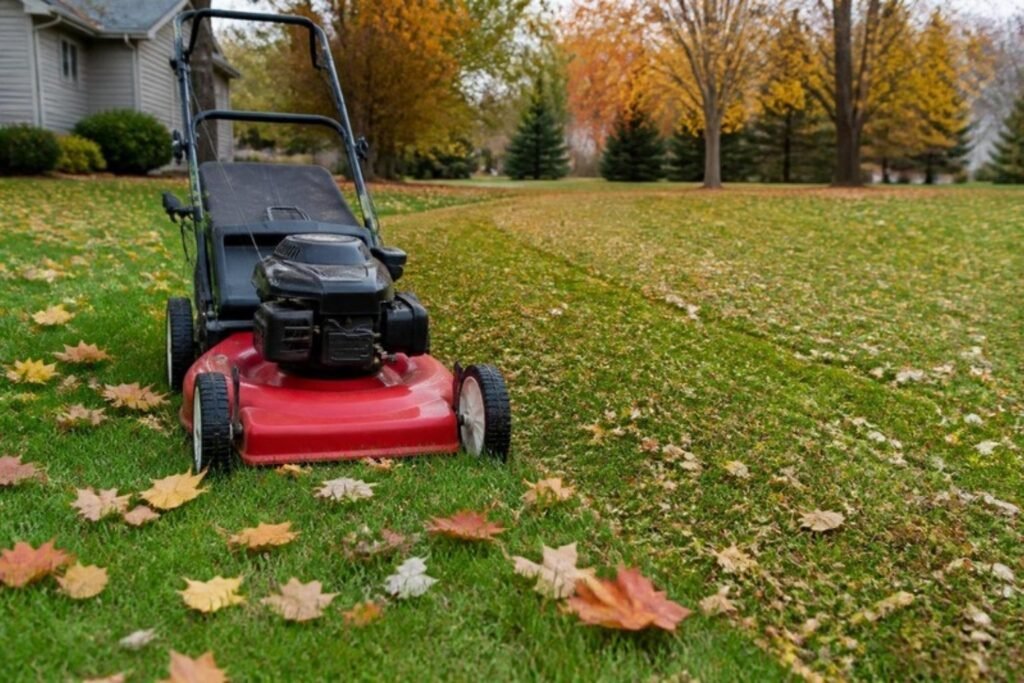
Before you choose between leaf blower vs rake, check whether you need to remove the leaves at all. On many lawns, mulching leaves with a mower is the fastest option and returns nutrients and organic matter to the soil.
- The research: Virginia Tech extension cites a Purdue University study in which up to 4,000 pounds of maple leaves per acre were mulched into a perennial ryegrass lawn with no undesirable effects on turf quality, color, growth or thatch.
- Soil benefits: a Michigan State University study summarized by the University of Missouri found that mulched leaves increased soil organic matter without changing soil pH.
- Limits: the University of Missouri advises that more than 3 to 4 inches of leaves is probably too much to mulch in one go. A thick, wet layer left on the grass blocks light and raises the risk of disease.
For the best results, mow when the leaves are dry, chop them into small pieces until you can see the grass again, and make more than one pass if needed. A mulching mower works best, but most rotary mowers can do the job. Remove sticks first, wear eye protection, and keep the mower blade sharp.
Mulching leaves does not work for every yard. Very thick leaf layers, pine needles and leaves on gravel or beds still need a rake or a blower.
What About a Leaf Vacuum or Mulcher?
Many corded and battery leaf blowers convert into a leaf vacuum. The air flow is reversed, the leaves pass through an impeller that shreds them, and the pieces end up in a bag. Manufacturers list a mulch ratio, such as 10:1 or higher, which tells you how much the volume shrinks.
- Good for: small piles, patios, flower bed edges and corners where leaves collect, and filling compost bins with shredded leaves that break down faster.
- Less good for: large lawns, because the bag fills quickly; wet leaves, which clog the tube; and yards with sticks, acorns or gravel that can damage the impeller.
- Standalone leaf mulchers shred big piles of dry leaves into a bin or bag and are useful if you compost a lot.
A vacuum is a handy extra, but for most yards the main choice is still leaf blower vs rake, with the mower doing the work on the lawn.
Leaf Blower or Rake: Which Fits Your Yard?
| Situation | Best fit | Why |
|---|---|---|
| Small yard with one or two trees | Rake | Quick, quiet and no setup |
| Large lawn with many trees | Mower plus leaf blower | Mulch the lawn, blow the hard surfaces |
| Driveway, patio and paths | Leaf blower | Fast on hard surfaces and in corners |
| Gravel, mulch and shrub borders | Leaf blower | Moves leaves without pulling up stones or bark |
| Wet, matted leaves | Rake | Handles heavy leaves a blower cannot lift |
| Close neighbors or noise rules | Rake or battery leaf blower | Little or no noise and no fumes |
Most yards end up using two of the three: a mower or rake for the lawn and a leaf blower for hard surfaces. If you decide on a blower, our best leaf blowers guide compares cordless, corded and gas models.
Raking vs Blowing Leaves: Health, Wildlife and the Environment
Speed is not the only thing that separates raking vs blowing leaves. Here is how both compare on the less obvious points:
| Factor | Raking | Blowing |
|---|---|---|
| Exercise | Moderate workout; about 144 calories per 30 minutes for a 155 lb person | Light work; carrying and vibration still tire you |
| Hearing | No risk | Hearing protection needed, especially with gas models |
| Dust and pollen | Little dust | Lifts dust, pollen and garden chemicals into the air |
| Wildlife | Easy to leave leaves in beds and under shrubs | Tends to clear everything, including leaves insects shelter in |
| Air quality | No emissions | Gas: high emissions. Battery: none at the tool |
The National Wildlife Federation encourages leaving leaves in garden beds and under shrubs, where butterflies, bumble bees and other wildlife spend the winter. Whichever tool you use, you do not need to remove every leaf from the whole yard.
How to Rake Leaves Efficiently
- Use a real leaf rake. A wide rake with flexible tines moves more leaves per stroke than a stiff garden rake.
- Rake with the wind. Work in the direction the wind blows, and pick a calm, dry day if you can.
- Work in sections. Divide the lawn into strips and rake each strip into small piles instead of one huge pile.
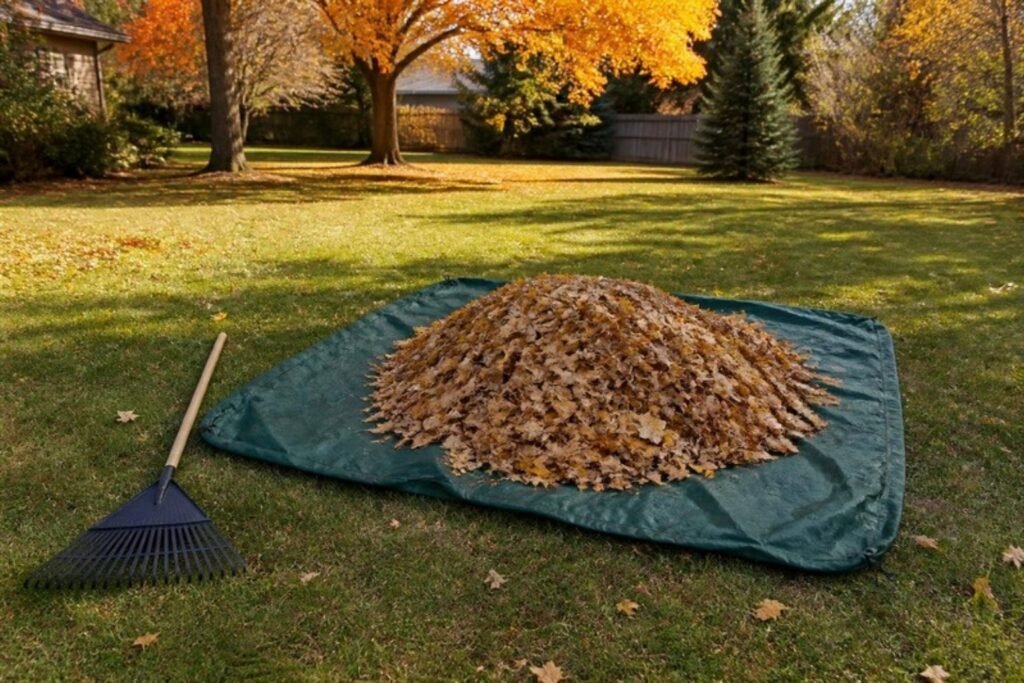
- Use a tarp. Rake the leaves onto a drawstring tarp and drag it to the compost or curb instead of bagging every pile by hand.
- Protect your back. Stand upright, keep the rake close, switch hands regularly and take short breaks. Wear gloves to prevent blisters; see our best gardening gloves.
- Rake more often. A thin layer every week is much easier to rake than a thick, wet layer at the end of the season.
How to Use a Leaf Blower Well
- Blow in one direction. Work from the edges toward one central pile, and do not fight the wind.
- Use the lowest speed that works. It saves battery, makes less noise and scatters fewer leaves.
- Keep the nozzle low. Aim at a shallow angle so the air lifts the leaves without blasting soil and mulch.
- Protect your ears and eyes. Wear hearing protection with gas models and safety glasses with any blower.
- Respect your neighbors. Check local hours and avoid blowing leaves onto sidewalks, streets or the yard next door.
Comparing models? Our guides to the best leaf blowers and gas vs electric leaf blowers explain what airflow, battery size and weight mean in practice.
Where to Put the Leaves
Whichever tool you use, fall leaves are a resource, not just waste. The National Wildlife Federation recommends moving leaves off lawns, sidewalks and driveways, and using them in garden beds instead:
- Garden beds: spread a leaf layer of about 3 to 5 inches as winter mulch; it suppresses weeds and breaks down into nutrients.
- Under trees and shrubs: leaves provide habitat for butterflies, bumble bees, fireflies and other wildlife.
- Compost: add extra leaves to a compost pile, where they turn into rich compost over time.
- Curbside collection: check your town’s yard waste rules for anything you cannot use.
In wildfire-prone areas, the National Wildlife Federation advises keeping leaf mulch away from the house. Our fall checklist to winterize your garden shows how leaf mulch fits into the rest of your fall jobs.
Common Mistakes to Avoid
- Leaving a thick, wet layer of leaves on the lawn all winter.
- Mulching leaves when the layer is so thick that the mower clogs.
- Using a stiff garden rake that tears up the grass instead of a leaf rake.
- Blowing wet leaves on full power and spraying soil and mulch everywhere.
- Running a gas leaf blower early in the morning or outside permitted hours.
- Blowing leaves into the street, where they can clog storm drains.
- Raking with a bent back for hours without breaks.
Rakes and Leaf Tools to Consider
These two tools make leaf cleanup by hand much faster. For blowers, see our best leaf blowers comparison, where you will find cordless, corded and gas models.
| Product | Helps with | Good to know | Link |
|---|---|---|---|
| Bully Tools 30-inch poly leaf rake | Moving large amounts of leaves quickly | Wide poly head with a fiberglass handle | View on Amazon |
| Rocky Mountain Goods drawstring tarp, 9 × 9 ft | Dragging leaves to the compost or curb | Closes into a bag with the drawstring | View on Amazon |
Prices and sizes on Amazon change often. Check the dimensions and materials on the product page before you buy.
Frequently Asked Questions
Is it better to rake or blow leaves?
For small yards, wet leaves and garden beds, raking is usually better. For large areas, hard surfaces and gravel, a leaf blower is faster. On many lawns, mulching leaves with a mower is the easiest option of all.
Is a leaf blower faster than a rake?
On large, open areas with dry leaves, yes. On small lawns or with wet, matted leaves, the difference is much smaller, and a rake can even be quicker.
Is it OK to leave leaves on the lawn?
A light layer is fine, especially if you mow it into small pieces. A thick layer left all winter blocks light and holds moisture, which can damage the grass. Move thick layers to beds or the compost.
Can I mow leaves instead of raking them?
Yes. Mulching leaves with a mower returns nutrients and organic matter to the soil. University research found no harm to the lawn, as long as the layer is not too thick. Make more than one pass if needed.
Are battery leaf blowers quieter than gas?
Yes, a battery leaf blower is noticeably quieter than a gas model and produces no exhaust. It still makes noise, so check local rules on hours of use.
Why are gas leaf blowers banned in some places?
Because of noise and air pollution. CARB reports that one hour of running a commercial leaf blower emits as much smog-forming pollution as driving a new car about 1,100 miles. California now requires most new small off-road engines to be zero-emission, and Audubon reports that more than 100 U.S. cities and towns ban gas blowers or limit their use.
How loud is a leaf blower?
Some gas leaf blowers produce more than 100 decibels, according to Audubon magazine, which is loud enough to call for hearing protection. Battery leaf blowers are noticeably quieter, but still loud up close.
Is raking leaves good exercise?
Yes. Harvard Health lists raking the lawn at about 120 to 168 calories per 30 minutes, depending on body weight. Use good technique, switch sides and take breaks to spare your back.
Is a leaf vacuum better than a leaf blower?
Not better, but different. A leaf vacuum shreds leaves into a bag and is great for small piles, beds and patios. For a large lawn the bag fills too quickly, and a blower, rake or mower is faster.
Can you use a leaf blower on wet leaves?
You can try, but wet, matted leaves are heavy and stick to the grass. A powerful blower on a low angle helps on hard surfaces; on the lawn a rake usually works better until the leaves dry.
Should I leave some leaves for wildlife?
Yes, where you can. The National Wildlife Federation recommends leaving leaves in garden beds and under trees and shrubs, where insects such as butterflies and bumble bees overwinter. Keep thick layers off the lawn.
Does a leaf blower damage the lawn?
Not when you use it on a low setting at a shallow angle. On full power it can blow away mulch, topsoil and grass seed in bare patches. On the lawn itself, mowing or raking is gentler.
When is the best time to rake leaves?
On a dry, calm day, ideally every week or two while the leaves are falling instead of once at the end of the season. Dry leaves are lighter and much easier to move, whichever tool you use.
What kind of rake is best for leaves?
A wide leaf rake with flexible plastic or spring steel tines. It glides over the grass and moves more leaves per stroke than a stiff garden rake, which is made for soil and gravel.
What should I do with raked leaves?
Use them as mulch in garden beds, add them to compost or leave a layer under trees and shrubs for wildlife. Check your town’s yard waste collection for the rest.
Final Thoughts
The leaf blower vs rake choice depends on your yard more than on the tools. A rake is the quiet, inexpensive choice for small yards, wet leaves and garden beds. A leaf blower, ideally a battery model, saves time on large areas, hard surfaces and gravel. And on many lawns, mulching leaves with your mower does most of the work for you.
Ready to choose? Compare models in our best leaf blowers guide, and use our fall checklist to finish the rest of your yard before winter.
Sources
- Virginia Cooperative Extension: “Leave” them alone, lawn leaf management
- University of Missouri IPM: Try mowing leaves rather than removal
- National Wildlife Federation: Leave the leaves
- California Air Resources Board: Small off-road engine fact sheet
- California Air Resources Board: Most new small off-road engines zero-emission from 2024
- Audubon magazine: Why cities are taking action to limit loud, polluting lawn care (2021)
- Harvard Health Publishing: Calories burned in 30 minutes for people of three different weights
- Amazon US: Bully Tools poly leaf rake listing