
How to Store Patio Furniture for Winter: 8 Easy Steps
Clean, dry, cover or bring inside: a practical plan to protect wood, metal, wicker and plastic outdoor furniture, cushions and umbrellas from snow, ice and damp, so your patio is ready to use again in spring.
Affiliate disclosure: This guide contains affiliate links to Amazon and links to our buying guides. As an Amazon Associate, we earn from qualifying purchases at no additional cost to you.
Knowing how to store patio furniture for winter is the difference between a patio that is ready on the first warm weekend of spring and one that needs sanding, new cushions and a can of rust paint. Snow, ice and months of damp are hard on outdoor furniture, but most of the damage is easy to prevent.
This guide on how to store patio furniture for winter walks you through eight steps, from cleaning to choosing between a garage and a cover. You will also find what each material needs, how to store outdoor cushions so they stay fresh, which patio furniture covers work best, and when it is fine to leave a set outside.
When Should You Put Patio Furniture Away for Winter?
Start before the first hard frost and before the first wet snow. Furniture makers quoted by Martha Stewart advise bringing furniture in once nighttime temperatures dip into the 30s °F and the first frost warnings arrive. The right moment depends a lot on where you live:
| Region | When to store or cover |
|---|---|
| Upper Midwest and northern New England | Late September to mid-October |
| High desert and mountain areas | Late September to early October; valleys can wait a little longer |
| Mid-Atlantic and central states | Mid-October to early November, around the big leaf cleanup |
| Southern states | Around December, or when cold, steady rain starts |
| Florida and the Gulf Coast | Whenever a named storm or strong wind is forecast |
| West Coast | When the heavy rain starts, usually in November |
A prolonged deep freeze is the real danger point. Matt Scallions, director of design at Lane Venture, advises moving furniture into a garage or climate-controlled storage when temperatures below 20 °F are forecast for days on end, and covering or moving wood furniture during sub-freezing spells even in the South.
Pick a dry, mild day. Furniture dries quickly in the sun, and cushions and covers go on or in much more easily when they are not stiff with cold. If you still use the patio on sunny weekends, store the cushions and umbrella first and leave the frame until the weather turns for good.
Winterizing your outdoor furniture fits well with the rest of your fall jobs. Our 12-step fall checklist to winterize your garden covers the beds, tools and faucets, and our guide on how to store a garden hose for winter takes care of the watering gear on the same day.
Can Patio Furniture Stay Outside in Winter?
Some of it can. Whether patio furniture in winter can stay outdoors depends mainly on the material, the finish and how harsh your winters are. This table gives a quick overview:
| Material | Stay outside? | What to watch for |
|---|---|---|
| HDPE lumber (POLYWOOD and similar) | Yes | Made for all seasons; a cover is optional and mainly keeps it clean |
| Aluminum | Yes, covered | Water trapped in hollow legs can freeze; check the foot caps |
| Teak and other hardwoods | Yes, covered | Turns silver-gray when untreated; avoid standing water around the legs |
| Resin wicker | Yes, covered | Snow load on seats; check the frame material underneath |
| Wrought iron and steel | Better inside | Rust starts at chips and scratches |
| Natural wicker, rattan, painted or softwood | No | Moisture and freeze-thaw cycles cause cracks, rot and peeling |
| Cushions, umbrellas, glass tops | No | Mildew, torn fabric and cracked glass |
The rule of thumb: the frame can often stay outside under a good cover, but fabric, glass and anything that soaks up water should come inside.
How to Store Patio Furniture for Winter in 8 Steps
1. Clear the patio and sort what goes where
Take everything off the furniture: cushions, pillows, throws, planters and table decor. Make three groups: pieces that go indoors, pieces that stay outside under a cover, and anything that needs repair or replacing. Doing this first tells you how much storage space you actually need.
2. Clean every piece
Dirt, pollen, bird droppings and leaf stains are much harder to remove after sitting all winter, and trapped grime holds moisture. For most materials, mild dish soap, warm water and a soft sponge or brush are enough. POLYWOOD recommends exactly that mix for its furniture. Rinse thoroughly so no soap residue stays behind.
3. Let it dry completely
This is the step most people rush. Covering or storing furniture while it is still damp invites mold and mildew. POLYWOOD warns that trapped moisture under a cover can lead to exactly that. Leave everything in the sun for a few hours, wipe out joints and tip chairs to drain water from frames.
4. Repair and protect
Fix small problems now, while they are still small. Touch up chips in painted metal, sand rough spots on wood, tighten loose bolts and sew up small tears in fabric. On wood, a fresh coat of sealant or stain protects against moisture. On metal, a coat of car wax or a silicone spray adds a water-repellent layer.
5. Bring fabric, glass and small items inside
Store outdoor cushions, pillows, umbrellas, rugs and glass table tops indoors, even if the frames stay outside. These are the parts that suffer most from winter and they take up little space. Brush and wash umbrella canopies with mild soap, let them dry completely, then close them and store them in their sleeve. Disconnect propane tanks from fire pit tables and patio heaters, following the manual; the cylinders themselves belong outdoors, upright and away from doors and windows, never in a garage, shed or basement.
6. Move delicate pieces indoors
If you have space in a garage, shed or basement, prioritize natural wicker, wrought iron, painted wood and anything with a weak finish. Stack only pieces the manufacturer says are stackable, and do not pile heavy items on chair seats or glass. Put cushions or blankets between stacked pieces so frames do not scratch each other.
Two storage details make a big difference. First, do not store furniture upside down: Lane Venture’s Matt Scallions warns that water collects in the drain holes, freezes and can burst aluminum frames or break wood joints. Second, keep the legs off bare concrete, which draws moisture up into the feet. A pallet, a shelf or a few furniture pads solve that.
7. Cover what stays outside
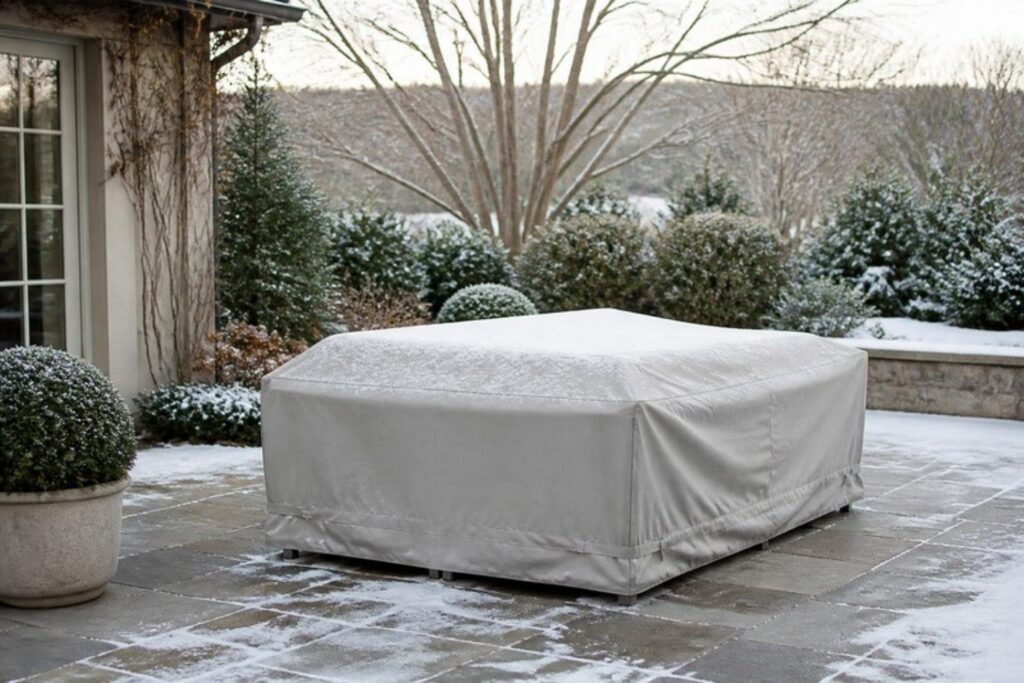
Use fitted, breathable patio furniture covers that reach close to the ground and fasten securely. A good fit matters: POLYWOOD notes that loose covers can trap snow and ice in their folds, which adds weight and can tear the fabric. Let the hem stop just above the ground, so air can circulate underneath, and raise furniture slightly on blocks or furniture feet so water does not pool and freeze around the legs.
8. Check it during the winter
Brush heavy snow off covered furniture after a storm and knock down icicles, since the weight strains joints and covers. After a windy week, check that covers are still fastened. A quick look once a month is enough.
How to Winterize Patio Furniture by Material

The eight steps on how to store patio furniture for winter apply to every set, but each material has its own weak spot. Here is how to winterize patio furniture by type.
Wood and teak
Clean wood with mild soap and a soft brush, and let it dry thoroughly. Replace slats with soft spots or deep cracks. Untreated teak weathers to a silver-gray color outdoors; that is a cosmetic change, not damage. Painted or stained softwood is more vulnerable and is best stored inside. Keep all wood off wet ground so the feet do not soak up water.
Aluminum
Aluminum does not rust, but hollow legs can collect water that expands when it freezes. POLYWOOD suggests removing foot caps on aluminum furniture so the water can drain, and touching up scratches with paint. A coat of car wax helps keep the finish looking new.
Wrought iron and steel
Rust starts wherever the coating is chipped. Remove loose rust with a wire brush, touch up the spot with matching exterior paint and let it cure before winter. If you have room, store iron furniture inside; if not, cover it and raise it off the ground.
Resin and natural wicker
Resin wicker handles weather well, but a heavy layer of snow can stretch the weave on seats and backs, so keep it covered. Repair broken strands before they snag. Natural wicker and rattan absorb moisture and should always come indoors.
HDPE and plastic
HDPE lumber furniture is designed to stay outside all year. POLYWOOD says its furniture can stay outdoors through heavy snow without special precautions, and that covers are optional. Thin injection-molded plastic chairs are a different story: cold can make them brittle, so stack them in a shed or garage.
How to Store Outdoor Cushions for Winter
Outdoor cushions are the part of a patio set most likely to come out of winter smelling musty. Even quick-dry foam and solution-dyed fabric need the right storage.
- Clean them first. Sunbrella recommends a mix of 1/4 cup mild soap per gallon of lukewarm water, a soft brush, a thorough rinse and air drying only. Check the care label of your own cushions.
- Dry them completely. Stand cushions on their sides in the sun, or indoors near a fan, until the foam is dry all the way through.
- Store them dry and ventilated. Use a breathable cushion storage bag or a lidded storage tote on a shelf in a garage, closet or basement. Avoid sealing slightly damp cushions in plastic.
- Keep them off the floor. A shelf or a raised deck box keeps them away from damp concrete and mice.
- Refresh the water repellency. In spring, or before storage, a spray-on fabric protector restores water repellency on outdoor fabrics.
A deck box is fine for outdoor cushions in a mild climate, as long as it sits on a dry surface and the cushions go in fully dry. In wet or very cold regions, indoor storage is safer.
How to Choose Patio Furniture Covers
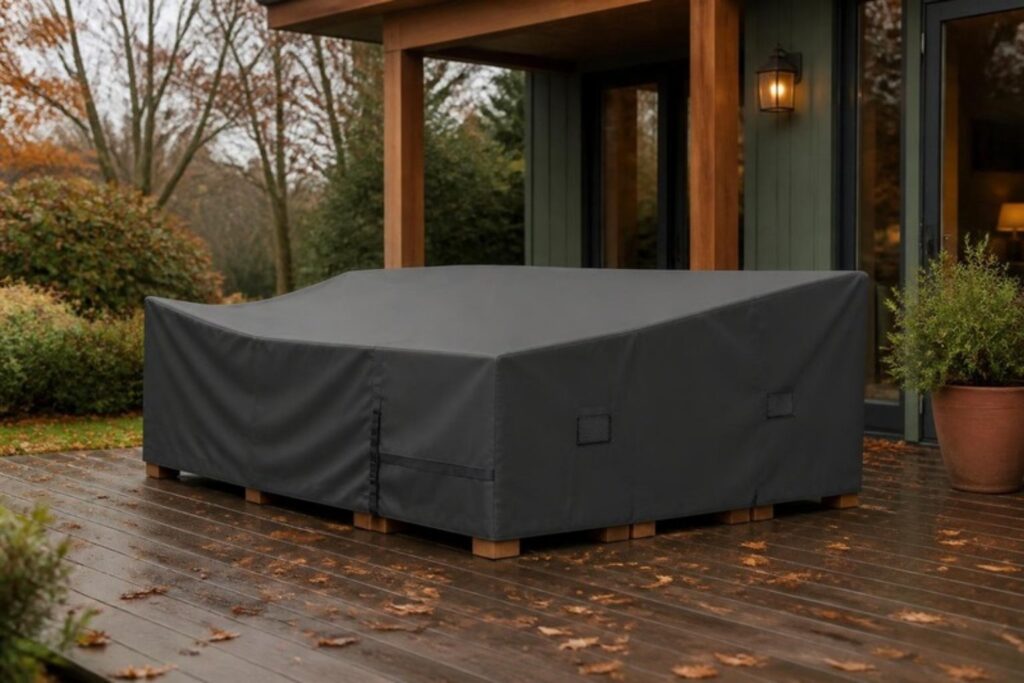
The right patio furniture covers keep snow, rain and leaves off your set without trapping moisture. Look for these features:
| Feature | Why it matters |
|---|---|
| Water-resistant and breathable | Keeps rain out while letting trapped moisture escape, which prevents mildew |
| Snug fit | Loose fabric collects snow and ice in its folds and can tear under the weight |
| Vents | Help moisture escape and stop the cover from ballooning in the wind |
| Straps, buckles or a drawcord | Keep the cover in place during winter storms |
| Padded handles | Make it easy to put the cover on and take it off without tearing |
Measure the set with chairs pushed in before you buy, and compare it with the cover dimensions. If you cannot find a fitted cover, a heavy-duty, UV-resistant tarp secured with bungee cords works as a backup. Keep in mind that plastic tarps and shrink wrap are waterproof but not breathable, so condensation can build up underneath. Prop the tarp up in the middle so water runs off, and leave the bottom open enough for air to circulate.
Where to Store Patio Furniture in Winter
The best place is dry, protected from frost and big enough that nothing needs to be stacked on top of fragile pieces.
| Location | Best for | Check first |
|---|---|---|
| Garage | Frames, folding chairs, umbrellas | Keep away from cars, salt spray and chemicals |
| Basement | Outdoor cushions and delicate pieces | Humidity; use shelves, not the floor |
| Garden shed | Frames and plastic chairs | Leaks, damp and rodents |
| Deck box | Cushions in mild climates | Dry surface, fully dry cushions |
| Outside, covered | HDPE, aluminum, teak, resin wicker | Fitted cover, legs off wet ground |
Short on space? Fold or stack what you can, hang folding chairs on wall hooks, and slide side tables under the dining table. In a small garage, prioritize the cushions and the most delicate pieces, and cover the rest outside.
How to Protect Patio Furniture Without a Garage
No garage, shed or basement? You can still protect patio furniture well through the winter. It takes a little more planning:
- Bring in the small things. Outdoor cushions, pillows and the umbrella canopy fit in a closet, under a bed or in a storage bag in the attic.
- Group the frames. Push the pieces together against a wall on the sheltered side of the house, out of the prevailing wind and away from the roof drip line.
- Raise everything. Set the legs on pavers, blocks or furniture pads so they stay out of standing water and ice.
- Use fitted, vented covers. One cover per group or set is easier to secure than loose covers on single chairs.
- Remove glass tops. Store them flat or on their edge indoors, on a blanket, so they cannot crack in the cold.
- Anchor against wind. Tighten straps and drawcords, and weigh down lightweight chairs or stack them in a corner.
On a small balcony, a lidded deck box or a tall vertical storage cabinet keeps cushions dry in mild climates, and folding chairs can hang on wall hooks. The rest of the advice is the same as for a garden: clean, dry and covered.
A Simple Spring Checklist
- Remove the covers on a dry day and let them air out before you fold them away.
- Check frames for rust, cracks and loose bolts.
- Wash the furniture with mild soap and water to remove winter grime.
- Air out outdoor cushions and check for mildew before you put them back.
- Reapply sealant to wood and refresh the water repellency of fabrics if needed.
Planning to use the patio earlier next year? Our winter patio ideas show how to keep a seating area comfortable through the cold months.
Common Mistakes When Storing Patio Furniture for Winter
- Covering furniture while it is still wet, which traps moisture and causes mildew.
- Using a non-breathable plastic sheet tied tightly around the furniture.
- Leaving outdoor cushions in a damp deck box all winter.
- Letting snow pile up on covered furniture for weeks.
- Storing metal furniture next to road salt or pool chemicals.
- Stacking chairs that are not designed to stack.
- Storing furniture upside down, so water collects in the drain holes and freezes.
- Leaving the legs directly on concrete, which draws moisture into the feet.
- Leaving furniture on soggy grass, where the legs sit in water and ice.
- Forgetting the propane tank of a fire pit table or patio heater.
Patio Furniture Covers and Storage to Consider
You do not need special gear to store patio furniture for winter, but these three items solve the most common problems: furniture that stays outside, outdoor cushions without a home, and fabric that no longer repels water.
| Product | Helps with | Good to know | Link |
|---|---|---|---|
| Classic Accessories Veranda patio set cover | Covering a dining set that stays outside | Sold in many sizes; measure your set first | View on Amazon |
| Keter Westwood 150-gallon deck box | Storing dry cushions in a mild climate | Resin box with a lid that doubles as a bench | View on Amazon |
| 303 Fabric Guard, 32 oz | Restoring water repellency on outdoor fabrics | Apply to clean, dry fabric | View on Amazon |
Prices, sizes and availability on Amazon change often. Check the dimensions and care instructions on the product page before you buy.
Frequently Asked Questions
Is it OK to leave patio furniture outside in winter?
For some materials, yes. HDPE lumber, aluminum, teak and resin wicker can stay outside under fitted covers. Natural wicker, wrought iron, painted wood, outdoor cushions, umbrellas and glass tops are better stored indoors.
Should I cover patio furniture in winter?
Yes, if it stays outside and the manufacturer does not say covers are unnecessary. Use breathable, fitted patio furniture covers and only put them on when the furniture is completely dry.
How do I store outdoor cushions for winter?
Clean them, let them dry completely and store them in a breathable bag or lidded tote on a shelf in a dry garage, closet or basement. Avoid sealing damp cushions in plastic.
Can outdoor cushions stay in a deck box all winter?
In a mild, dry climate they can, as long as they go in fully dry and the box stands on a dry surface. In wet or very cold regions, indoor storage is the safer choice.
How do I winterize patio furniture made of metal?
Clean it, touch up chips and scratches with paint, and protect the finish with car wax or a silicone spray. For aluminum, make sure water can drain from hollow legs. Store wrought iron indoors if you can.
Does snow damage patio furniture?
Snow itself is not the problem; weight, moisture and freeze-thaw cycles are. Heavy snow can strain joints, covers and wicker weaves, and melting snow that refreezes can crack wood and finishes. Brush heavy snow off after storms.
What temperature is too cold for patio furniture?
There is no single number, but furniture makers quoted by Martha Stewart advise bringing furniture in when nights dip into the 30s °F and the first frost warnings arrive. For a prolonged freeze below 20 °F, a garage or other sheltered storage is the safest place.
Can I store patio furniture upside down?
It is better not to. Water collects in the drain holes, freezes and can burst aluminum frames or break wood joints. Store pieces upright or on their side, raised off the ground.
Can I use a tarp to cover patio furniture?
Yes, as a backup. Use a heavy-duty, UV-resistant tarp, prop it up so water runs off, and leave room for air to circulate, because plastic is not breathable and condensation can cause mildew.
How do I protect patio furniture without a garage?
Bring cushions, the umbrella and glass tops inside, group the frames against a sheltered wall, raise the legs on pavers or pads, and use fitted, vented covers with straps. In mild climates, a deck box holds dry cushions.
Can teak furniture stay outside in winter?
Yes, teak can stay outside under a breathable cover, raised off wet ground. It turns silver-gray when untreated, which is cosmetic. In a long, hard freeze, a garage or shed is still the safer place.
Should I store patio umbrellas indoors?
Yes. Close the umbrella when it is dry, remove it from the base and store it indoors, preferably in its storage sleeve. Wind and snow can bend the ribs and tear the canopy.
When should I bring patio furniture out again?
After the last hard frost in your area, on a dry day. Remove the covers, clean the furniture and check everything for damage before you put the cushions back.
Final Thoughts
Learning how to store patio furniture for winter comes down to four things: clean it, dry it, protect the fabric and keep water away from the frames. Bring outdoor cushions, umbrellas and delicate pieces inside, cover the rest with fitted patio furniture covers and raise the legs off wet ground. If you have no garage, you can still protect patio furniture with fitted covers, raised legs and a sheltered spot. An afternoon of work in the fall means a patio that is ready on the first sunny day of spring.
Want to keep using your patio through the cold months instead? See our winter patio ideas and compare heating options in our best patio heaters guide.
Sources
- POLYWOOD: How to winterize patio furniture in 4 easy steps
- POLYWOOD: Keeping POLYWOOD outside year-round
- Martha Stewart: Exactly when to bring patio furniture inside for winter, and how to store it
- Sunbrella: Upholstery care and cleaning
- Amazon US: Classic Accessories Veranda patio set cover listing
- Amazon US: Keter Westwood 150-gallon deck box listing

