
12 Plants That Bring Positive Energy to Your Home and Patio
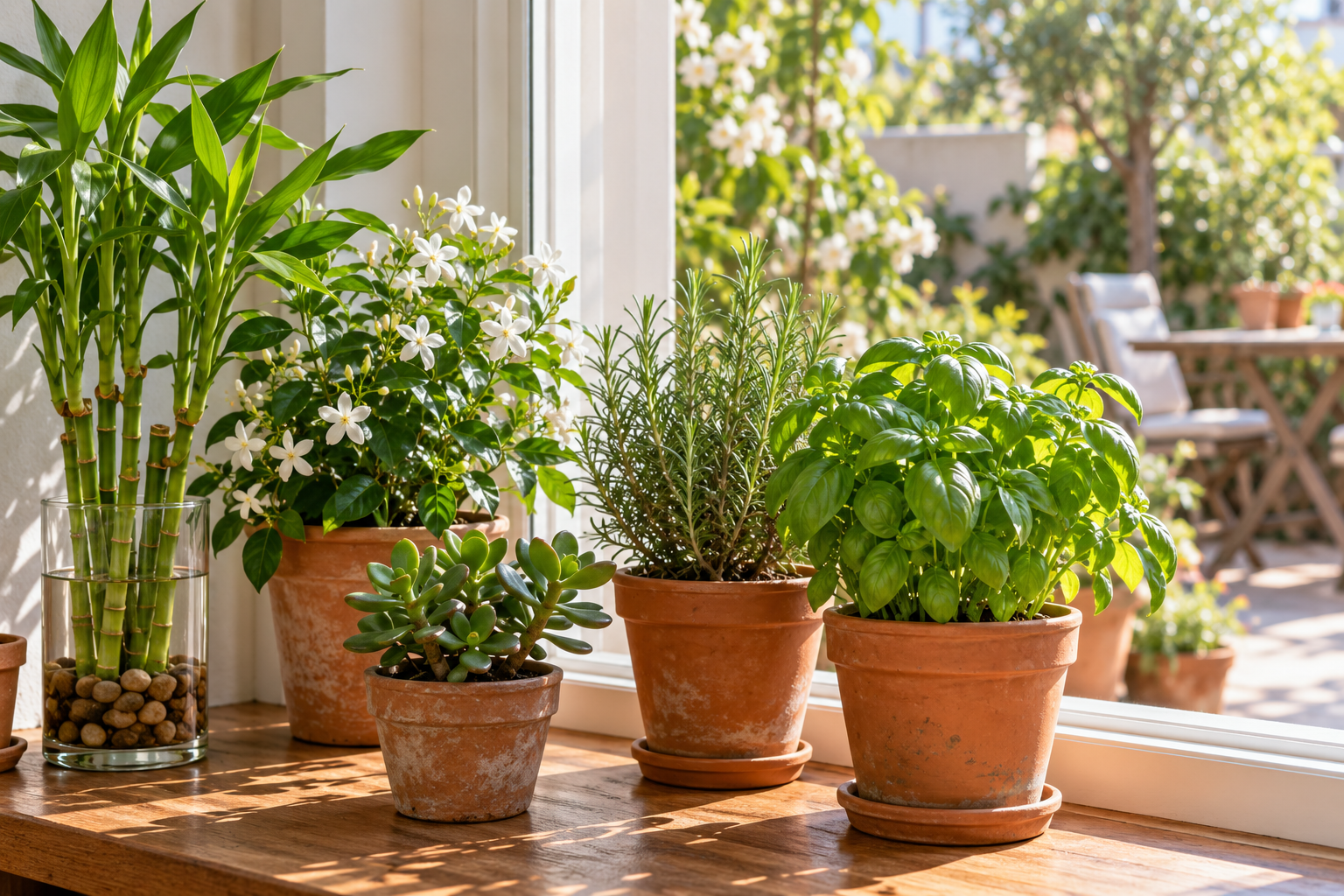
Plants that bring positive energy, explained honestly: popular feng shui plants and good luck plants such as lucky bamboo, jasmine, rosemary and basil, what tradition says and what science says, simple lucky bamboo care, and which choices are pet safe plants.
Affiliate disclosure: This guide links to our buying guides, which contain affiliate links. As an Amazon Associate, we earn from qualifying purchases at no additional cost to you.
Many people choose plants not only for their looks but for the mood they create. In feng shui and other traditions, certain plants are believed to bring luck, calm or “positive energy” into a home. Whatever you believe, a room or patio filled with healthy green plants simply feels more welcoming.
This guide covers 12 popular plants that bring positive energy according to tradition, from lucky bamboo to rosemary. For each plant, we separate tradition from science, give practical care tips and flag whether it belongs on our list of pet safe plants. You will also learn simple lucky bamboo care and why the popular claim that houseplants “clean the air” needs a big asterisk.
Feng Shui Plants and Good Luck Plants: Tradition vs. Science
| Claim | What tradition says | What science says |
|---|---|---|
| Plants bring “positive energy” | Feng shui links living plants with growth, vitality and good fortune | “Energy” in this sense cannot be measured; it is a cultural belief |
| Plants bring luck | Lucky bamboo, jade and money plants are classic good luck plants | No evidence, but they make thoughtful, long-lasting gifts |
| Plants make you feel better | Plants create harmony in a space | Research links gardening and plant care to better mood and less stress |
| Plants purify the air | Some plants “cleanse” a room | A review of 30 years of studies found you would need 100 to 1,000 plants per square meter to match normal ventilation |
The old version of this page presented claims such as “aloe vera absorbs negative energy” or “peonies increase the chance of love” as facts. We keep the traditions, because many readers enjoy them, but label them clearly. For the evidence on how gardening affects well-being, see our guide to the health benefits of gardening.
12 Plants That Bring Positive Energy at a Glance
| Plant | Traditional meaning | Light | Pets |
|---|---|---|---|
| Lucky bamboo | Luck, prosperity | Bright, indirect | Toxic to cats and dogs |
| Jasmine (Jasminum) | Love, sweetness | Bright light, some sun | Generally considered pet safe |
| Rosemary | Protection, clarity | Full sun | Generally considered pet safe |
| Basil | Harmony, good fortune | Full sun | Generally considered pet safe |
| Mint | Freshness, energy | Sun to part shade | Can upset pets’ stomachs in quantity |
| Sage | Cleansing (smudging tradition) | Full sun | Generally considered pet safe |
| Peace lily | Peace, harmony | Low to medium | Irritant to pets (FDA) |
| Snake plant | Protection, resilience | Low to bright | Toxic to pets |
| Pothos (money plant) | Wealth, abundance | Low to bright, indirect | Toxic to pets |
| Jade plant | Prosperity | Bright, some direct sun | Toxic to cats and dogs |
| Orchids | Love, refinement | Bright, indirect | Generally considered pet safe |
| Chrysanthemum | Joy, optimism | Bright light | Toxic to pets |
Most feng shui plants on this list are easy to grow. Pet safety notes are general guidance; check any plant with your veterinarian or a pet poison control center if you are unsure. Jade toxicity is listed by NC State; lily warnings come from the FDA.
Lucky Bamboo Care: The Classic Good Luck Plant
Lucky bamboo (Dracaena sanderiana) is not a true bamboo. Penn State Extension describes it as a forest understory plant from West Africa that likes partial shade but stays vibrant even in deep shade. In feng shui, the number of stalks carries meaning: for example, three stalks for happiness and long life. Tradition also says never to give four stalks.
| Lucky bamboo care | Recommendation | Source |
|---|---|---|
| Light | Bright, indirect light; not direct sun | Extension Foundation (Ask Extension) |
| Low light | Tolerates deep shade and stays green | Penn State |
| Water quality | Sensitive to fluoride and chlorine; use rainwater or distilled water | Ask Extension |
| Water changes | Every 1 to 2 weeks when grown in water | Ask Extension |
| Fertilizer in water | Once a month, at about 20 percent of the label dose | Ask Extension |
| Yellow leaves | Fluoride, nutrient shortage or pests such as whiteflies | Ask Extension |
Good lucky bamboo care is simple: clean water, gentle light and very little fertilizer. Lucky bamboo is a dracaena and is toxic to cats and dogs, so keep it out of reach.
Jasmine: Fragrance and Romance
Jasmine is traditionally linked with love and sweetness, and its scented flowers are the main reason people grow it. Most jasmines need bright light and flower best with some direct sun. Indoors, a cool period in winter helps many types set buds. On a sunny patio, jasmine can climb a trellis and scent a whole seating area on summer evenings. For more scented choices, see our guide to fragrant plants.
True jasmine (Jasminum) is different from Carolina jessamine (Gelsemium), which is poisonous. Check the botanical name before buying.
Rosemary, Basil, Mint and Sage: Herbs with Good Vibes
| Herb | Tradition | Practical benefit | Our guide |
|---|---|---|---|
| Rosemary | Protection, remembrance | Fragrant, culinary, loves sun | Grow in a sunny pot |
| Basil | Harmony, good fortune | Kitchen herb; the old page also mentioned it repels mosquitoes, which is not well proven | Sunny windowsill or patio |
| Mint | Freshness, prosperity | Refreshing scent and tea | See how to care for mint |
| Sage | Cleansing (smudging tradition) | Culinary herb, silvery leaves | See how to care for sage |
Herbs are perhaps the most practical plants that bring positive energy: they smell good, look fresh and end up in your cooking. Most need at least six hours of sun, so a sunny patio or balcony suits them better than a dim room. See our guide on how to grow herbs indoors for windowsill tips.
Peace Lily and Snake Plant
The peace lily (Spathiphyllum) is linked with peace and harmony. The University of Maryland notes it is one of the few plants that flowers in low light, and that it needs more water than most houseplants. The snake plant is associated with protection and resilience; Penn State describes it as growing in a wide range of light levels with minimal watering.
- Peace lily: keep the soil evenly moist; it wilts quickly when dry and recovers after watering.
- Snake plant: let the soil dry out between waterings; overwatering is the main risk.
- The FDA notes that peace lilies cause localized irritation in cats rather than the kidney failure caused by true lilies, but keep them out of reach anyway.
For more low-light options, see our guide to plants that don’t need sun.
Pothos (Money Plant) and Jade Plant
Both are classic good luck plants for wealth and prosperity, and both are among the most popular feng shui plants. Pothos (Epipremnum aureum) is an easy trailing plant; Penn State notes that most pothos prefer bright to medium indirect light, and that the ‘Jade’ cultivar does better in lower light than brightly variegated types. The jade plant is a succulent that needs bright light and little water; see our guide on how to propagate a jade plant to grow more for friends.
Flowering Plants: Orchids, Chrysanthemums, Peonies and Lilies
- Orchids: linked with love and refinement; moth orchids flower for weeks in bright, indirect light.
- Chrysanthemums: symbols of joy and optimism; best as patio plants in fall. Toxic to pets.
- Peonies: symbols of love and prosperity; garden perennials for sunny beds, not houseplants.
- Lilies: beautiful and fragrant, but the FDA warns that the entire plant, including pollen and vase water, is toxic to cats and can cause kidney failure.
The old version of this page recommended lilies and daffodils for the home without any warning. Daffodils are also toxic if eaten. If you have cats, choose orchids or herbs instead of lilies.
Aloe Vera
Aloe vera is a popular “protective” plant in many traditions and a handy succulent for a sunny window. It needs bright light, a gritty mix and very little water; let the soil dry out completely between waterings. See how to water cacti and succulents. Aloe is toxic to cats and dogs if eaten, so place it out of reach.
Do Houseplants Really Clean the Air?
Many lists of plants that bring positive energy also claim they purify indoor air. Drexel University researchers Bryan Cummings and Michael Waring reviewed a dozen studies spanning 30 years and concluded that it would take between 100 and 1,000 plants per square meter of floor space to match the air cleaning of a building’s ventilation system, or even a couple of open windows.
So enjoy plants for their beauty, their scent and the calm of caring for them, but open a window for fresh air.
Pet Safe Plants: What to Know
| Plant | Risk | Source |
|---|---|---|
| True lilies (Easter, tiger, Asiatic, Oriental, stargazer, daylily) | Extremely dangerous to cats; kidney failure within 24 to 72 hours without treatment | FDA |
| Peace lily, calla lily | Local irritation of mouth and throat | FDA |
| Jade plant | Problem for cats, dogs and horses | NC State |
| Lucky bamboo, snake plant, pothos, aloe, chrysanthemum | Commonly listed as toxic to pets | General veterinary guidance |
| Basil, rosemary, sage, orchids, jasmine (Jasminum) | Commonly listed as non-toxic | General veterinary guidance |
The FDA advises: if you suspect your cat has eaten any part of a lily, its pollen or water from a vase with lilies, call your veterinarian or a pet poison control center immediately. When in doubt, choose pet safe plants such as herbs and orchids, or place plants well out of reach.
Placement Tips for a Positive Home
| Room | Good choices | Why |
|---|---|---|
| Entrance | Lucky bamboo, peace lily | Welcoming; tolerate lower light |
| Living room | Pothos, jade, snake plant | Easy and decorative |
| Kitchen windowsill | Basil, mint, rosemary | Fresh herbs at hand |
| Bedroom | Snake plant, jasmine (if it gets enough light) | Calm, fragrant |
| Office or desk | Lucky bamboo, ZZ plant, pothos | Tolerate office lighting |
| Bathroom with a window | Peace lily, ferns | Like humidity |
When placing feng shui plants, healthy plants matter more than which plant you choose: a struggling plant is said to bring the opposite effect. Practically, that means matching each plant to the light it gets. See ZZ plant care and how to save a dying plant.
Creating a Positive Patio
Plants that bring positive energy work just as well outdoors. A few pots of herbs, a jasmine on a trellis and a comfortable chair turn a patio into a calming retreat. Add scented plants near seating, grasses that move in the wind and flowers that attract butterflies. See our guides to full sun plants, porch ferns and enjoying your patio in winter.
Good Luck Plants as Gifts
Good luck plants make thoughtful gifts because they keep growing long after flowers fade. These suggestions combine tradition with practical care and pet safety:
| Occasion | Good choice | Why |
|---|---|---|
| Housewarming | Lucky bamboo or jade plant | Classic symbols of luck and prosperity; easy care |
| New job or office | Pothos, snake plant or ZZ plant | Tolerate office lighting and irregular watering |
| Friends with cats or dogs | Orchid or a pot of herbs | Commonly listed as pet safe plants |
| Keen cooks | Rosemary, basil or mint | Useful in the kitchen |
| Romantic gesture | Jasmine or an orchid | Traditionally linked with love; beautiful flowers |
| New baby | Avoid toxic plants; choose herbs or an orchid | Safe if curious hands reach them later |
Include a short care note with your gift, for example the basics of lucky bamboo care: clean water, gentle light and little fertilizer. Avoid lilies as gifts for anyone with cats.
Common Mistakes
| Mistake | Why it hurts | Better approach |
|---|---|---|
| Choosing by meaning only | The plant struggles in the wrong light | Match the plant to your light first |
| Ignoring pet safety | Some plants are toxic | Check before buying; avoid lilies with cats |
| Tap water for lucky bamboo | Fluoride and chlorine can yellow the leaves | Use rainwater or distilled water |
| Herbs in a dark room | Leggy, weak plants | Give herbs at least six hours of sun |
| Expecting plants to clean the air | Plants are too slow to matter | Ventilate; enjoy plants for well-being |
| Overwatering succulents | Root rot | Water only when the soil is dry |
What You Need
| Item | Why it helps | More information |
|---|---|---|
| Pots with drainage holes | Healthy roots for most plants | See our container gardening guide |
| Distilled water or rainwater | Lucky bamboo care | Change every 1 to 2 weeks |
| Small hand tools and pruners | Potting and trimming herbs | See our gardening tool sets guide |
| Gardening gloves | Handling plants with irritating sap | See our gardening gloves guide |
| Hose with gentle shower nozzle | Watering patio herbs and pots | See our garden hose nozzle guide |
| Patio heater | Enjoy your plant-filled patio on cool evenings | See our patio heater comparison |
| Kneeling pad | Comfortable repotting and planting herbs | See our kneeling pad guide |
Frequently Asked Questions
Which plants bring positive energy?
According to tradition, popular choices include lucky bamboo, jasmine, rosemary, basil, mint, sage, peace lily, snake plant, pothos (money plant), jade plant, orchids and chrysanthemums.
Do plants really bring positive energy?
“Energy” in the feng shui sense cannot be measured. However, research links gardening and caring for plants to better mood and less stress.
What are the best feng shui plants?
Lucky bamboo, jade plant, pothos (money plant), peace lily and snake plant are among the most popular feng shui plants.
What is the luckiest plant?
Lucky bamboo and the jade plant are the best-known good luck plants in many traditions.
How do I care for lucky bamboo?
Give bright, indirect light, use rainwater or distilled water, change the water every one to two weeks and fertilize very lightly.
Why is my lucky bamboo turning yellow?
Common causes are fluoride or chlorine in tap water, a lack of nutrients or pests such as whiteflies.
How many lucky bamboo stalks should I have?
In feng shui tradition, the number has meaning: three stalks for happiness and long life are popular, and four stalks are traditionally avoided.
Do houseplants purify the air?
Not in a meaningful way. A review of 30 years of studies found you would need 100 to 1,000 plants per square meter to match normal ventilation.
Are lilies safe for cats?
No. The FDA warns that true lilies are extremely dangerous to cats; even pollen or vase water can cause kidney failure.
Which plants are pet safe?
Herbs such as basil, rosemary and sage, as well as orchids and true jasmine, are commonly listed as non-toxic. Always check a specific plant if you are unsure.
What plant brings good luck at the front door?
In tradition, lucky bamboo, jade plants and healthy, thriving potted plants at the entrance are said to welcome good fortune.
Which plant is best for a bedroom?
Snake plant and peace lily tolerate lower light; jasmine adds scent if the room is bright enough.
What is the best plant for a housewarming gift?
Lucky bamboo and the jade plant are classic good luck plants for a new home. For pet owners, an orchid or a pot of herbs is a safer choice.
Is a money tree the same as a money plant?
No. The money tree is Pachira aquatica, a small tree with a braided trunk; “money plant” usually refers to pothos or the jade plant. All three are popular feng shui plants.
Can I grow positive energy plants outside?
Yes. Herbs, jasmine and chrysanthemums thrive on a sunny patio, and many houseplants enjoy a summer outdoors in shade.
Final Thoughts
Plants that bring positive energy are as much about how they make you feel as about tradition. Feng shui plants and good luck plants such as lucky bamboo, jade and pothos make meaningful gifts, while herbs and jasmine bring scent and life to a kitchen or patio.
Choose plants that suit your light, keep them healthy with simple care, such as good lucky bamboo care with clean water, and look for pet safe plants if you share your home with cats or dogs. A thriving plant is the best “positive energy” of all.
Sources: Penn State Extension: low-light houseplants; Extension Foundation (Ask Extension): lucky bamboo care; University of Maryland Extension: houseplants for low light conditions; U.S. Food and Drug Administration: lovely lilies and curious cats, a dangerous combination; Drexel University: potted plants do not improve indoor air quality (Cummings and Waring, 2019); NC State Extension: Crassula ovata (jade plant).
Back to contents ↑
