
Vinegar in the Garden: What Works, What Does Not, and How to Use It Safely
Vinegar in the garden, honestly explained: does vinegar kill weeds, how a vinegar weed killer compares with horticultural vinegar, why vinegar for plants is not a fertilizer, and the cleaning jobs where vinegar really helps.
Affiliate disclosure: This guide links to our buying guides, which contain affiliate links. As an Amazon Associate, we earn from qualifying purchases at no additional cost to you.
Vinegar is one of the most popular “natural” garden tricks online. It is said to kill weeds, feed plants, chase away pests and cure plant diseases. Some of these claims are true, some only half true, and some can actually harm your plants. If you want to use vinegar in the garden, it helps to know the difference.
This guide explains what vinegar really does, based on university research. You will learn whether vinegar kills weeds and which ones, how a homemade vinegar weed killer compares with horticultural vinegar, why vinegar for plants is not a fertilizer, why you should never add salt, and the practical cleaning jobs where vinegar is truly useful. We also cover safety, because strong vinegar is far less harmless than it sounds.
What Is Vinegar, and How Does It Affect Plants?
Vinegar is a solution of acetic acid in water. NPIC describes acetic acid as a non-selective contact herbicide: it breaks open plant cell walls, so the leaves it touches dry out and die. It only works where it lands, it does not move through the plant to the roots, and it breaks down quickly in the environment.
That explains both the strengths and the limits of vinegar in the garden. It can burn down leaves quickly, but it cannot tell weeds from your favorite plants, and it does not reach the roots of tough weeds.
Does Vinegar Kill Weeds?
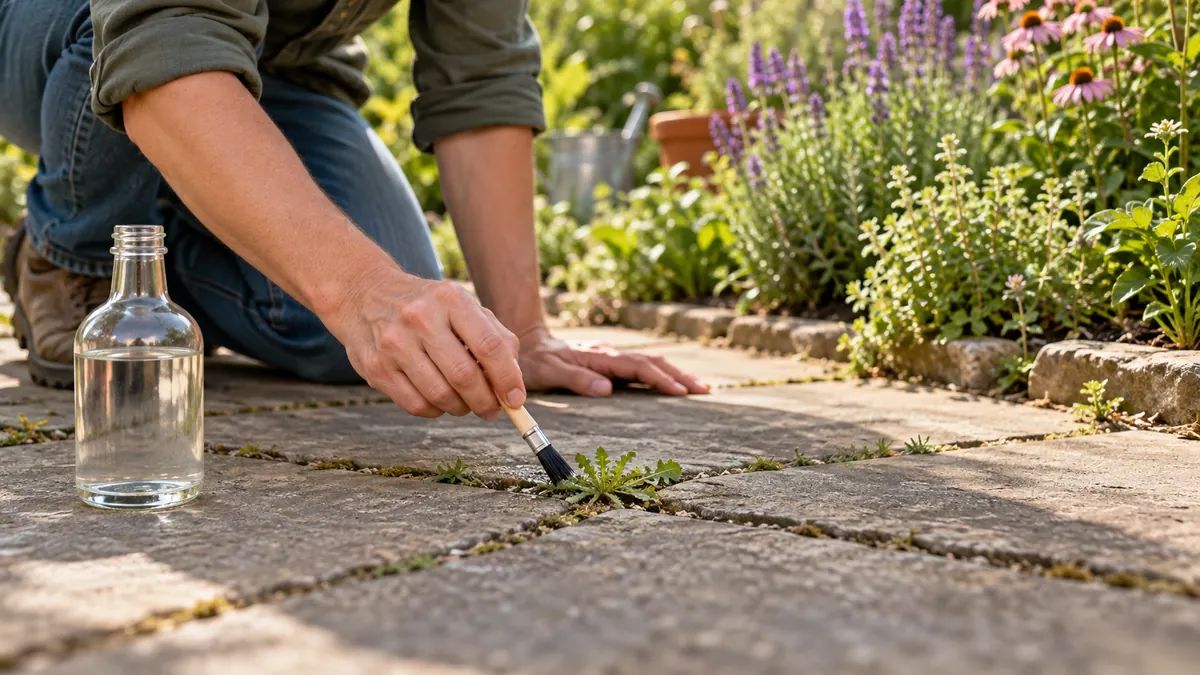
Does vinegar kill weeds? Partly. According to the University of Maryland Extension, acetic acid works well on young broadleaf annual weeds, such as mustard and lambsquarters, when they are treated at the seedling stage. On perennial weeds, the leaves may wilt and discolor soon after spraying, but the plants often grow back a week or so later because the roots survive.
| Weed type | Examples | Result with vinegar |
|---|---|---|
| Young annual broadleaf weeds | Chickweed, lambsquarters, mustard seedlings | Often killed, especially when small |
| Older annual weeds | Larger, established plants | Leaves burn; plants may regrow |
| Grasses | Crabgrass, annual bluegrass | Top growth burns; growing point often survives |
| Perennial weeds | Dandelion, bindweed, thistle, quackgrass | Top dies back, roots regrow; needs repeated treatment |
So yes, does vinegar kill weeds? It kills the leaves, and small annual weeds often die completely. For deep-rooted perennials, vinegar is at best a way to weaken them with repeated treatments.
Household Vinegar vs. Horticultural Vinegar
| Household vinegar | Horticultural vinegar | |
|---|---|---|
| Acetic acid | About 4 to 6% | Usually 20% or more |
| Effect on weeds | Only very small seedlings | Faster, stronger burn-down of leaves |
| Safety | Mild irritant | Can cause severe skin burns and permanent eye damage |
| Label | Food label; not registered as a weed killer | Registered herbicide products carry an EPA number, a signal word and directions |
NPIC points out that weed killers based on vinegar should carry an EPA registration number, a signal word such as DANGER and directions for use. Buy horticultural vinegar only as a registered product, and follow its label. The University of Maryland notes that acetic acid products of 11% or more can burn skin and cause eye damage, including blindness.
Natural does not mean safe. Treat horticultural vinegar with the same care as any other strong chemical.
How to Use a Vinegar Weed Killer
Use a separate, clearly labeled sprayer for any vinegar weed killer, and never use it later for plant treatments. See our best garden sprayers guide to choose a separate sprayer for this job, and wear gloves; see our gardening gloves guide.
Vinegar Weed Killer Recipe: What You Should Know
Many gardeners search for a vinegar weed killer recipe. The most common version is simple: undiluted household vinegar with a few drops of dish soap so it clings to the leaves. Here is what to expect from it:
| Ingredient | Purpose | Our advice |
|---|---|---|
| Household vinegar (5%) | Burns leaves on contact | Works only on very small weeds; do not dilute it further |
| A few drops of dish soap | Helps the liquid stick to waxy leaves | Optional; use very little |
| Salt | Often added online | Do not add: it damages soil for a long time |
| Horticultural vinegar | Stronger effect | Use only as a registered product, with gloves and eye protection |
Spray it on a sunny day, only on weeds in paving, gravel or along edges, and expect to repeat it. For anything beyond small annual weeds, digging, mulching or a string trimmer will give better results.
Why You Should Never Add Salt
Many online recipes for a vinegar weed killer add salt. Please do not. Salt does not break down: it stays in the soil, harms soil life and can keep plants from growing in that spot for a long time. It also washes into nearby beds and lawns with rain, and it can damage concrete and paving.
Dish soap is also often added to help the vinegar stick to the leaves. Registered vinegar weed killers already include the right additives, so there is no need to create your own mix.
Vinegar for Plants: Is It a Fertilizer?
No. Vinegar for plants is not a fertilizer. It contains no meaningful amounts of nitrogen, phosphorus or potassium. Popular recipes that mix vinegar and sugar to “revive” wilting plants do not work: wilting is usually caused by too little or too much water, heat or root problems. Spraying vinegar on leaves damages them.
If plants wilt, check the soil moisture first; see how often to water your garden. For vegetables, see how often to water your vegetable garden.
Cut flowers are the exception: florist flower food combines sugar, an acidifier and a biocide. A tiny amount of acid can help vase water, but this does not apply to plants in the garden.
Vinegar and Soil pH
Some gardeners use vinegar to acidify soil for blueberries, azaleas or hydrangeas. The effect is short-lived: vinegar breaks down quickly, so the soil returns to its original pH, while repeated strong doses can harm roots and soil life.
- Test your soil pH before making changes.
- Use elemental sulfur or an acidifying fertilizer made for acid-loving plants to lower pH gradually.
- Mulch acid-loving plants with pine needles or bark.
- Grow blueberries in a raised bed or large container with acidic potting mix if your soil is alkaline; see how to build a raised garden bed.
Vinegar Against Pests and Plant Diseases
| Claim | Reality |
|---|---|
| Vinegar spray repels insects | Any effect is short-lived, and the spray can burn leaves |
| Vinegar kills aphids | It may kill some it hits, but also damages the plant; insecticidal soap is safer |
| Vinegar cures fungal diseases | No reliable evidence; use proper prevention and labeled fungicides |
| Vinegar erases ant trails | Briefly, yes; ants return once the smell is gone |
| Vinegar keeps cats, rabbits or mice away | Only briefly; physical barriers work better |
For pests, see our guides on how to keep ants out of your garden, white bugs on plants and how to apply insecticide safely. For animals, see how to keep animals out of your garden.
Cleaning Jobs Where Vinegar Really Helps
This is where vinegar in the garden truly shines:
- Terracotta and clay pots: soak pots in a mix of 1 part vinegar and 3 to 4 parts water to loosen white mineral crusts, then scrub and rinse well.
- Rusty tools: soak small tools in vinegar for a few hours, scrub the rust away, then rinse, dry and oil them.
- Hose nozzles and watering cans: soak parts in vinegar to dissolve limescale that blocks the spray.
- Bird baths: scrub with diluted vinegar, then rinse very thoroughly before refilling.
- Garden furniture and glass tabletops: diluted vinegar removes water spots.
Good tools last longer with regular cleaning; see our gardening tool sets guide and garden hose nozzle guide.
Vinegar Weed Killer vs. Other Weed Control Methods
How does a vinegar weed killer compare with the other options you have?
| Method | Kills roots? | Best for | Drawbacks |
|---|---|---|---|
| Household vinegar | No | Tiny seedlings in paving | Weak; repeat often |
| Horticultural vinegar | No | Small annual weeds on hard surfaces | Strong acid; burns skin and eyes |
| Hand weeding and hoeing | Yes, if done well | Beds and borders | Takes time; easiest after rain |
| Mulch | Prevents new weeds | Beds, borders, around shrubs | Needs topping up each year |
| Boiling water | Partly | Paving joints and gravel | Also kills soil life; take care with burns |
| String trimmer | No | Large areas, edges, fence lines | Weeds regrow; wear eye protection |
| Synthetic herbicides | Some do | Stubborn perennial weeds | Follow the label; risks to people, pets and soil life |
Ohio State University Extension points out a surprising fact: in EPA tests on rats, acetic acid was more acutely toxic than glyphosate. Their conclusion is simple: anything that kills plants is a toxin, natural or not, so every weed killer deserves careful use according to its label.
When to Use Vinegar Through the Year
| Season | Useful vinegar jobs |
|---|---|
| Early spring | Spot-spray tiny weed seedlings in paving and gravel on sunny days; clean pots before sowing |
| Late spring and summer | Repeat spot treatments on new weed seedlings every few weeks; descale hose nozzles and watering cans |
| Fall | Clean and remove rust from tools before storing them; scrub bird baths and pots |
| Winter | Soak and clean terracotta pots and tools for the new season |
Getting your garden ready for winter? See our guide to winterizing your garden.
Safety When Using Vinegar in the Garden
- Wear gloves and eye protection, especially with horticultural vinegar.
- Spray only on calm days, so drift does not reach your face, other plants or neighbors.
- Keep children and pets away until the spray has dried.
- Store vinegar products in their original containers, out of reach.
- Never mix vinegar with bleach: this creates toxic chlorine gas.
NPIC warns that strong acetic acid can permanently damage the eyes and burn the skin, mouth and throat, and that its vapor can irritate the airways.
Vinegar in the Garden: Uses at a Glance
| Use | Works? | Our advice |
|---|---|---|
| Small weeds in paving and gravel | Yes | Spot-spray on sunny days |
| Perennial weeds | Partly | Top growth dies, roots regrow; dig them out instead |
| Weeds in lawns and beds | No | Kills grass and plants around the weeds |
| Fertilizer | No | Contains no useful nutrients |
| Lowering soil pH | Short-term | Use sulfur or acidifying fertilizer instead |
| Pest control | Hardly | Use targeted methods |
| Cleaning pots and tools | Yes | A great use of vinegar |
Better Ways to Control Weeds
- Mulch beds with 2 to 3 inches of bark, straw or compost to block weed seeds.
- Pull or hoe weeds when they are small, ideally after rain.
- Dig out perennial weeds with as much root as possible.
- Pour boiling water on weeds in paving joints, away from plants.
- Use a string trimmer for large areas and edges.
- Fill paving joints with polymeric sand.
See our complete guides on how to get rid of weeds and how to keep weeds out of the vegetable garden. For edges and larger areas, our battery-powered weed eater guide can help, and a kneeling pad makes hand weeding more comfortable.
Frequently Asked Questions
What is the best vinegar weed killer recipe?
Undiluted household vinegar with a few drops of dish soap, sprayed on small weeds on a sunny day. Never add salt, and expect to repeat the treatment.
Does vinegar kill weeds permanently?
Only small annual weeds. Vinegar burns the leaves it touches but not the roots, so perennial weeds usually grow back.
What is the best vinegar weed killer?
A registered horticultural vinegar product with an EPA number, used as the label says. Household vinegar only affects very small seedlings.
Is horticultural vinegar safe?
It is a strong acid. Products of 11% acetic acid or more can burn skin and permanently damage eyes. Wear gloves and eye protection and follow the label.
Can I use vinegar in the garden near vegetables?
Only with great care: vinegar damages any plant it touches. Shield crops, spot-spray weeds on calm days and never spray the crops themselves.
Is vinegar good for plants?
No. Vinegar for plants is not a fertilizer and damages leaves. It is useful for cleaning pots and tools, not for feeding plants.
Should I add salt to vinegar to kill weeds?
No. Salt stays in the soil and can keep plants from growing there for a long time. It also damages paving and nearby lawns.
How long does it take for vinegar to kill weeds?
On a sunny day, leaves often wilt and brown within hours to a day. Perennial weeds may regrow within one to two weeks.
Does vinegar kill grass?
Yes, it burns grass leaves too. Do not use vinegar to kill weeds in a lawn.
Can vinegar lower soil pH for blueberries?
Only briefly, and it can harm roots. Use elemental sulfur or an acidifying fertilizer instead.
Does vinegar keep ants away?
It briefly erases their scent trails, but ants return. Slow-acting ant bait works much better.
Can I clean garden tools with vinegar?
Yes. Soak rusty tools for a few hours, scrub, rinse, dry and oil them.
Final Thoughts
Now you know what vinegar in the garden can and cannot do. Does vinegar kill weeds? It burns the leaves and kills small annual weeds, but perennial weeds grow back. A homemade vinegar weed killer is weak, while horticultural vinegar is effective but requires real care.
Use vinegar for spot treatments on paving and gravel and for cleaning pots and tools. Skip vinegar for plants as a fertilizer, pest spray or disease cure, never add salt, and choose mulch and hand weeding as your main weed control. That way, vinegar becomes a useful helper instead of a risk to your garden.
Sources: University of Maryland Extension: vinegar, an alternative to glyphosate?; National Pesticide Information Center: can I use vinegar to control weeds?; Ohio State University Extension: vinegar, is it a safer herbicide?.
Back to contents ↑
