How to Keep Ants Out of Your Garden: Safe Methods That Work
How to keep ants out of your garden beds, raised beds and patio: why ants on plants usually point to aphids, how to use ant bait the right way, natural ant control that works, and which popular home remedies are not worth the effort.
Affiliate disclosure: This guide links to our buying guides, which contain affiliate links. As an Amazon Associate, we earn from qualifying purchases at no additional cost to you.
A few ants in the garden are normal, and most of them are even helpful: they aerate the soil, break down organic matter and eat insect eggs and larvae. Problems start when ants build nests in raised beds and pots, march over the patio, or crowd onto plants. If you want to know how to keep ants out of your garden, or how to get rid of ants in the garden without harming your plants, the first step is to understand why they are there.
This guide explains why ants on plants are usually a sign of another pest, how to stop ants from climbing into shrubs and trees, how to use ant bait so it reaches the whole colony, and which methods of natural ant control are worth trying. You will also see which popular home remedies do little, and when to call in help, for example with fire ants.
Why Ants Come into Your Garden
| Reason | What you see | What to do |
|---|---|---|
| Honeydew from aphids, scales and mealybugs | Ants running up and down stems, sticky leaves | Control the sap-sucking pests |
| Dry, loose soil | Small mounds of fine soil in beds, pots and between pavers | Water evenly; disturb the soil regularly |
| Food sources | Ants at fallen fruit, pet food or compost | Clean up food; close the compost |
| Sheltered nest sites | Nests under stones, pots, pavers and mulch | Move pots and stones now and then |
| Warm, sunny spots | Nests along the house, in raised beds and patio joints | Target these spots with bait |
Knowing these reasons is the basis of how to keep ants out of your garden. According to UC IPM, ants become a garden problem mainly when they feed on the sweet honeydew produced by sap-sucking insects. Solve that, and many ant problems solve themselves.
Are Ants Good or Bad for the Garden?
- Aerate and mix the soil
- Break down organic matter
- Eat insect eggs, larvae and other small pests
- Pollinate some small flowers
- Protect aphids, scales and mealybugs from predators
- Build mounds in beds, pots and lawns
- Disturb seeds and seedling roots
- Some species bite or sting
The goal of how to keep ants out of your garden is not to get rid of every ant, but to keep ants out of the places where they cause trouble. UC IPM notes that most ant species are beneficial, so selective control makes more sense than trying to eliminate them.
Ants on Plants: What It Means
If you see many ants on plants, look closely at the stems, the tips of new shoots and the undersides of the leaves. In almost every case you will find one of these:
| Pest | What it looks like | Where |
|---|---|---|
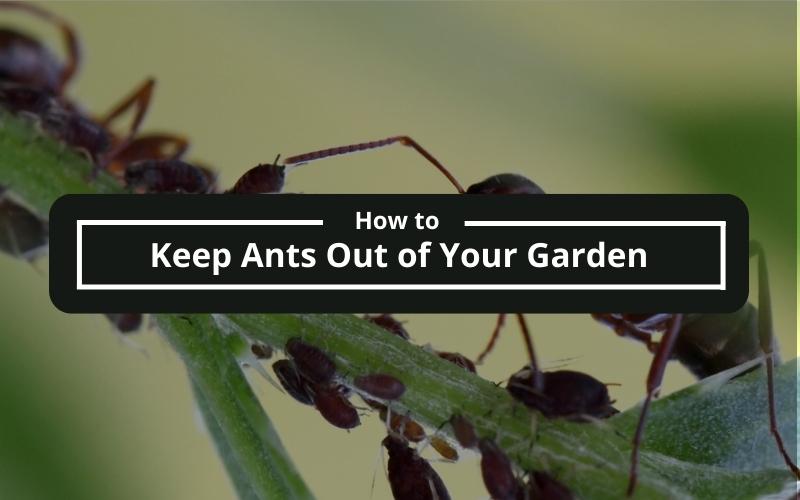
| Aphids | Small green, black or gray insects in clusters | New shoots, buds, undersides of leaves |
| Soft scales | Brown or tan bumps that do not move | Stems and twigs |
| Mealybugs | White, cottony clusters | Leaf joints, stems, roots of potted plants |
| Whiteflies | Tiny white flies that rise when disturbed | Undersides of leaves |
Ants protect these pests because they feed on the honeydew they excrete. UC IPM explains that ants even attack lady beetles, lacewings and parasitic wasps that would otherwise control the pests. Sticky leaves and black sooty mold are other signs. See our guides to white bugs on plants and how to get rid of scale insects.
One well-known exception: ants on peony buds. They feed on the sugary nectar on the outside of the buds and do no harm to the flowers, so there is no need to treat them. Simply rinse cut peonies before bringing them inside.
How to Keep Ants Out of Your Garden: 9 Methods
Step 1: Control the Pests That Attract Ants
- Aphids: spray them off with a strong jet of water every few days, or use insecticidal soap, following the label.
- Scales and mealybugs: prune heavily infested shoots and use horticultural oil or insecticidal soap at the right time.
- Encourage natural enemies: flowers such as sweet alyssum and dill attract hoverflies, lacewings and parasitic wasps.
- Avoid excess nitrogen fertilizer: it produces soft new growth that aphids love.
A hose nozzle with a strong jet setting is one of the simplest tools against aphids; see our best garden hose nozzle guide. Once the pests are gone, ants on plants usually disappear too.
Sticky Barriers: Keep Ants Off Trees and Shrubs
UC IPM recommends a sticky band several inches wide around the trunk to stop ants from climbing into trees and shrubs:
- Wrap the trunk first with duct tape, fabric tree wrap or a similar layer, and apply the sticky material on top. Do not apply it directly to bark, green stems or young trees.
- Prune branches that touch walls, fences or other plants, so ants have no bridge around the barrier.
- Check the band every one to two weeks and stir it with a stick, so dust and debris do not create a path.
- Combine barriers with pest control; once ants can no longer protect them, natural enemies can do their work.
Sticky barriers work best on trees, roses and larger shrubs with a single trunk or a few main stems. They are not practical for low plants in beds.
Ant Bait: How to Use It the Right Way
Ant bait is the most effective way to control ant colonies, because it reaches the queens and the nest underground. UC IPM explains that slow-acting baits give foraging ants time to carry the bait back to the colony and share it.
| Tip | Why |
|---|---|
| Choose slow-acting bait | Fast baits kill workers before they reach the nest |
| Match the bait to the ants | Sugar-loving ants take sweet baits; others prefer protein or oil baits in spring |
| Place it on trails and near nests | Ants find it quickly and do not look elsewhere |
| Do not spray near the bait | Sprays kill the workers that should carry the bait |
| Be patient | It can take days to weeks before the colony declines |
| Start early | Late winter or early spring, when colonies are smallest |
UC IPM also gives a homemade borate bait: dissolve half a teaspoon of boric acid and 9 teaspoons of sugar in a cup of hot water, for roughly 1% boric acid. Stronger mixes repel ants instead of killing them. Keep any bait in closed bait stations, out of reach of children and pets.
Boric acid is a pesticide. Store it safely, label homemade bait clearly and never use it in the soil of your vegetable beds.
Natural Ant Control: What Works
Natural ant control works best when you combine several steps. This is how to keep ants out of your garden without harsh chemicals:
- Remove honeydew pests with water sprays and natural enemies.
- Keep beds evenly moist: ants rarely nest in soil that is regularly watered and mulched.
- Disturb the soil: loosening the top layer regularly makes nest sites less attractive.
- Boiling water: can kill part of a nest in paving joints or away from plants; it also kills plant roots and soil life, so never use it in beds.
- Diatomaceous earth: a fine powder that dries out insects; it only works when dry and also harms helpful insects, so use it only on ant trails, not on flowers.
- Welcome natural predators: birds, toads and ground beetles eat ants.
These steps help you get rid of ants in the garden where they cause problems, without harming the rest of the soil life. For a healthy, low-effort garden, see our guide to a low-maintenance garden.
How to Get Rid of Ants in the Garden: Raised Beds and Pots
Raised beds and pots warm up quickly and are often drier than the ground, which makes them ideal nest sites. To get rid of ants in the garden beds and containers:
- Water deeply and regularly; dry soil is the main attraction.
- Mulch the soil so it stays evenly moist.
- For pots, submerge the pot in a bucket of water for about 20 minutes; many ants will leave.
- Repot badly infested plants in fresh potting mix.
- Place bait stations next to the bed, not in the soil where you grow food.
Keeping soil evenly moist also helps your crops; see how often to water your vegetable garden and how to build a raised garden bed.
Ants on the Patio, Paths and Around the House
- Fill joints between pavers with polymeric sand, which hardens and leaves no room for nests.
- Sweep up sand mounds regularly.
- Keep food, drinks and pet bowls off the patio or clean up promptly.
- Place bait stations along trails near the house foundation.
- Seal cracks in walls and around doors if ants come inside.
A tidy patio is also a nicer place to relax; see our tips to enjoy your patio in winter.
Ant Hills in the Lawn
Small ant hills in the lawn are mostly a cosmetic problem. The ants loosen the soil, but mounds can smother grass and make mowing uneven.
- Rake or brush mounds flat on a dry day, before you mow.
- Water the lawn deeply during dry spells; ants prefer dry, sandy soil.
- Overseed thin, bare patches, because dense grass leaves fewer nest sites.
- Use ant bait near the busiest mounds only if they keep returning.
- Do not spray the whole lawn with insecticide: it harms helpful insects and earthworms.
A healthy, thick lawn is the best long-term solution; see our guide on types of lawns and lawn alternatives.
Home Remedies: What Works and What Does Not
Many home remedies circulate online. Here is an honest overview:
| Remedy | Does it work? | Notes |
|---|---|---|
| Coffee grounds | Hardly | May briefly disturb ants; no lasting effect on nests |
| Cinnamon, peppermint or citrus | Short-term | Strong smells can disturb trails for a short time |
| Cayenne pepper | Short-term | Washes away with rain; not a solution |
| Dish soap spray | Only on contact | Kills ants it hits; can damage some plants; does not reach the nest |
| Baking soda baits | Unproven | Little evidence; slow-acting borate baits work better |
| Boiling water | Partly | Kills part of the nest, but also plants and soil life |
| Vinegar | Short-term | Erases scent trails briefly; harms plants; see our vinegar guide |
| Slow-acting ant bait | Yes | Reaches the colony; the approach recommended by UC IPM |
Read more about what vinegar can and cannot do in our guide to vinegar in the garden.
Fire Ants: When to Be Careful
In the southern United States, red imported fire ants build large mounds and sting painfully. Do not disturb their mounds with your hands, and never try to dig them out. Use a bait labeled for fire ants, apply it when the ants are actively foraging, and contact your local extension service or a pest control professional for large infestations.
People who are allergic to insect stings should seek medical help right away if stung. Wear gloves and closed shoes when working near mounds; see our gardening gloves guide.
Common Mistakes When Fighting Ants
- Spraying insecticide over the whole bed: it kills helpful insects and only the ants you see.
- Using fast-acting bait, or spraying around bait stations.
- Ignoring aphids and scales on the plants.
- Pouring boiling water or vinegar into vegetable beds to get rid of ants in the garden.
- Expecting instant results; bait needs time.
- Treating every ant as a pest; most ants help your garden.
If you do need to use a product, read our guide on how to apply insecticide safely, and learn more about other pests in our garden insects guide.
Frequently Asked Questions
Are ants on peonies bad?
No. Ants on peony buds feed on nectar and do not harm the flowers. There is no need to treat them.
How do I get rid of ant hills in my lawn?
Rake mounds flat on a dry day, water the lawn deeply in dry spells, overseed bare patches and use ant bait near mounds that keep returning.
How do I keep ants out of my garden?
Control aphids and other honeydew pests, use sticky barriers on trees and shrubs, place slow-acting ant bait on trails, keep beds evenly moist and remove food sources. Avoid broad insecticide sprays.
Why are there ants on my plants?
Ants on plants almost always feed on honeydew from aphids, scales, mealybugs or whiteflies. Check the stems and the undersides of leaves.
Are ants bad for my garden?
Most ants are helpful: they aerate soil and eat insect eggs. They become a problem when they protect sap-sucking pests or nest in beds and pots.
What is the best ant bait?
A slow-acting bait that the ants accept, placed on trails and near nests. Workers carry it back to the colony, which reaches the queens.
What is the best natural ant control?
Remove honeydew pests, water beds evenly, disturb nest sites and let natural predators do their work. Use slow-acting bait in closed stations where needed.
How do I get rid of ants in the garden without killing plants?
Avoid boiling water, vinegar and salt in beds. Use bait stations next to beds, sticky barriers on trunks and even watering instead.
Do coffee grounds keep ants away?
Not in any lasting way. They may briefly disturb ants, but they do not affect the nest.
How do I get rid of ants in raised beds?
Water deeply and regularly, mulch the soil, loosen the top layer and place bait stations next to the bed, not in the soil where you grow food.
How do I get rid of ants in potted plants?
Submerge the pot in water for about 20 minutes, or repot the plant in fresh potting mix. Keep the mix evenly moist afterward.
Will ants damage my vegetables?
Rarely directly. They can disturb seeds and roots and protect aphids, which do damage. Controlling aphids is usually enough.
How long does ant bait take to work?
Usually several days to a few weeks. Do not spray near the bait in the meantime, and refill it while ants are still taking it.
Final Thoughts
Now you know how to keep ants out of your garden: tackle the honeydew pests that attract them, block trails into trees and shrubs, use slow-acting ant bait near nests and trails, and keep beds and pots evenly moist.
Accept a few ants as part of a healthy garden, and focus natural ant control on the spots where ants on plants or in beds really cause trouble. That approach is safer for your plants, pets and helpful insects, and it works better in the long run.
Sources: UC IPM: ant management in gardens and landscapes; UC IPM: ants (home and landscape); UC IPM: aphids; UC IPM: sooty mold.
Back to contents ↑