
How to Get Rid of Weeds: 9 Methods That Work
How to get rid of weeds in beds, borders, paths and lawn edges: pull, smother, mulch and spot-treat them, with natural options first and a plan to keep them from coming back.
Affiliate disclosure: This guide links to our buying guides, which contain affiliate links. As an Amazon Associate, we earn from qualifying purchases at no additional cost to you.
Knowing how to get rid of weeds starts with one fact: most weeds are easiest to beat when they are small. A few minutes of weeding every week, combined with mulch and a plan for bare soil, does more than one big cleanup a season. And in most gardens you can get rid of weeds naturally, without chemicals.
This guide explains how to get rid of weeds in garden beds, borders, paths and along lawn edges. We start with methods that need no chemicals, explain when a natural weed killer helps (and when it does not), and finish with a simple plan to prevent weeds from coming back. For weeds between vegetables, see our separate guide on keeping weeds out of the vegetable garden.
Know Your Weeds: Annual or Perennial?
How you get rid of weeds depends on the type. Look at the plant before you choose a method:
| Type | Examples | How to control |
|---|---|---|
| Annual weeds | Crabgrass, chickweed, henbit, purslane | Pull or hoe while small; they die when cut off at the soil line and do not regrow from roots |
| Perennial weeds | Dandelion, bindweed, quackgrass, thistle | Remove the whole root; roots and runners left behind regrow |
| Winter annuals | Henbit, purple deadnettle, chickweed | Sprout in fall and early spring; mulch or pull them in fall before they flower |
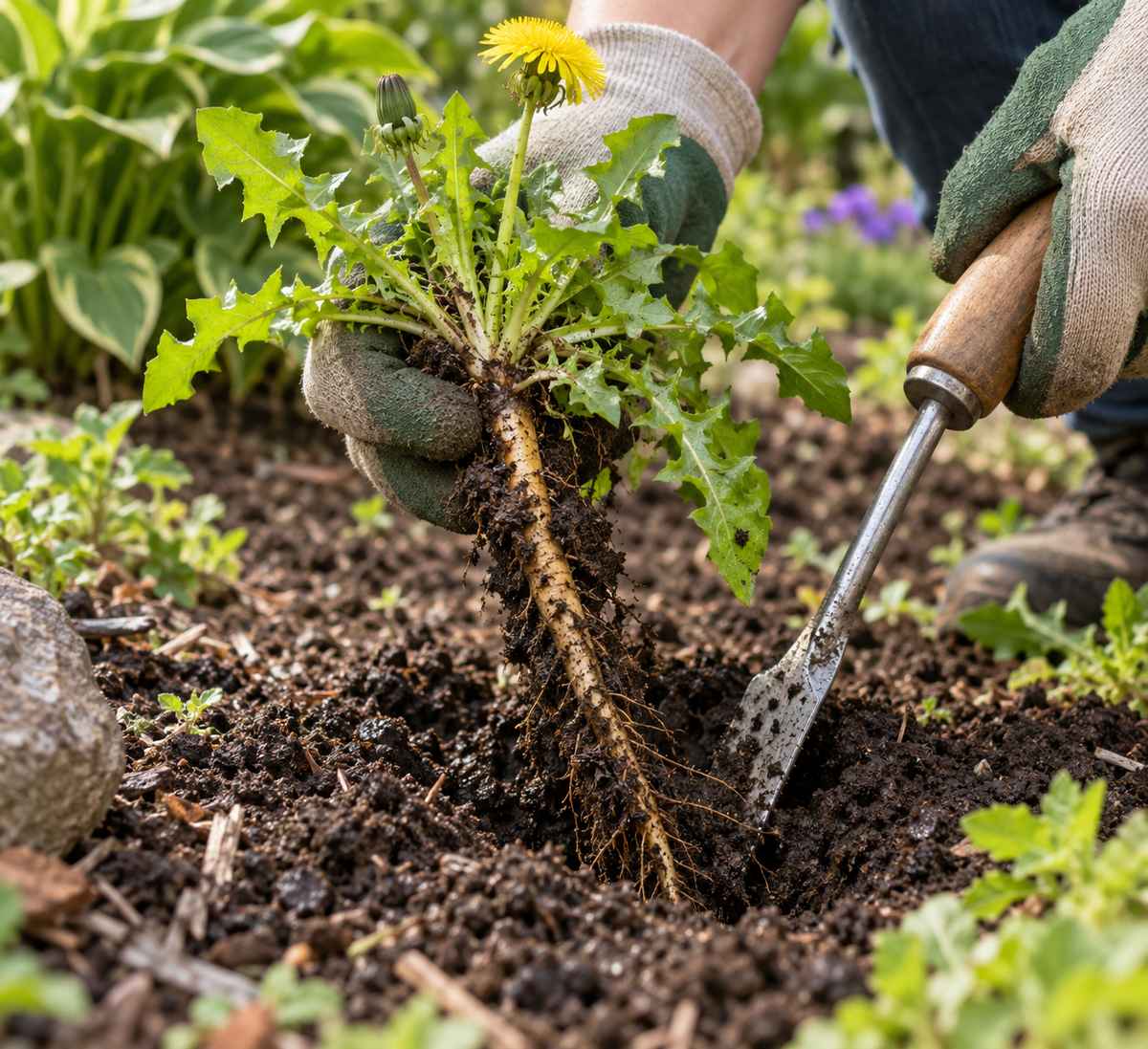
Perennial weeds with deep taproots, such as dandelions, come out more easily after rain or watering, when the soil is soft.
Common Garden Weeds and How to Get Rid of Them
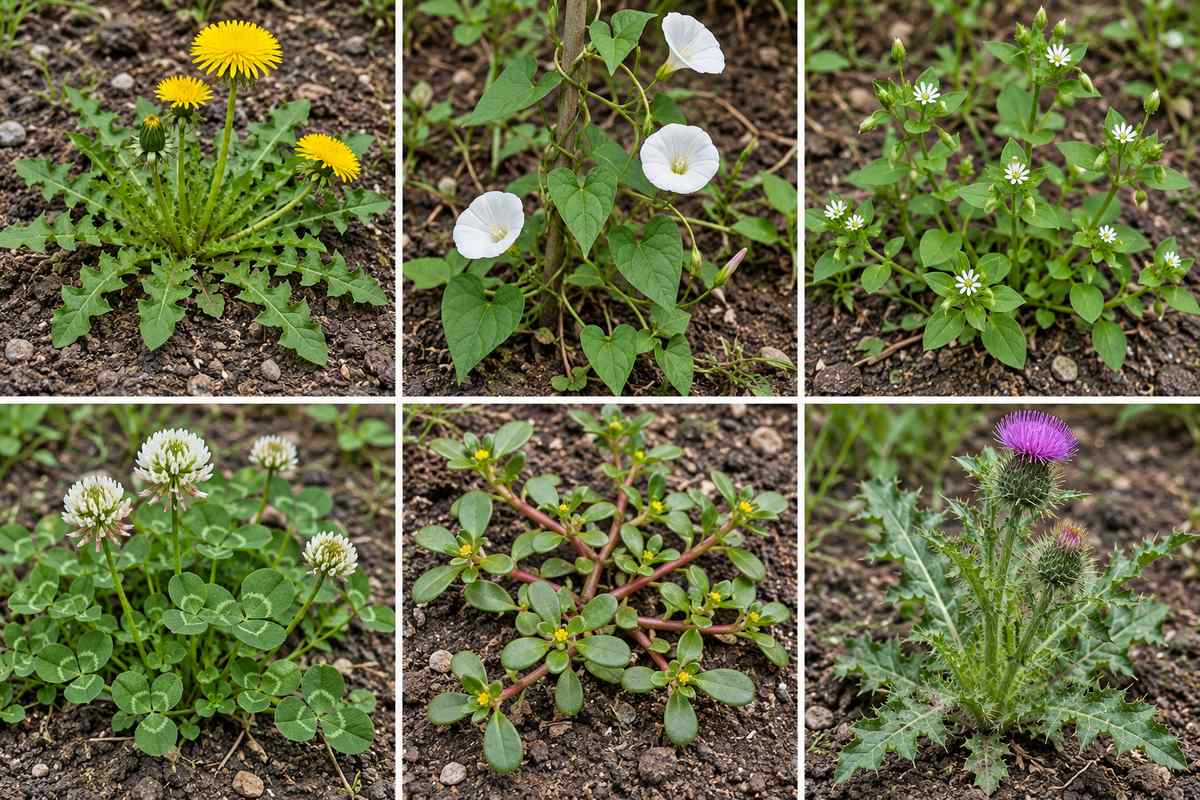
Most weeds in garden beds belong to a small group of common species. Once you recognize them, you know how to get rid of weeds of each type:
| Weed | Type | Best way to get rid of it naturally |
|---|---|---|
| Dandelion | Perennial, taproot | Dig out the whole taproot with a dandelion knife after rain; mulch the spot |
| Crabgrass | Summer annual grass | Pull young plants before they seed; keep lawns thick and beds mulched |
| Bindweed | Perennial, deep roots | Pull or cut repeatedly to exhaust the roots; smother large patches with cardboard and mulch |
| Clover | Perennial | Hand-pull in beds; in lawns, clover often points to low fertility |
| Chickweed and henbit | Winter annuals | Hoe or pull in fall and early spring before they flower |
| Purslane | Summer annual | Pull and remove from the bed; stems can reroot if left on moist soil |
| Thistle | Perennial | Cut before flowering and dig out roots; wear thick gloves |
| Nutsedge | Perennial, tubers | Pull young shoots often; tubers left in the soil regrow, so persistence matters |
Protect your hands when you pull thistles and other prickly weeds; see our best gardening gloves, including options for thorns.
9 Ways to Get Rid of Weeds
These are the most effective ways to get rid of weeds in a home garden, starting with the simplest:
How to Get Rid of Weeds in Garden Beds
Weeds in garden beds compete with your plants for water, light and nutrients. To clear a bed:
- Start with a cleanup: pull or dig out all visible weeds, including roots of perennials. A kneeling pad and good gardening gloves make this far more comfortable.
- Mulch right away: spread coarse mulch, such as wood chips, 3 to 4 inches deep, or fine mulch about 2 inches deep. Keep mulch a few inches away from stems and trunks.
- Keep up with new weeds: a quick weekly round with a hand weeder stops new weeds before they root deeply.
- Water the plants, not the paths: watering at the base of your plants, rather than wetting the whole bed, gives weeds less moisture. See how often to water your garden.
Weeds in garden beds are much easier to control in a raised bed, because you start with weed-free soil. Read how to build a raised garden bed.
How to Get Rid of Weeds in Paths, Patios and Driveways
- Remove weeds from cracks with a crack weeder or an old knife, then sweep sand or polymeric joint sand into the gaps.
- Pour boiling water carefully on young weeds in paving joints. It works best on small annual weeds; roots of perennials often survive.
- Use a flame weeder on broadleaf weeds: a few seconds of heat is enough; you do not need to burn the weed. Never use one near dry grass, mulch or during a burn ban.
- Trim edges regularly: a battery-powered weed eater keeps weeds along paths, fences and lawn edges from flowering and seeding.
- Clear debris: leaves and soil in joints give weed seeds a place to grow; a leaf blower keeps paving clean.
How to Get Rid of Weeds in Your Lawn
In a lawn, the best way to get rid of weeds is to grow grass that crowds them out. Extension services agree that a thick, healthy lawn is the most effective weed control:
- Mow high: never remove more than one third of the grass blade at a time. Taller grass shades the soil, so fewer weed seeds sprout.
- Water deeply and less often: this builds deep grass roots; frequent light watering favors shallow-rooted weeds.
- Feed and overseed thin spots: bare patches fill with weeds. Clover and spurge often point to low fertility.
- Pull broadleaf weeds by hand after rain, when roots come out easily.
- Treat perennial broadleaf weeds in fall if you use a herbicide: from mid-September to mid-October they move nutrients to their roots, so a spot treatment works better than in spring.
Keep weeds along lawn edges from seeding with a battery-powered weed eater, and clear clippings from paths with a leaf blower.
How to Get Rid of Weeds Naturally
You can get rid of weeds naturally in most home gardens. These methods are the most reliable:
- Hand weeding and hoeing: still the most effective way to get rid of weeds naturally in beds.
- Mulch: organic mulch blocks light, keeps soil moist and improves the soil as it breaks down.
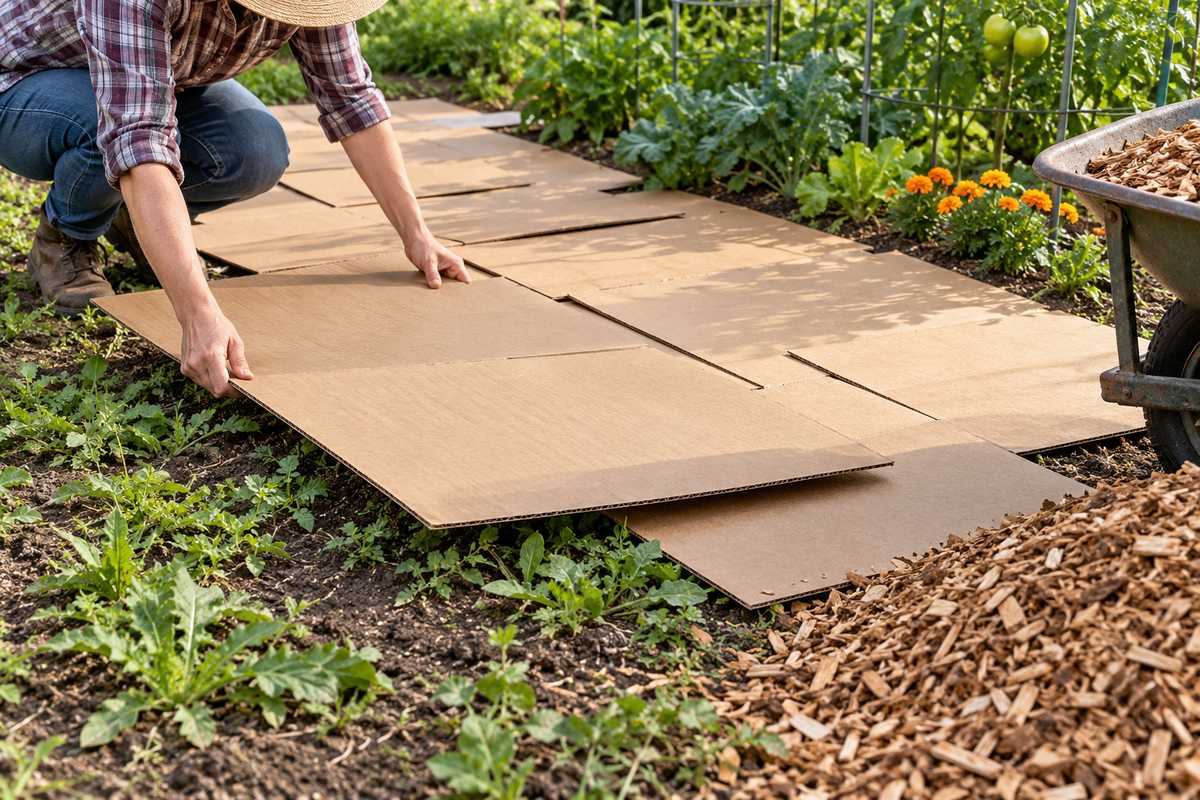
- Cardboard sheet mulching: lay plain cardboard over weeds, wet it and cover it with mulch; the weeds underneath die off over the following weeks.
- Boiling water and flame weeding for paths and patios.
- Healthy lawn and dense planting: thick grass and groundcovers crowd out weeds.
- Young annual weeds
- Weeds in paving joints
- Large patches you can cover for a few weeks
- Deep-rooted perennials such as bindweed
- Weeds mixed in between garden plants
- Lawns with many broadleaf weeds
Natural Weed Killer: Does Vinegar Work?
Vinegar is the best-known natural weed killer, but it has clear limits:
| Product | Acetic acid | What to expect |
|---|---|---|
| Household vinegar | About 5% | Burns the leaves of small weeds; roots survive |
| Horticultural vinegar | About 10 to 20% | Kills young annual broadleaf weeds within about a day; perennial weeds regrow from the roots |
- A vinegar weed killer is non-selective: it damages every plant it touches, including your flowers and lawn.
- It has no lasting effect: it does not stop new weeds from sprouting.
- Vinegar of 11% or stronger can burn skin and cause serious eye injury. Wear gloves and eye protection and follow the product label.
- Only use a product labeled as a herbicide, and do not mix your own with salt or dish soap; salt builds up in soil and can harm plants for a long time.
Spray a natural weed killer on a dry, windless, sunny day, directly on the weeds. A small hand or pump sprayer reserved only for weed control prevents mix-ups. For other uses, see vinegar in the garden.
Other Natural Weed Killer Options: What Works and What to Avoid
Besides vinegar, several other natural weed killer options are often recommended online. Here is how they compare:
| Option | Does it work? | Notes |
|---|---|---|
| Boiling water | Yes, on young weeds | Best for paving joints and gravel; roots of perennials often survive |
| Flame weeder | Yes, on young broadleaf weeds | A few seconds of heat is enough; never use near dry grass, mulch or during a burn ban |
| Horticultural vinegar | Partly | Burns the leaves of young annual weeds; perennials regrow |
| Corn gluten meal | Mixed results | Sold as a natural pre-emergent; trials by Oregon State and others showed little or inconsistent effect |
| Salt, borax or bleach | Avoid | They build up in soil, harm plants and soil life and can run off into waterways |
| Dish soap mixtures | Avoid | Little effect on their own and not labeled as herbicides |
The most reliable natural weed killer is not a spray at all: it is mulch, dense planting and removing weeds before they set seed. Use sprays only as a spot treatment on paths and patios.
How to Prevent Weeds from Coming Back
Once a bed is clear, the goal is to prevent weeds from getting a second chance. Knowing how to prevent weeds saves more time than any weed killer:
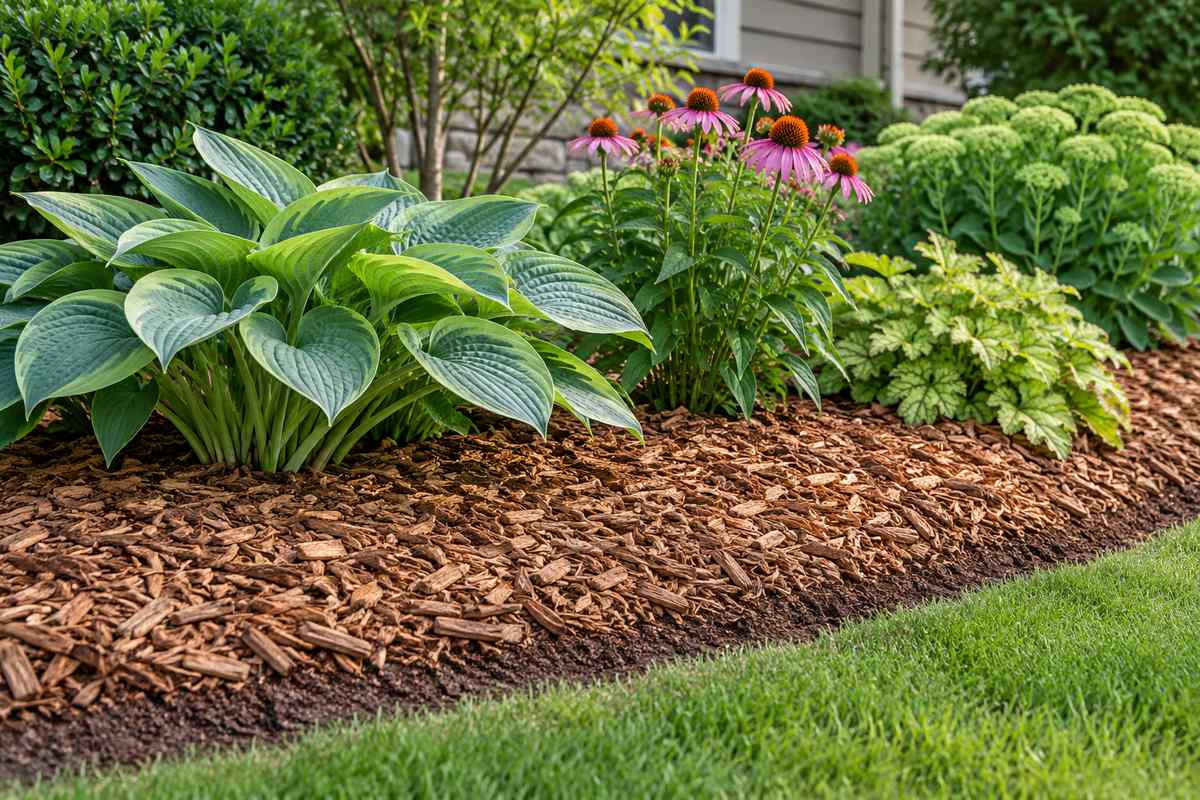
- Never leave soil bare: mulch it, plant it or sow a cover crop.
- Disturb the soil as little as possible: digging brings buried weed seeds to the surface, where they sprout.
- Refresh mulch once a year to keep it at the right depth.
- Stop weeds before they set seed: pull or trim them before flowers turn to seed heads.
- Check new soil, compost and plants for weeds before you bring them into the garden.
- Use landscape fabric only under long-term plantings such as shrubs; cover it with a thin layer of mulch.
How to Prevent Weeds in Garden Beds: A Year-Round Plan
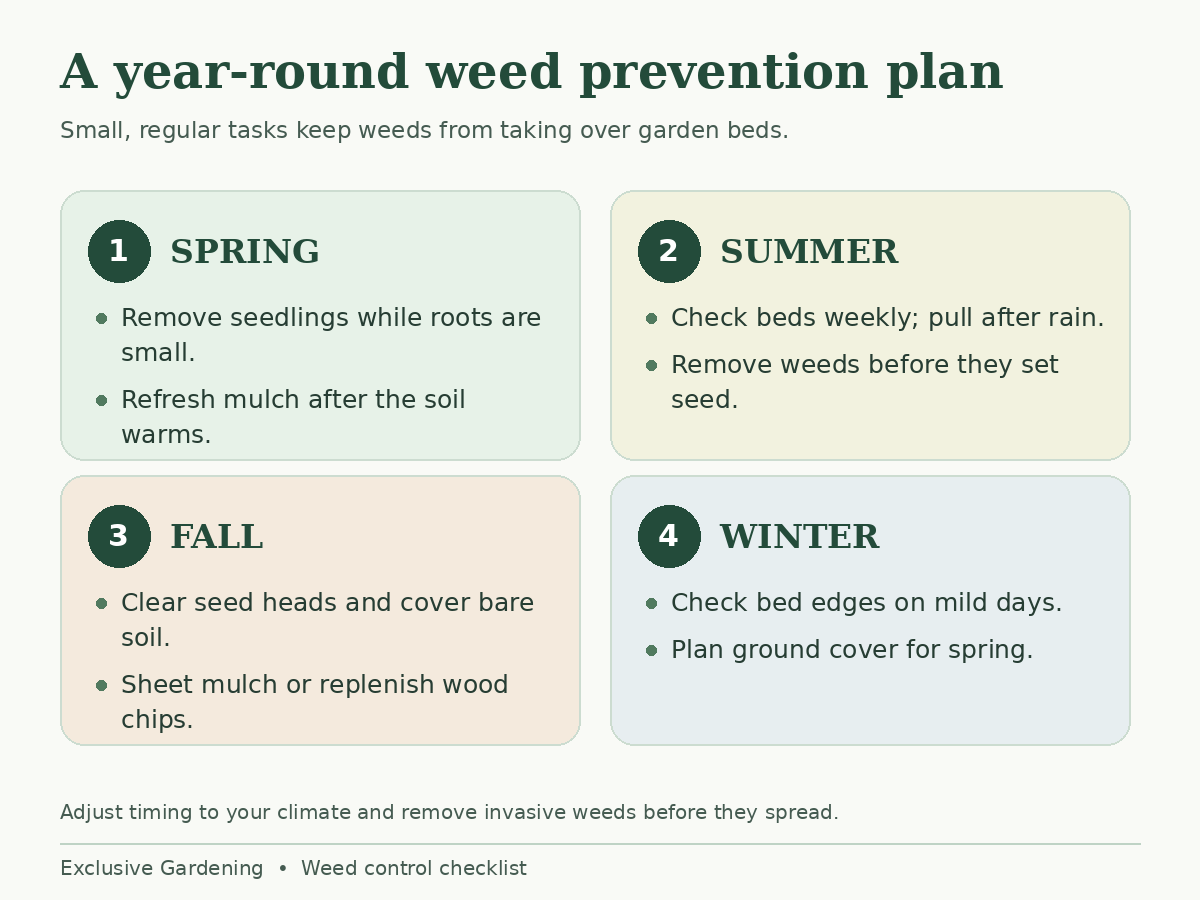
A few tasks at the right time of year prevent weeds in garden beds far better than one big cleanup:
| Season | What to do to prevent weeds |
|---|---|
| Early spring | Pull winter annuals before they flower; top up mulch once the soil has warmed |
| Late spring | Hoe new seedlings every week; plant densely so crops and flowers cover the soil |
| Summer | Pull weeds before they set seed; water plants at the base, not the whole bed |
| Fall | Clear weeds and perennial roots; mulch bare soil or cover it with shredded leaves |
| Winter | Plan beds and edging; order mulch and replace worn weeding tools |
With this plan, weeds in garden beds become a quick weekly task instead of a seasonal battle. For the vegetable garden, combine it with our tips on keeping weeds out of the vegetable garden.
Fall Weed Control: Why Autumn Is a Good Time
Fall is one of the best times to get rid of weeds. Winter annuals such as henbit, purple deadnettle and chickweed sprout in fall and early spring. Pulling them now, before they flower, and mulching bare soil prevents a flush of weeds next spring.
- Clear weeds from beds after the last harvest, including roots of perennials.
- Mulch bare soil or cover it with a layer of shredded leaves.
- Trim weedy edges one last time before seed heads ripen.
Fall weeding fits well into getting the garden ready for colder weather; see our checklist to winterize your garden.
Tools That Make Weeding Easier
The right tools make it much easier to get rid of weeds naturally, because pulling, hoeing and trimming take less effort and time:
| Tool | Best for |
|---|---|
| Hand weeder or dandelion knife | Removing taproots of dandelions and dock |
| Scuffle or stirrup hoe | Cutting young weeds between rows and plants |
| String trimmer | Stopping weeds along edges and fences before they seed |
| Kneeling pad and gloves | Comfort and protection during longer weeding sessions |
| Hand or pump sprayer | Spot-treating weeds on paths, used only for weed control |
Our gardening tool set comparison includes sets with a hand weeder and cultivator, and our kneeling pad guide helps you choose a pad that stays comfortable.
Mistakes to Avoid When You Get Rid of Weeds
- Waiting too long: large weeds have deep roots and may already have dropped seed.
- Leaving roots behind: small pieces of bindweed or quackgrass roots grow into new plants.
- Adding seeding weeds to the compost: most home compost piles do not get hot enough to kill seeds.
- Piling mulch against stems: it can cause rot; keep a small gap.
- Using salt or homemade mixtures: salt damages soil for a long time.
- Spraying on windy days: drift damages nearby plants.
Frequently Asked Questions
What kills weeds permanently?
No single method kills all weeds permanently, because new seeds keep arriving. The closest you get is removing perennial roots completely, never letting weeds set seed and keeping soil covered with mulch or plants, which prevents weeds from coming back.
How do I get rid of weeds between pavers?
Remove them with a crack weeder, pour boiling water on young weeds or use a flame weeder, then refill the joints with sand or polymeric sand. Sweep the paving regularly so soil and seeds do not collect in the joints.
Does mulch prevent weeds?
Yes. A layer of 2 to 4 inches of organic mulch blocks the light weed seeds need to sprout. It works best on soil that is already weed-free, and it helps you get rid of weeds naturally without sprays.
What is the best natural weed killer?
For beds, the best natural weed killer is mulch plus hand weeding. For paths and patios, boiling water, a flame weeder or horticultural vinegar work on young weeds. Avoid salt, borax and bleach.
What is the fastest way to get rid of weeds?
For a bed, the fastest way to get rid of weeds is to pull or hoe them while small and mulch the soil right away. For paving joints, boiling water or a flame weeder works quickly on young weeds.
How do you get rid of weeds naturally?
Pull or hoe them, cover bare soil with 2 to 4 inches of mulch, smother large patches with cardboard and mulch, and use boiling water or a flame weeder on paths. These methods get rid of weeds naturally without herbicides.
Does vinegar kill weeds permanently?
No. A vinegar-based natural weed killer burns the leaves, but the roots of perennial weeds usually survive and regrow. It works best on young annual weeds.
How do I prevent weeds in garden beds?
Keep soil covered with mulch, dig as little as possible and remove weeds before they set seed. Refresh the mulch once a year.
Should I pull weeds when the soil is wet or dry?
Pull weeds when the soil is moist, so the roots come out whole. Hoe weeds when the soil surface is dry, so the cut weeds dry out and die.
Is landscape fabric good for weed control?
It helps under long-term plantings such as shrubs, covered with a thin layer of mulch. In beds you replant often, organic mulch is more practical.
Can I compost weeds?
Compost weeds that have not flowered. Leave out seeding weeds and roots of perennials such as bindweed, because home compost often does not get hot enough to kill them.
When is the best time to get rid of weeds?
Weed early in the season and keep going weekly. Fall is also a good time, because it stops winter annuals before they flower in spring.
Final Thoughts
Now you know how to get rid of weeds without making it a full-time job: pull and hoe them while they are small, remove perennial roots, mulch bare soil and never let weeds go to seed. That is how you get rid of weeds naturally in most gardens. Use a natural weed killer only for young weeds on paths and patios.
Combine these methods with a weekly routine and the right tools, and you will spend less time weeding each year.
Sources: UC Statewide IPM Program: weed management in landscapes; UC Statewide IPM Program: weed management in lawns; University of Minnesota Extension: managing weeds in lawns; University of Maryland Extension: corn gluten for crabgrass control; Oregon State University Extension: corn gluten meal study; West Virginia University Extension: mulch in fall to prevent spring weeds; University of Maryland Extension: vinegar as an alternative to glyphosate; National Pesticide Information Center: can I use vinegar to control weeds?.
Back to contents ↑
