
Plants That Don’t Need Sun: 12 Low Light Plants for Home and Porch
The best plants that don’t need sun: low light houseplants for dim rooms, plants for north facing windows, shade plants for porch and patio, and honest care tips so your low light plants stay green instead of just surviving.
Affiliate disclosure: This guide links to our buying guides, which contain affiliate links. As an Amazon Associate, we earn from qualifying purchases at no additional cost to you.
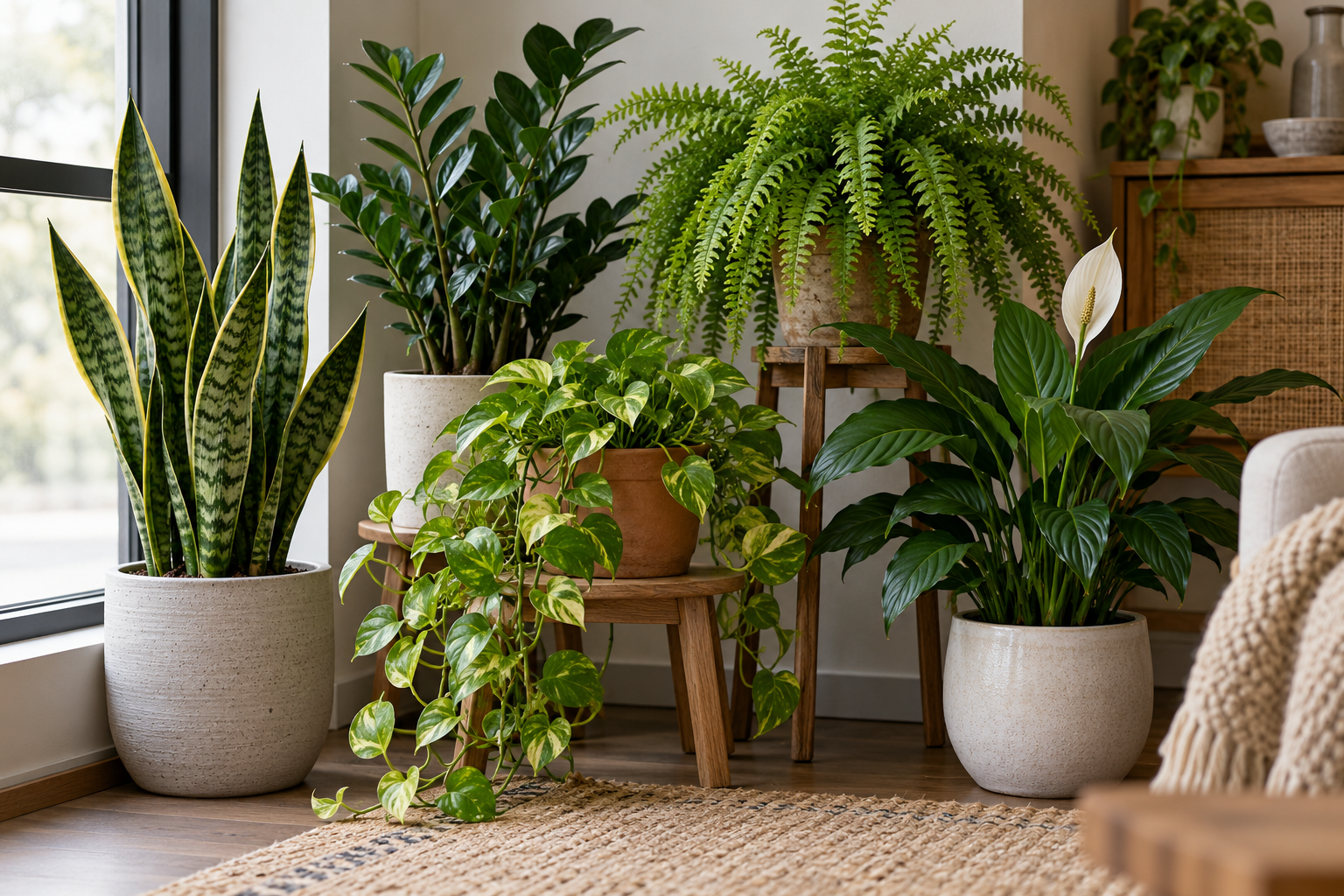
Not every room or porch gets sunshine. North-facing windows, hallways, offices and covered porches can feel too dark for plants, yet a surprising number of plants grow happily in low light. The trick is to choose the right ones and to adjust how you water them.
This guide covers 12 plants that don’t need sun, from tough low light houseplants such as snake plant and ZZ plant to shade plants for porch and patio. You will learn what “low light” really means, which plants suit plants for north facing windows, how to water low light plants, and the honest truth: no plant can live in total darkness.
“No Sun” Is Not “No Light”
All plants need light to make food. Plants that don’t need sun are plants that do not need direct sunlight and can manage with the lower, indirect light of a room or covered porch. In a windowless room, even the toughest plant slowly declines unless you add a grow light.
The old version of this page said aglaonema “does not need sunlight” and that areca palm “doesn’t need sun to grow”. Both tolerate shade from direct sun, but they still need reasonable indirect light. Areca palm, in particular, prefers bright, indirect light.
What Does Low Light Mean?
Penn State Extension explains that a common baseline for low light is about 100 foot-candles, although some plants tolerate even less: their snake plant was measured growing at as low as 25 foot-candles in mid-morning. These practical guidelines follow general houseplant practice:
| Light level | Where you find it | Good for |
|---|---|---|
| Bright, indirect | Near a south, east or west window, out of direct sun | Most houseplants |
| Medium | A few feet from a bright window, or right at a north window | Many low light plants grow well |
| Low | Far from windows, hallways, offices | Snake plant, ZZ, pothos, lucky bamboo |
| No natural light | Windowless rooms | Only with a grow light |
Penn State also notes that winter brings shorter days and a lower sun angle, so light levels drop in fall and winter. Watch your plants and move them closer to windows if growth stalls.
12 Plants That Don’t Need Sun at a Glance
| Plant | Light tolerance | Water | Source |
|---|---|---|---|
| Snake plant | Wide range, including very low light | Minimal | Penn State, Maryland |
| ZZ plant | Tolerates very low light | Every 7 to 14 days, when dry | Iowa State |
| Pothos | Prefers bright to medium; ‘Jade’ does better in low light | When the top is dry | Penn State, Maryland |
| Philodendron (heartleaf) | Prefers bright, tolerates low | When the top is dry | Maryland |
| Peace lily | Flowers even in low light | More than most houseplants | Maryland |
| Chinese evergreen (Aglaonema) | Tolerates low light | When the top is dry | Maryland |
| Dracaena ‘Warneckei’ | Tolerates lower light | Keep on the dry side | Maryland |
| Dumb cane (Dieffenbachia) | Grows at much lower light levels | Moderate | Penn State |
| Lucky bamboo | Partial shade; stays vibrant in deep shade | Clean water, changed regularly | Penn State |
| Boston fern | Shade outdoors; medium light indoors | Evenly moist | Clemson |
| Kimberly queen fern | Shade to morning sun | Evenly moist | Clemson |
| Hardy garden ferns | Shade in the garden | Moist soil | Illinois |
Snake Plant and ZZ Plant: The Toughest Low Light Houseplants
The University of Maryland calls the snake plant “one of the toughest plants on the planet”. Penn State notes it grows in a wide range of light levels and needs minimal watering; their plant even grew from 9 to 17 inches over a spring and summer in medium light. The ZZ plant is just as forgiving: Iowa State notes it performs best in bright, indirect light but tolerates very low light, and that a thorough watering every 7 to 14 days is usually fine.
- Both store water and rot if overwatered.
- Both suit offices, hallways and bedrooms.
- Both are toxic if eaten, so keep them away from pets.
For full care, see our guide to ZZ plant care.
Pothos and Philodendron: Trailing Low Light Plants
Penn State notes that most pothos prefer bright to medium indirect light, and that the green ‘Jade’ cultivar fares better in lower light than the chartreuse ‘Neon’. The University of Maryland adds that variegation fades to green in very low light. Heartleaf philodendron, with its dark green, heart-shaped leaves, prefers bright light but tolerates low light and does well under fluorescent lighting; Maryland suggests pinching the tips to keep it compact.
Both look great trailing from a shelf or hanging basket. The old version of this page called pothos “boa constrictor”, a literal translation of its Brazilian name; in English it is pothos or devil’s ivy.
Peace Lily: Flowers Without Sun
The University of Maryland notes that the peace lily is one of the few houseplants that flowers in low light. It grows 2 to 4 feet tall indoors (dwarf forms are smaller) and needs more water than most houseplants. It wilts quickly when it is dry, which makes it easy to tell when to water; it usually recovers within hours.
Peace lilies are not true lilies, but the FDA notes they cause localized irritation if pets chew them. Keep them out of reach.
Chinese Evergreen, Dracaena and Dumb Cane
| Plant | Low light notes | Source |
|---|---|---|
| Chinese evergreen (Aglaonema) | Silver or gray-green markings; old plants develop tall stems that can be cut back | Maryland |
| Dracaena fragrans ‘Warneckei’ | Most stay under 4 feet, some reach 8 feet; prefer to be kept on the dry side | Maryland |
| Dumb cane (Dieffenbachia) | Tolerates 2 to 3 hours of direct sun but grows at much lower light levels; variegation becomes greener in low light | Penn State |
The old version of this page advised watering aglaonema weekly and anthurium three times a week. In low light, plants use water slowly, so check the soil instead of following a schedule. Dumb cane sap irritates the mouth, so keep it away from children and pets.
Lucky Bamboo
Penn State describes lucky bamboo as a West African forest understory plant that likes partial shade but remains vibrant even in deep shade, and notes that its leaves no longer scorch when kept out of direct sun. It grows in water or soil. For care and feng shui meanings, see our guide to plants that bring positive energy.
Plants for North Facing Windows
North facing windows get gentle, indirect light all day without direct sun, which makes them ideal for many low light houseplants. Good plants for north facing windows include (general houseplant practice):
| Plant | Why it works |
|---|---|
| Pothos and philodendron | Trail nicely and grow steadily in medium light |
| Peace lily | Flowers in lower light |
| Snake plant and ZZ plant | Tolerate even the darker corners of the room |
| Chinese evergreen | Colorful leaves without sun |
| Boston fern | Likes the gentle light and higher humidity of a bathroom |
| Lucky bamboo | Happy in indirect light |
Place plants right at the window rather than across the room: light drops off quickly with distance. Clean the window in winter to let in as much light as possible.
Shade Plants for Porch and Patio
Covered porches and shaded patios are perfect for shade plants for porch containers. Clemson describes the classic porch ferns:
| Plant | Light (Clemson) | Notes |
|---|---|---|
| Boston fern | Dappled to full shade; burns in sun | Lush hanging baskets; bring indoors before nights drop below about 50°F |
| Kimberly queen fern | Most sun-tolerant porch fern; several hours of morning sun | Upright, tidy shape |
| Macho fern | Tolerates a few hours of morning sun | Large, for big containers |
For shade beds next to a porch, the University of Illinois recommends hardy ferns such as Christmas fern, lady fern and Japanese painted fern. Many houseplants, such as peace lily, pothos and Chinese evergreen, also enjoy a summer on a shaded porch as long as nights stay warm and they are protected from direct sun. See our full guide to types of ferns.
Watering Low Light Plants
Low light plants grow slowly and use less water, so overwatering is the most common way to kill them. Iowa State warns, for the ZZ plant, that problems develop when the potting soil is constantly wet. These rules follow from that:
For more help, see how to save a dying plant, which explains the signs of overwatering.
How to Give Low Light Plants a Boost
- Move plants closer to the window; even a few feet makes a big difference.
- Rotate pots regularly so all sides get light.
- Dust the leaves so they can use all available light.
- Use a grow light in windowless rooms or dark winters.
- Give houseplants a summer on a shaded porch for a growth spurt.
- Choose green varieties: variegated leaves need more light (Penn State, Maryland).
Plants That Need More Light Than You Think
| Plant | Why it struggles in low light |
|---|---|
| Areca palm | Prefers bright, indirect light; the old version of this page said it does not need sun |
| Anthurium | Flowers poorly without bright, indirect light |
| Succulents and cacti | Need bright light or direct sun |
| Herbs | Most need about six hours of sun |
| Flowering plants such as orchids | Need bright, indirect light to rebloom |
These are general care guidelines. For sun lovers, see how to water cacti and succulents and how to grow herbs indoors.
Grow Lights for Dark Rooms
In a windowless bathroom, hallway or office, even plants that don’t need sun need some light. A simple grow light solves that. These guidelines follow general practice; the University of Minnesota gives a comparable setup for cacti (lights 6 to 12 inches above the plants for 14 to 16 hours a day):
| Point | Guideline |
|---|---|
| Type | LED grow lights use little energy and give off little heat |
| Distance | About 6 to 12 inches above the leaves for most low light houseplants |
| Hours | About 12 to 16 hours a day; a timer makes it automatic |
| Best plants | Snake plant, ZZ plant, pothos, philodendron and peace lily |
| Signs of too little light | Stretched stems, small new leaves, fading variegation |
| Signs of too much | Bleached or scorched patches; raise the light |
With a grow light, even low light plants in a room without windows can stay green and keep growing.
Common Mistakes with Low Light Plants
| Mistake | Why it hurts | Better approach |
|---|---|---|
| Expecting growth in total darkness | No light means slow decline | Use a grow light in windowless rooms |
| Watering on a schedule | Soil stays wet in low light | Check the soil first |
| Variegated plants in dark corners | Variegation fades and growth slows | Choose green varieties |
| Sudden move into full sun | Leaves scorch | Acclimatize gradually |
| Ferns on a sunny porch | Fronds burn | Shade or Kimberly queen fern |
| Ignoring toxicity | Several low light plants are toxic | Place out of reach of pets and children |
What You Need
| Item | Why it helps | More information |
|---|---|---|
| Pots with drainage holes | Prevents soggy soil | See our container gardening guide |
| Hose with gentle shower nozzle | Watering porch ferns and baskets | See our garden hose nozzle guide |
| Lightweight expandable hose | Easy watering on the porch | See our expandable garden hose guide |
| Pruners | Trimming vines and cutting back leggy plants | See our gardening tool sets guide |
| Gardening gloves | Handling plants with irritating sap | See our gardening gloves guide |
| Grow light (optional) | Light for windowless rooms | Use 12 to 16 hours a day |
| Kneeling pad | Comfortable repotting and porch planting | See our kneeling pad guide |
Frequently Asked Questions
What plants don’t need sun?
No plant grows without light, but many tolerate low light without direct sun: snake plant, ZZ plant, pothos, philodendron, peace lily, Chinese evergreen, dracaena, dumb cane, lucky bamboo and ferns.
What is the best low light houseplant?
Snake plant and ZZ plant are the toughest. Pothos and peace lily are also very forgiving.
Can plants grow without any sunlight?
Not without some light. In a windowless room, use a grow light; otherwise the plant slowly declines.
What are good plants for north facing windows?
Pothos, philodendron, peace lily, Chinese evergreen, snake plant, ZZ plant, Boston fern and lucky bamboo.
What plants grow well on a shaded porch?
Boston fern, Kimberly queen fern and macho fern are classic shade plants for porch containers. Many houseplants also enjoy a summer on a shaded porch.
How often should I water low light plants?
Less often than plants in bright light. Check the soil and water only when the top inch or two is dry, except for peace lilies and ferns, which like evenly moist soil.
Does a peace lily flower in low light?
Yes. The University of Maryland notes it is one of the few houseplants that flowers in low light.
Why is my pothos losing its variegation?
Too little light. Variegation fades to green in very low light; move it closer to a window.
Is a snake plant really that tough?
Yes. Penn State measured growth at very low light levels, and it needs minimal watering.
Can I use a grow light for low light plants?
Yes. A grow light lets you keep plants in windowless rooms or helps them through dark winters.
Which low light plants are safe for pets?
Many popular low light plants, such as pothos, snake plant, ZZ plant and dumb cane, are toxic if eaten. Ferns such as Boston fern are commonly listed as pet friendly; check each plant to be sure.
What is low light in foot-candles?
Penn State gives about 100 foot-candles as a common baseline for low light.
Can a snake plant live in a windowless bathroom?
Not for long without help. It tolerates very low light, but with no natural light at all it needs a grow light, or regular breaks in a brighter room.
What hanging plants do well in low light?
Pothos and heartleaf philodendron trail beautifully in lower light, and Boston fern suits a shaded porch or a bright bathroom.
Can I put low light houseplants outside?
Yes, in shade during warm months. Avoid direct sun and bring them in before nights turn cool.
Final Thoughts
Plants that don’t need sun are perfect for north-facing rooms, offices and shaded porches, as long as you remember that they still need some light. Snake plant, ZZ plant, pothos and peace lily are among the most reliable low light houseplants, and ferns are the classic shade plants for porch and patio.
Water low light plants less often, keep them close to the window, choose green varieties for darker spots and pick plants for north facing windows that match your space. With the right choices, even the dimmest corner can look green and alive.
Sources: Penn State Extension: low-light houseplants; University of Maryland Extension: houseplants for low light conditions; Iowa State University Extension: how do I care for a ZZ plant?; Clemson Cooperative Extension: how to grow and care for porch ferns; University of Illinois Extension: ferns add texture to the shade garden; U.S. Food and Drug Administration: lilies and cats.
Back to contents ↑
