Backyard Landscaping Cost: What You’ll Really Pay and How to Budget Smart
Backyard landscaping cost explained without the guesswork: current national price ranges, cost per square foot, what drives the price up, the hidden costs most quotes leave out, and three example budgets you can adapt to your own yard.

Affiliate disclosure: This guide links to our buying guides, which contain affiliate links to Amazon. As an Amazon Associate, we earn from qualifying purchases at no additional cost to you.
How much does landscaping cost for a backyard? It’s one of the first questions homeowners ask, and one of the hardest to answer with a single number. Backyard landscaping cost depends far more on what you change than on how big your yard is. Refreshing a planting bed, laying a new patio and regrading a soggy lawn can cover the same area, yet the prices are worlds apart.
This guide gives you the numbers that matter: current national ranges, landscaping cost per square foot, typical prices for common projects, and the costs that rarely show up in a headline estimate. You’ll also learn how to measure your project, compare contractor quotes fairly and turn it all into a landscaping budget you can actually stick to.
Backyard Landscaping Cost at a Glance
Use these ranges for orientation only. They mix many project types, from a few new shrubs to complete remodels, so they are not a fixed price for your yard.
| Project scope | Typical cost | What it usually covers |
|---|---|---|
| Average pro landscaping project | About $3,500 | A mix of planting, sod, beds and smaller hardscape jobs |
| Small area (200 sq ft) | $900–$2,400 | A new border, bed or small seating corner |
| Medium area (500 sq ft) | $2,250–$6,000 | Beds plus a path or small patio area |
| Large area (1,000 sq ft) | $4,500–$12,000 | A larger part of the backyard redone |
| Full backyard renovation | Up to $50,000+ | Patio, grading, planting, lighting and structures |
The jump between the middle rows and the last row comes mostly from hardscape. Patios, retaining walls, outdoor kitchens and grading take more materials, heavier equipment and specialized labor than plants and mulch do. That is why the backyard renovation cost for a complete remodel can be ten times the price of a planting refresh in the same yard.
Landscaping Cost per Square Foot
Many contractors price landscape work per square foot because area drives material quantities and labor time. Angi’s 2026 national figures show a fairly consistent range:
| Area | National average range | Per square foot |
|---|---|---|
| 200 sq ft | $900–$2,400 | About $4.50–$12 |
| 500 sq ft | $2,250–$6,000 | About $4.50–$12 |
| 1,000 sq ft | $4,500–$12,000 | About $4.50–$12 |
| 2,000 sq ft | $9,000–$24,000 | About $4.50–$12 |
Lawn Love reports a wider range of about $4.50 to $17 per square foot, which shows how much the type of work matters. Treat any landscaping cost per square foot as a rough check, not a quote. A per-square-foot number can’t tell you whether the ground needs excavation, whether a truck can reach the yard or whether a drainage problem must be fixed first. Always check whether the figure is material only, installed work or a complete project.
Backyard Landscaping Cost by Project
Breaking your plan into separate projects makes it much easier to compare prices and decide what to do yourself. These are Angi’s 2026 national ranges for common services, with landscape design from Lawn Love:
| Project | Typical cost | Budget note |
|---|---|---|
| Flower bed installation | $800–$3,000 | Soil prep and plant size drive the price |
| Sod installation | $950–$4,300 | Old lawn removal and grading may be extra |
| Tree planting | $120–$2,500 | Larger trees cost far more to move and plant |
| Mulch installation | $30–$120 per cu yd | Easy to do yourself on most sites |
| Lawn grading | $1,025–$3,300 | Do it before any planting or paving |
| Sprinkler system | $1,700–$3,550 | Install before sod and beds, not after |
| Tree removal | $200–$2,000 | Stump removal adds about $300–$500 |
| Landscape design | $1,960–$7,220 | Design only; installation is separate |
Angi also reports softscaping projects (plants, soil, lawn) at roughly $800 to $10,000 and hardscaping projects at $300 to $30,000. The huge upper range for hardscape is exactly why patios and walls deserve the most careful quotes.
Landscaping Material Prices
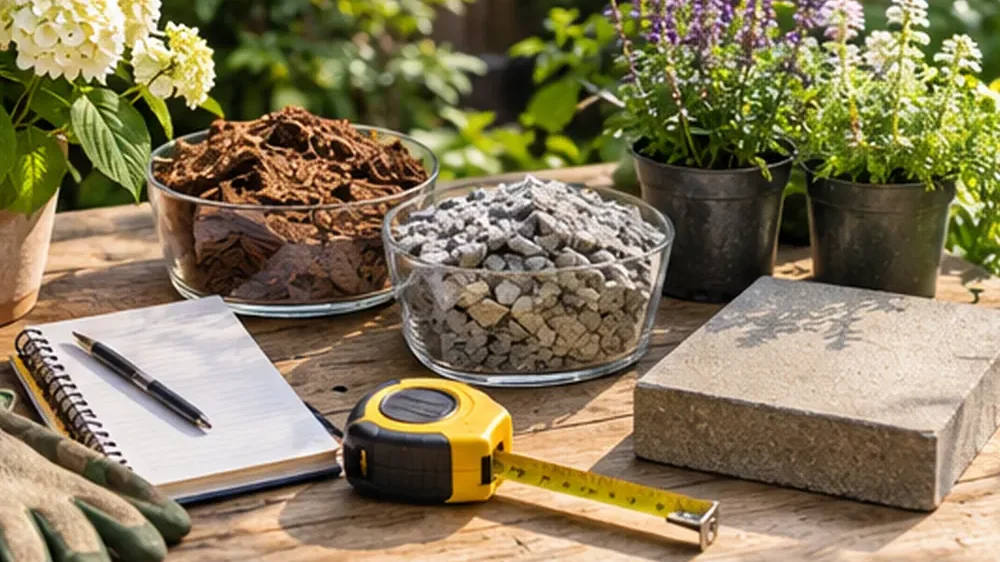
The table below shows selected U.S. material prices. These are not installed prices, and the units differ per row, so don’t compare one row directly with another.
| Material | Material price | Budget note |
|---|---|---|
| Sod | $0.35–$0.85 per sq ft | Add site prep and installation |
| Artificial turf | $2–$6 per sq ft | Base preparation is a big part of the cost |
| Topsoil | $12–$55 per cu yd | Delivery can cost as much as the soil |
| Gravel or rock | $40–$100 per cu yd | Check stone type and minimum order |
| Pavers | $1–$25 per sq ft | Base, edging, cuts and labor are extra |
| Border plants | $2–$50 per plant | Smaller plants are cheaper and establish well |
A paver’s shelf price is never the installed price. For hardscape, add the compacted base, bedding sand, edge restraints, delivery, a waste allowance, tool rental and labor. For planting, include soil improvement, mulch and irrigation, and choose plants for their mature size, so you don’t pay to replace them in a few years.
What Affects Backyard Landscaping Cost?
Two yards with the same square footage can get completely different quotes. These are the factors that move your backyard landscaping cost the most.
1. Scope and existing conditions
Replacing a few shrubs is simple. Removing old concrete, fixing poor drainage, grading a slope or getting equipment through a narrow side gate is not. Measure the area you’re actually changing, not your whole lot, and note anything that has to be removed first.
2. Softscape vs hardscape: the biggest driver of backyard renovation cost
Plants, soil, mulch and lawn are softscape. Patios, paths, retaining walls and built structures are hardscape. Hardscape needs more site preparation, heavier materials and specialized labor, which is why it dominates most backyard renovation cost estimates. A planting refresh can easily be done in phases; a patio rebuild usually can’t.
3. Materials and quality
Concrete pavers, natural stone and composite edging can differ several times in price for the same area. Native and climate-appropriate plants often cost about the same upfront but need less water and fewer replacements later, which lowers the long-term cost.
4. Location and labor
Labor rates, disposal fees and delivery distances differ a lot across the U.S. Angi’s city data shows how big the gap can be: landscaping in Los Angeles averages about $7,800, more than double the national average. Use national figures only to sanity-check local quotes, and expect your backyard landscaping cost to follow local labor rates.
5. Access and timing
If a skid steer can’t reach your backyard, materials are moved by wheelbarrow, and labor hours go up. Timing matters too: contractor calendars fill quickly in spring, while winter is often the best time to plan, get quotes and book a start date.
How Much Does Landscaping Cost for Your Yard? Start With Scope
The honest answer to “how much does landscaping cost?” is: it depends on your scope. The most useful first step is to write down exactly what you’re changing. Make three lists: work you definitely need, work you’d like, and work that can wait. This keeps essential site work, such as drainage, from being squeezed out by decorative features.
Next, draw a simple sketch on graph paper. Include the house, gates, trees you’re keeping, slopes, downspouts, hose connections, existing paving and planting areas, with rough dimensions in feet. Keep the patio separate from the planting beds, so you can price them separately and decide which tasks are realistic to do yourself.
Finally, write your assumptions next to each item: “existing patio stays,” “beds get a 2-inch mulch layer,” “contractor removes the old concrete.” Assumptions explain why one quote is higher than another, and they make it easy to adjust your landscaping budget when the scope changes.
Calculate Quantities Before You Calculate Prices
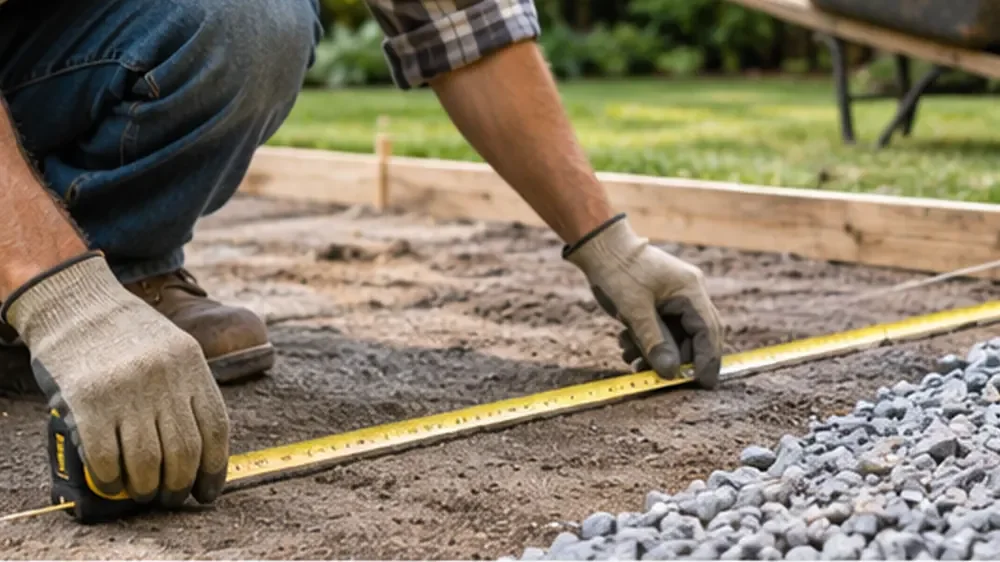
Overbuying ties up cash, and underbuying leads to extra delivery fees and delays. Square feet describe an area; cubic feet and cubic yards describe volume. Mixing them up is one of the most common reasons a garden budget goes wrong.
Mulch example: a 200-square-foot flower bed
For a 3-inch layer: 3 ÷ 12 = 0.25 foot. Then 200 × 0.25 = 50 cubic feet. Divide by 27 to get about 1.85 cubic yards, or 25 bags of 2 cubic feet. Rutgers Cooperative Extension advises keeping the total mulch depth at no more than 3 inches, including old mulch, and keeping mulch a few inches away from plant stems and tree trunks.
Soil example: a raised bed
A bed of 8 × 4 feet that is 1 foot deep holds 32 cubic feet, or about 1.19 cubic yards. You may need less if you don’t fill it to the rim or if existing soil takes up part of the depth. Our guide on how to build a raised garden bed covers the full build.
Patio example: allow for cuts and base
A 12 × 16-foot patio covers 192 square feet. With a 7% waste allowance for cuts, you’d order about 206 square feet of pavers, rounded up to full packs. On top of that you need a compacted base, bedding material, edging and possibly drainage. Follow the paver manufacturer’s installation instructions rather than a universal base depth.
Three Example Landscaping Budgets
These are planning scenarios written by our editors, not reported averages or guaranteed prices. Use them to see how budget categories fit together, then replace every line with local quotes. Our Backyard Budget Planner makes that easy: enter your own prices line by line and the category totals update for you.
| Expense | $750 refresh | $3,000 patio update | $8,000 project |
|---|---|---|---|
| Plants, soil, mulch | $300 | $450 | $1,200 |
| Hardscape, surface | $0 | $1,300 | $3,300 |
| Furniture, lighting | $200 | $450 | $850 |
| Labor, rentals, disposal | $150 | $400 | $1,650 |
| Contingency reserve | $100 | $400 | $1,000 |
| Total | $750 | $3,000 | $8,000 |
The $750 example assumes no new patio and no contractor-led installation. The $8,000 example assumes a modest, mostly DIY-friendly hardscape area. If your project includes structural walls, drainage problems or complex hardscape, you’ll need a different scope and bigger line items, closer to a full backyard renovation cost. For low-cost ideas that fit the first column, see our guide to a backyard makeover on a budget.
DIY Landscaping vs Hiring a Professional
Most homeowners now get help with outdoor projects. The 2026 U.S. Houzz Outdoor Trends Study found that 71% of renovating homeowners hired a professional, up from 65% in 2024, with landscape contractors the most commonly hired pros. That’s a survey of Houzz users, not proof that every garden project needs a contractor, but it shows how complex many outdoor projects have become.
| Usually fine as DIY | Consider a pro | Hire a pro |
|---|---|---|
| Mulching, edging, planting perennials | Small paver patio or gravel area | Retaining walls and major grading |
| Raised beds and containers | Sod on a large or sloped lawn | Drainage correction |
| Solar and plug-in lighting | Irrigation system | Hardwired lighting and gas lines |
Compare both options on the same scope. A contractor quote may include tools, disposal, insurance and a warranty. Your DIY estimate needs tool rental, delivery, protective gear, disposal fees and the value of several weekends of your time.
How to Compare Landscaping Quotes Fairly
Ask every contractor to price the same written scope. A quote that looks cheaper may simply leave out base preparation, disposal or cleanup. Check each quote against this list:
- Scope: exact areas, dimensions, demolition, grading, planting and cleanup
- Materials: type, brand or specification, quantity, color and allowed substitutions
- Site: access route, utility marking, drainage and tree-root protection
- Money: itemized labor and materials, delivery, tax, deposit and change-order terms
- Timing: start date, duration and what happens with weather delays
- Accountability: license where required, insurance, warranty and references
Track commitments separately from money already spent. If you sign a $2,000 contract and pay a $400 deposit, you still owe $1,600. A simple tracker with three columns (paid, committed, forecast) shows at a glance whether you can afford an extra feature or should save it for a later phase. The Backyard Budget Planner has this paid, committed and forecast tracking built in.
7 Smart Ways to Lower Your Backyard Landscaping Cost
- Phase the project: do drainage, grading and hardscape first, and add plants, lighting and furniture later.
- Do the softscape yourself: mulching, planting and edging are where DIY saves the most with the least risk.
- Plan in winter: use the quiet season to measure, design and collect quotes, so you’re first in line in spring.
- Choose smaller plants: they cost less and often establish faster than large specimens.
- Pick climate-appropriate plants: check your USDA hardiness zone and local extension advice to avoid costly replacements.
- Reuse what works: keep sound paving, edging stones and furniture, and refresh them instead of replacing.
- Combine deliveries: order soil, mulch and gravel at the same time to pay one delivery fee.
Our low-maintenance garden guide shows how plant choice and layout can cut ongoing costs too.
Budget for the First Year After Installation
Installation isn’t the last expense, so a good landscaping budget looks beyond opening day. New plants need extra water while they establish, irrigation needs checking, cushions need storage and gravel areas need topping up. Add an “aftercare” line for water, mulch, replacement plants and seasonal maintenance. It helps you compare design choices on first-year cost, not just on how they look on day one.
A large lawn may be cheaper to install than a patio, but it needs mowing, watering and feeding every year. A fast-growing hedge may seem cheaper than a fence but needs regular pruning. If your main goal is a place to relax, spending more on shade, comfortable seating and a few durable plants often gives better everyday value than many decorative features.
How to Build a Realistic Landscaping Budget
- Choose one priority: a seating area, better drainage, a new border or a vegetable garden.
- Measure the work: sketch the plan with square feet and linear feet.
- List every cost: materials, labor, delivery, rentals, tax and waste.
- Get local prices: collect two or three comparable quotes.
- Set a contingency: 10 to 20% is a common planning range for uncertain sites.
- Phase optional upgrades: finish essential work first, then add extras.
- Track actual spending: update your landscaping budget as invoices come in.
Turn your plan into a real budget
The Backyard Budget Planner organizes materials, project scenarios, contractor quotes and spending in one interactive planner, so you can work with real local prices instead of guesses.
Explore the Backyard Budget PlannerFrequently Asked Questions
How much does landscaping cost for a backyard?
Angi reports a national average of about $3,500 for a professional landscaping project. Smaller areas of 200 square feet often cost $900 to $2,400, while a full backyard renovation with patios and structures can reach $50,000 or more.
What is the average landscaping cost per square foot?
Based on Angi’s 2026 figures, roughly $4.50 to $12 per square foot. Lawn Love reports up to about $17. Check whether a figure includes labor, materials only or the whole project.
How much does it cost to landscape a small backyard?
It depends on the work. A planting and mulch refresh can stay under $1,000 if you do it yourself, while a new patio in the same space can cost several thousand dollars. Measure the area, define the scope and get local quotes.
What is the most expensive part of landscaping?
Hardscape, grading, drainage and structural work usually take the biggest share of a backyard renovation cost. On simple projects, plants, soil and delivery are the main expenses.
How much should I set aside for unexpected costs?
There is no universal percentage. Many homeowners plan with a 10 to 20% contingency, and more for older yards or sites with drainage questions. Keep it separate from planned purchases.
Does landscaping cost per square foot include labor?
Not always. Published figures can refer to materials only, installed work or a complete project. Always check the scope and units before you use a number.
Is it cheaper to landscape in fall or winter?
Prices don’t drop automatically, but contractors often have more availability outside spring. Winter is ideal for planning and collecting quotes, and fall is a good time to plant many trees and shrubs.
Can I landscape my backyard in phases?
Yes. Do drainage, grading and hardscape first, then planting and finishing touches. Keep one overall plan, and keep in mind that bringing a contractor or equipment back twice can add mobilization costs.
Final Thoughts
Backyard landscaping cost isn’t one number. It’s the sum of your scope, materials, site conditions and labor. Start with a clear plan, calculate quantities, compare quotes on the same scope and keep a separate contingency. That way your landscaping budget holds up when the real invoices arrive.
Planning to spend more evenings outside? Compare options in our best fire pits guide and our best patio heaters guide.
Sources
- Angi: How much does landscaping cost?
- Lawn Love: How much does landscape design cost?
- Lawn Love: How much does landscaping cost?
- Angi: Landscaping cost guide (full backyard renovations)
- Houzz: 2026 U.S. Houzz Outdoor Trends Study
- Rutgers Cooperative Extension: Proper mulching techniques
- USDA Plant Hardiness Zone Map