
Full Sun Plants: 40 Heat Tolerant Picks for Hot Gardens and Patios
The best full sun plants for hot, sunny beds and patios: heat tolerant plants and drought tolerant plants chosen from university lists, the best full sun container plants for a hot patio, sun loving perennials, and how to keep them thriving in summer.
Affiliate disclosure: This guide links to our buying guides, which contain affiliate links. As an Amazon Associate, we earn from qualifying purchases at no additional cost to you.
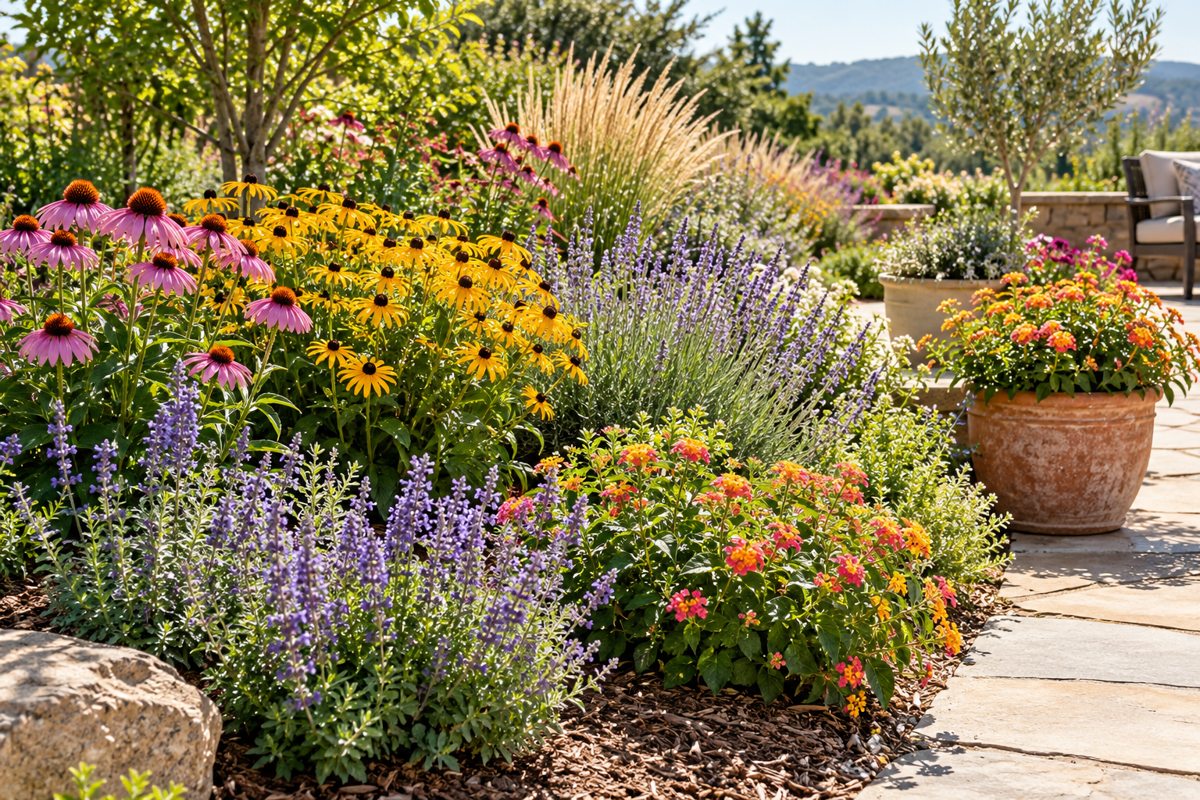
A sunny patio or a south-facing bed can feel like an oven in July. Many popular plants wilt, scorch or stop flowering in that heat, but others are made for it. The right full sun plants keep flowering through the hottest weeks and need surprisingly little water once they are established.
This guide brings together heat tolerant plants and drought tolerant plants from university extension lists. You will find the best annuals for color, sun loving perennials that come back every year, full sun container plants for a hot patio, tough shrubs and grasses, and practical tips for planting and watering in the heat. We also correct a few plants from the old version of this page that do not belong in full sun at all.
What Does “Full Sun” Mean?
| Light level | Hours of direct sun | Typical spots |
|---|---|---|
| Full sun | 6 hours or more per day | South- and west-facing beds, open patios, rooftops |
| Partial sun / partial shade | About 3 to 6 hours | East-facing spots, near trees |
| Shade | Less than 3 hours | North sides of buildings, under dense trees |
These ranges are the standard definitions used on most plant labels. Full sun plants need at least six hours of direct sun, but in hot climates the real test is the afternoon: a west-facing patio with reflected heat from paving and walls is much tougher than an open bed. That is where heat tolerant plants and drought tolerant plants really prove their worth.
Heat Tolerant Plants: Annuals for Summer-Long Color
These heat tolerant plants appear on the heat and drought lists of Penn State, Colorado State and Oklahoma State:
| Plant | Why it works in full sun | Listed by |
|---|---|---|
| Lantana | Drought tolerant; upright and trailing forms; also survives part shade (Colorado State) | Penn State, Colorado State, Oklahoma State |
| Zinnia (garden and creeping) | Comes in every color except blue and brown (Colorado State) | Penn State, Colorado State |
| Moss rose (Portulaca) | Succulent leaves; flowers open in sun | Penn State |
| Angelonia (summer snapdragon) | No deadheading or pinching needed (Colorado State) | Colorado State, Oklahoma State |
| Globe amaranth | Papery flowers that last for weeks | Penn State, Oklahoma State |
| Cosmos | Airy flowers for pollinators | Penn State, Oklahoma State |
| Spreading petunia | Outstanding heat and drought tolerance, low maintenance (Colorado State) | Colorado State |
| Annual vinca | Glossy leaves, steady flowers in heat | Penn State |
| Mexican sunflower | Tall, orange, loved by butterflies | Penn State, Oklahoma State |
| Marigold | Yellow, orange and red; deadhead faded flowers (Colorado State) | Colorado State, Oklahoma State |
| Dusty miller | Silver foliage that tolerates heat | Penn State, Oklahoma State |
| Verbena | Spreading, long-flowering | Penn State |
The old version of this page listed “eleven-hours”; that is moss rose (Portulaca), which is indeed one of the best annuals for hot, dry spots.
Sun Loving Perennials That Come Back Every Year
Sun loving perennials give you color year after year with less replanting. These appear on the Penn State and Oklahoma State lists:
| Perennial | Highlights | Listed by |
|---|---|---|
| Yarrow | Flat flower heads; very drought tolerant | Penn State, Oklahoma State |
| Butterfly weed | Native; orange flowers for monarchs | Penn State, Oklahoma State |
| Blanketflower | Red and yellow daisies all summer | Penn State |
| Black-eyed Susan | Classic golden daisies | Penn State, Oklahoma State |
| Catmint | Blue-purple haze; easy and tough | Penn State, Oklahoma State |
| Russian sage | Silvery stems, lavender-blue flowers | Penn State, Oklahoma State |
| Perennial salvia | Spikes of blue, purple or pink | Penn State |
| Lavender | Fragrant; needs excellent drainage | Penn State |
| Sedum and hens and chicks | Succulent, nearly carefree | Penn State, Oklahoma State |
| Coreopsis (tickseed) | Long bloom season | Penn State, Oklahoma State |
| Daylily | Adaptable, many colors | Penn State |
| Lamb’s ear | Soft, silver foliage | Penn State, Oklahoma State |
For lavender care tips, see our guide on how to care for a lavender tree. Peonies from the old version of this page also enjoy sun, but they are spring bloomers that need regular water, so they are less suited to hot, dry spots than the plants above.
Full Sun Container Plants for a Hot Patio
Containers on a sunny patio face the toughest conditions: hot pots, reflected heat and fast-drying soil. Colorado State recommends these heat-loving annuals for containers:
| Full sun container plant | Notes (Colorado State) |
|---|---|
| Angelonia | Blue, purple, pink, white; no deadheading needed |
| Plume celosia | Prefers consistent moisture and an extra shot of fertilizer |
| Geranium (zonal and ivy leaf) | Pinch off spent blooms to keep flowering |
| Lantana | Drought tolerant; upright and trailing forms |
| Marigold | Deadhead faded flowers |
| Spreading petunia | Heat and drought tolerant, low maintenance |
| Rudbeckia ‘Denver Daisy’ | Prefers moderate to dry moisture |
| Zinnia and creeping zinnia | Every color except blue and brown |
- Choose larger pots: more soil holds more water and keeps roots cooler.
- Light-colored pots stay cooler than dark ones in full sun.
- Colorado State advises watering plants well after transplanting and fertilizing periodically to keep them blooming.
- Group pots together so they shade each other’s sides.
For more on pots and potting mix, see our container gardening guide.
Ornamental Grasses and Succulents
| Plant | Why it works | Listed by |
|---|---|---|
| Little bluestem | Native grass with copper fall color | Oklahoma State |
| Switchgrass | Upright, airy seed heads | Oklahoma State |
| Blue oat grass | Blue-gray mounds | Oklahoma State |
| Mexican feather grass | Fine, flowing texture | Oklahoma State |
| Prickly pear cactus | Very drought tolerant; cold hardy types exist | Penn State, Oklahoma State |
| Yucca / Adam’s needle | Bold, spiky structure | Penn State, Oklahoma State |
| Parry’s agave | Hardy agave for dry, sunny spots | Oklahoma State |
Agaves and cacti need excellent drainage and many are not frost hardy, so check your zone or grow them in pots you can move. See our guide on how to water cacti and succulents.
Shrubs for Full Sun
| Shrub | Highlights | Listed by |
|---|---|---|
| Juniper | Evergreen; groundcover to upright forms | Penn State, Oklahoma State |
| Blue mist shrub (Caryopteris) | Blue late-summer flowers for pollinators | Penn State, Oklahoma State |
| Smokebush | Purple or green leaves, smoky plumes | Penn State, Oklahoma State |
| Chastetree | Lavender flower spikes in summer heat | Penn State, Oklahoma State |
| Crapemyrtle | Long summer bloom in warmer zones | Oklahoma State |
| Ninebark | Tough native with colorful foliage | Penn State |
| Shrub roses / saltspray rose | Repeat flowering | Penn State, Oklahoma State |
| Lilac | Spring fragrance; full sun | Penn State |
Planting a lilac? See when to trim lilac bushes so you do not cut off next year’s flowers.
Plants That Do Not Belong in Full Sun
The old version of this page included some plants that are not true full sun plants. Here is a more realistic picture:
| Plant | Better position | Why |
|---|---|---|
| Caladium | Partial shade | A tropical foliage plant; frost tender and many types scorch in strong sun |
| Snake plant (Saint George’s sword) | Bright indirect light; outdoors only in mild climates | Mainly a houseplant; leaves can burn when suddenly moved into hot sun |
| English ivy | Shade to partial shade | Grows best in cooler, shadier spots |
| Palms | Depends on species | Hardiness varies hugely; see our palm guide |
These positions reflect widely accepted plant care practice. For shade-loving alternatives, see our guide on growing ivy, and for palms, see how to plant a palm tree.
Planting in the Heat
Watering Drought Tolerant Plants
UMass Extension describes its list as plants that are drought tolerant “once established”. In their first season, drought tolerant plants need regular, deep watering to grow roots. After that, most need water only in long dry spells.
| Situation | How to water |
|---|---|
| First summer after planting | Deeply, when the top few inches of soil are dry; often once or twice a week |
| Established perennials and shrubs | Only during long dry spells; deep and infrequent |
| Containers in full sun | Check daily in summer; water until it drains from the bottom |
| Heat waves | Water early in the morning; containers may need water twice a day |
A good hose and nozzle make deep watering quick; see our garden hose nozzle guide and expandable garden hose guide, and read how often to water your garden. Contrary to a common myth, watering plants in the sun does not scorch their leaves; see our article on gardening myths.
Designing a Hot, Sunny Patio
- Layer heights: tall grasses or Mexican sunflower at the back, mid-height salvia or angelonia, and trailing lantana or petunias at the edge of pots.
- Repeat colors: two or three colors repeated across pots look calmer than many single colors.
- Add silver foliage: dusty miller, lamb’s ear and Russian sage cool down hot color schemes.
- Think about pollinators: zinnias, butterfly weed, salvia and cosmos attract bees and butterflies.
- Create shade for yourself: a pergola with a vine or a large umbrella lets you enjoy the patio while the plants enjoy the sun.
For a fruiting vine over a pergola, see our guide on how to grow kiwi.
Full Sun Plants for Bees and Butterflies
Many full sun plants are also excellent for pollinators. These plants from the lists above are widely known for attracting bees and butterflies (general horticultural knowledge):
| Plant | Type | Attracts |
|---|---|---|
| Zinnia | Annual | Butterflies and bees |
| Cosmos | Annual | Bees and butterflies |
| Mexican sunflower | Annual | Butterflies, especially monarchs |
| Lantana | Annual (perennial in warm zones) | Butterflies |
| Butterfly weed | Perennial | Monarch butterflies (host plant) and bees |
| Catmint | Perennial | Bees |
| Perennial salvia | Perennial | Bees and hummingbirds |
| Yarrow | Perennial | Bees and beneficial insects |
| Blanketflower | Perennial | Bees and butterflies |
| Russian sage | Perennial | Bees |
Combining heat tolerant plants with pollinator value gives you a patio that is colorful, low-maintenance and full of life. Avoid spraying insecticides on flowering plants; see our garden insects guide for gentler approaches.
Common Mistakes with Full Sun Plants
| Mistake | Why it hurts | Better approach |
|---|---|---|
| Skipping water in the first season | Roots never establish | Water deeply until plants are established |
| Shade plants in full sun | Scorched, stressed plants | Match the plant to the light |
| Small, dark pots on hot paving | Roots overheat and dry out | Use larger, lighter-colored pots |
| Bare soil | Soil heats up and dries out fast | Mulch beds |
| Frequent shallow watering | Shallow roots, less drought tolerance | Water deeply and less often |
| Planting in midsummer heat | Severe transplant stress | Plant in spring or early fall |
What You Need
| Item | Why it helps | More information |
|---|---|---|
| Hose with adjustable nozzle | Deep watering at the base | See our garden hose nozzle guide |
| Lightweight expandable hose | Easy watering of patio pots | See our expandable garden hose guide |
| Hand tools | Planting and dividing perennials | See our gardening tool sets guide |
| Gardening gloves | Protection from spiny plants such as agave and yucca | See our gardening gloves guide |
| Kneeling pad | Comfortable planting and weeding | See our kneeling pad guide |
| Mulch | Keeps roots cool and moist | 2 to 3 inches, away from stems |
| Retractable hose reel | A tidy hose that is always ready for patio pots | See our retractable garden hose guide |
Frequently Asked Questions
What are the best full sun plants?
For summer color: lantana, zinnia, moss rose, angelonia, cosmos and spreading petunias. For perennials: yarrow, butterfly weed, blanketflower, black-eyed Susan, catmint, Russian sage, salvia, lavender and sedum.
What does full sun mean?
At least six hours of direct sun per day.
What are the most heat tolerant plants for pots?
Colorado State recommends angelonia, plume celosia, geraniums, lantana, marigolds, spreading petunias, rudbeckia ‘Denver Daisy’ and zinnias for containers.
Do drought tolerant plants need water?
Yes, especially in their first season. They become drought tolerant once their roots are established.
Which perennials can take full sun all day?
Yarrow, butterfly weed, Russian sage, catmint, sedum, black-eyed Susan, coreopsis, blanketflower and lavender are reliable choices.
What flowers bloom all summer in full sun?
Lantana, zinnias, angelonia, globe amaranth, vinca, petunias and moss rose flower from early summer until frost.
How often should I water full sun container plants?
Check them daily in summer and water whenever the top inch is dry. In heat waves, small pots may need water twice a day.
Can caladiums grow in full sun?
Most caladiums prefer partial shade. They are tropical, frost tender plants, and many types scorch in strong sun.
Is a snake plant a full sun plant?
Not really. It is mainly a houseplant that prefers bright, indirect light and can burn when suddenly moved into hot sun.
What shrubs do well in full sun and heat?
Juniper, blue mist shrub, smokebush, chastetree, crapemyrtle in warmer zones, ninebark and shrub roses.
How do I keep plants alive on a hot patio?
Use large, light-colored pots, group them, mulch the surface, water deeply in the morning and choose heat tolerant plants.
Should I mulch drought tolerant plants?
Yes. Oklahoma State notes that many plants are considerably more drought resistant when properly mulched.
Which full sun plants need the least water?
Once established, sedum, hens and chicks, prickly pear, yucca, agave, yarrow, Russian sage and lavender need very little water. No plant can survive with no water at all, especially in its first season.
Can sun loving perennials grow in pots?
Yes. Lavender, salvia, sedum, catmint and coreopsis grow well in large containers in full sun. In cold regions, potted perennials need winter protection, because roots in pots freeze more easily than roots in the ground.
When is the best time to plant full sun perennials?
Spring or early fall, when temperatures are milder and roots can establish before summer heat or winter cold.
Final Thoughts
The right full sun plants turn a scorching bed or patio into a place full of color. Choose heat tolerant plants such as lantana, zinnias and angelonia for summer-long flowers, and sun loving perennials such as yarrow, salvia and Russian sage for color that returns every year.
Remember that drought tolerant plants only become tough once established: water deeply in the first season, mulch well and match each plant to the light. Full sun container plants in large, light pots complete a patio that looks good even in the hottest weeks.
Sources: Penn State Extension: heat and drought tolerant plants; Colorado State University Extension PlantTalk: heat-loving replacement annuals for containers; Oklahoma State University Extension: drought-tolerant plant selections for Oklahoma; UMass Extension: drought tolerant perennials.
Back to contents ↑
